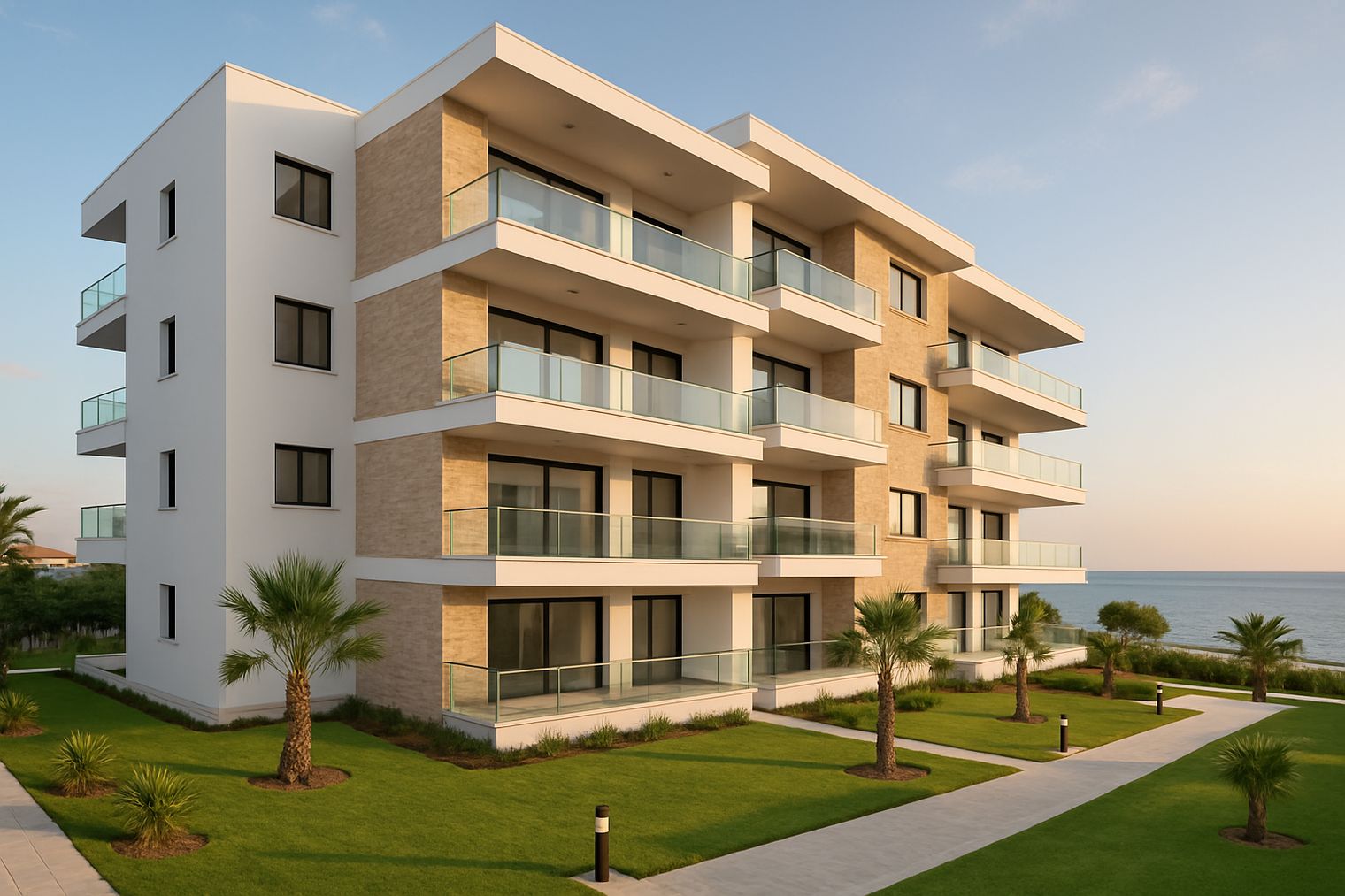
Plenty of Australians who have looked at European property end up asking the same question: does a Cyprus purchase make sense alongside an Australian portfolio, or inside an SMSF? The answer depends on the buying rules, the tax on both sides, and how a fund would hold an asset thousands of kilometres from home. This is general information only, and the detail below is worth checking with specialists before any decision.
How buying in Cyprus works
EU membership does not mean every buyer is treated the same. Non-EU buyers, including UK and US citizens, need permission from the Council of Ministers, usually granted as a formality, and are typically limited to one home or a plot up to about 4,014 m². Australians fall into the non-EU group, so this step applies to them.
Costs depend mainly on whether the property is new or a resale. On a new build you pay 19% VAT (or a reduced 5% on a qualifying first home), while resale properties carry transfer fees instead. Resale transfer fees follow a sliding scale of 3% for property value up to €85,000, 5% from €85,001 to €170,000, and 8% for value over €170,000. Resale with no VAT attracts a 50% reduction, so the standard rates are halved to an effective 1.5%, 2.5% and 4%. Where VAT has been charged on a new build, transfer fees are not chargeable at all.
Legal fees are a separate cost. One guide puts them generally between 1%-2% of the property price, covering contract creation, due diligence, and representation if needed. Lending is harder to access as a non-resident. One guide reports that banks can offer loans that cover only 50% to 60% of the property value, requiring higher down payments. Treat that as one source's figure and confirm it with a licensed broker.
The tax on both sides
In Cyprus, the picture is more mixed than the marketing suggests. Nonresident individuals are generally subject to Cyprus income tax only on income derived from sources in Cyprus, including rental income from immovable property situated in Cyprus. Sources disagree on the rate. One describes a flat 30% rate for non-residents on net rental income, while another says non-residents do not have a EUR 22,000 tax-free threshold on rental income unless they elect to be taxed under the normal progressive income tax rules. The special defence contribution has also been reported differently. One table states that for 2026 it is abolished as from 1st of January 2026 for residents, and not applicable to non-resident individuals, while older guides still cite a 2.25% effective rate. A Cypriot tax adviser should confirm the position that applies at the time.
On the Australian side, an Australian resident still declares worldwide income in their Australian return. A double tax agreement then decides which country can tax each type of income. Australia gives relief mostly through the foreign income tax offset, and the ATO says tax that is only payable, not paid, does not count. Details on the Australia and Cyprus treaty are available from the ATO and should be checked by a tax adviser.
Where the trade-offs sit
A warm climate and EU membership are real features, but they do not change the numbers on a rent roll. The points below deserve more weight than the lifestyle appeal:
- Rental income: Realistic yields, vacancy periods and local management costs should come from an independent rental appraisal, not a sales brochure. Trustees also need a reliable local property manager who can find tenants, collect rent and organise repairs, which can be harder across distance.
- Currency: Currency movements swing the fund's reported position.
- Valuation: An SMSF must value its assets each year, and producing a defensible annual valuation of an overseas property, in a foreign market, in a foreign currency, that satisfies an Australian auditor, is materially harder and more expensive than valuing a suburban Australian house.
- Exit costs: One guide notes CGT at 20% on disposal gains, which sits alongside the transfer fees and any Australian tax on the same gain.
- Stability: A stable legal system is one factor to weigh. It is not a guarantee of value, and title checks by a Cypriot solicitor remain essential.
A worked example in euros
This example is illustrative only. It uses no projected return and does not assume an exchange rate.
Imagine a €300,000 contract price for two different purchases. A new build with VAT at 19% would add €57,000 if the price excludes VAT, with no transfer fee on top. A resale at the same price with no VAT would attract a full-rate transfer fee of €17,200 (€2,550 on the first €85,000, €4,250 on the next €85,000, and €10,400 on the remaining €130,000). With the 50% reduction, that falls to €8,600. Legal fees of 1% to 2% would add €3,000 to €6,000 to either purchase.
Now take gross rent of €15,000 a year. A 20% deduction leaves €12,000 of net rent before other allowances. If a flat 30% applied, Cyprus tax would be €3,600. If the progressive scale applied instead, the figure would differ. Any tax paid in Cyprus would then need to be assessed under the Australia and Cyprus treaty.
If the property sat inside an SMSF in the accumulation phase, fund income is generally taxed at 15%. Whether any foreign tax can be offset inside the fund is a question for an SMSF specialist accountant. The example does not show returns, and rent before costs is not the same as profit.
Offshore property adds a second tax system, a second title system and a second valuation exercise. Each one needs its own specialist.
What to do next
- Check the fund's governing documents. An SMSF specialist accountant or solicitor can confirm whether the trust deed and investment strategy allow an overseas property, and how title would be held. An SMSF structure may not be recognized in the country you are investing in, which may mean a suitable structure is needed to meet the legislative requirements both abroad and in Australia.
- Get local advice in Cyprus and Australia. A Cypriot solicitor should check permits, title and fees. A Cypriot tax adviser should confirm landlord obligations, and an Australian tax adviser should confirm the treaty position.
- Speak with a licensed broker and get an independent rental appraisal. A broker can explain non-resident lending options. An independent appraisal gives a grounded view of rent before any numbers go into a plan.
If you want to talk through how an offshore purchase would fit with your Australian property or SMSF plans, you can book a free call or send us an enquiry. You can also read more on the insights page.
General information only, not personal financial advice. Speak with a licensed adviser before acting.