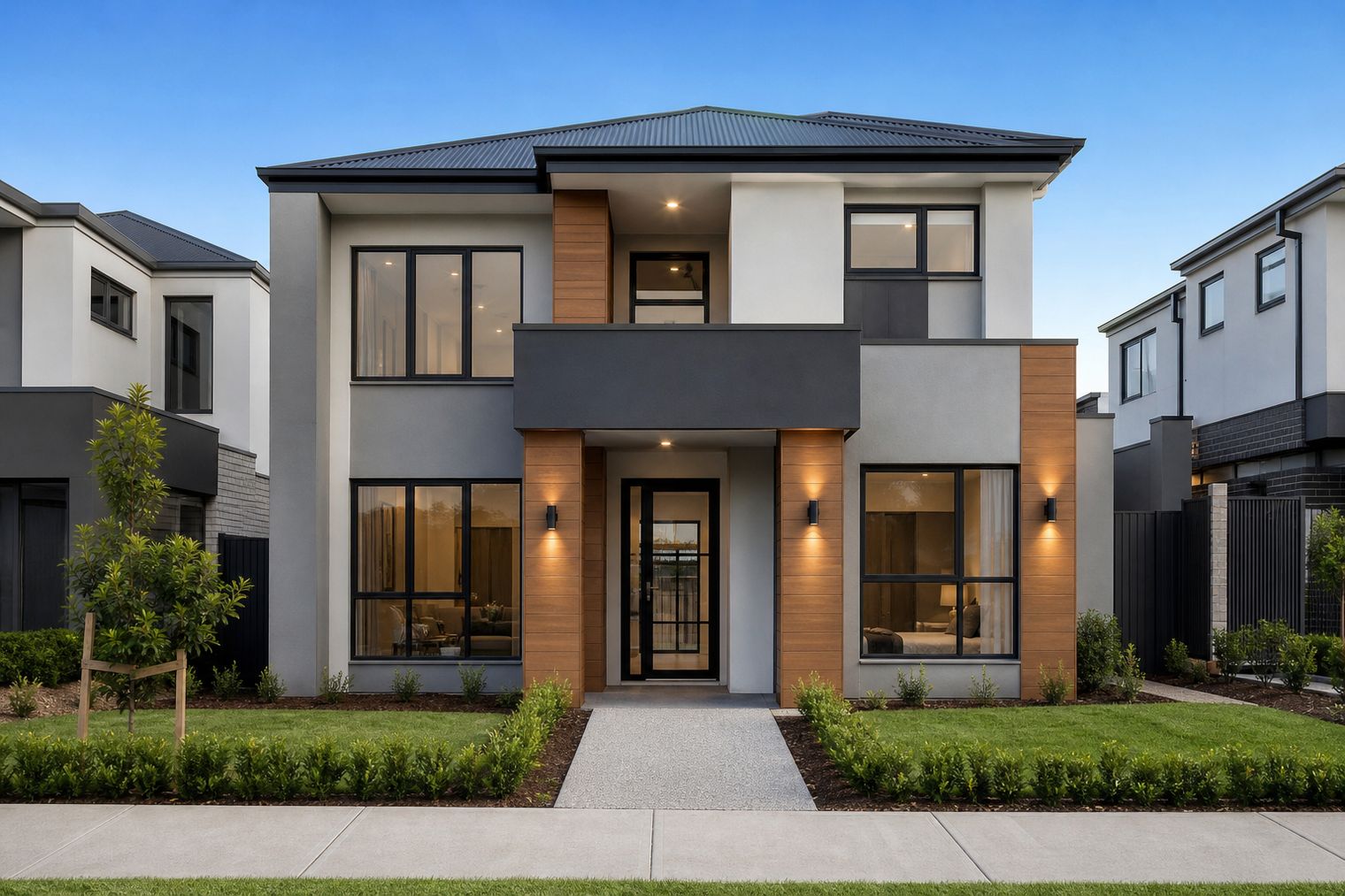
Picture an investor with a block in a growth corridor and a plan for eight furnished rooms, each with its own lock and a shared kitchen and laundry. The pitch sounds simple: build new, and the building should meet current standards. That is a sound starting point, but it covers only part of the picture. Running a rooming house brings licensing, registration and record keeping duties, and those keep applying after the keys are handed over.
How the rules layer together
Start with the building itself. The National Construction Code sorts small shared homes by size, and a guest house or boarding house that holds up to 12 people and stays under 300 square metres can sit in Class 1b. Anything larger is treated as Class 3 A guest house is Class 1b up to 12 people and 300 m² of floor area (A6G2(2)(b)); past either limit it is Class 3. Smaller shared homes in Class 1b can receive lighter treatment than the Class 3 rules impose without having to comply with the more stringent Class 3 requirements.
In Victoria, the building approval is only one layer. A building is treated as a rooming house once rooms are available for rent and four or more people may live in them Under the Residential Tenancies Act 1997, a Rooming House is a building where one or more rooms is available for rent, and the total number of people who may occupy those rooms is four or more. Several bodies then share oversight. The council registers the building under public health law, the Business Licensing Authority licenses the operator, Consumer Affairs Victoria oversees the minimum standards, and a registered building surveyor approves the building against the National Construction Code.
The minimum standards focus on privacy, security, safety and amenity, and they reach every room whatever the paperwork looks like. They apply to the rooming house and its rooms whether a resident has a rooming house agreement or an individual rental agreement. Structural soundness and freedom from damp and mould are explicit requirements A rooming house must be structurally sound and weatherproof. A rooming house must also be free from mould and damp caused by or related to the building structure. Record keeping is also now a formal duty, with all rooming house operators required to keep records sufficient to show a property meets the rooming house minimum standards from 13 October 2026, according to Consumer Affairs Victoria.
New construction gives you a current-rules starting point. It does not make running a rooming house a set-and-forget arrangement.
Other states have their own regimes and planning rules, so the detail depends on where the site sits. Planning is a separate test again. In Victoria, a planning permit may be required for a rooming house if it does not meet the requirements of Clause 52.23.
When it suits and when it doesn't
This model tends to suit an owner who is comfortable running a shared-living property, has a site that meets planning and building conditions from the outset, and is ready for turnover, cleaning, repairs and record keeping. It is a poor fit for anyone wanting a hands-off holding with no operator duties, for a plan that relies on a planning permit not yet granted, or for a budget with no room for vacancies and a slower lease-up.
The costs and risks sit mainly in operations. Licence and registration obligations, shared-area wear, tenant turnover and the cost of keeping evidence of compliance all need allowing for. Rental income should be realistic, with an honest vacancy allowance and an independent rental appraisal rather than a best-case number. Nothing about a new build removes those variables.
A worked example with illustrative numbers
Assume a hypothetical eight-room house where each room rents for $290 a week. Full occupancy gives $2,320 a week, or $120,640 a year. If the owner allows two weeks of vacancy across the year, the gross figure drops to $116,000. This is an illustration, not a forecast or a yield figure. It leaves out operating costs, licence and registration fees, repairs, cleaning, insurance, finance and tax, and each of those can change the answer materially.
If the property were held through an SMSF, the funding route narrows. From 10 August 2026, SMSFs can no longer enter into new LRBAs to acquire residential property. A fund can still buy residential property outright with fund cash the ban only applies to borrowing. Whether a rooming house counts as residential property for this purpose, and how the related party rules apply to any use of the property, are questions for an SMSF specialist accountant or lawyer. Tax treatment inside super is also a question for that same specialist.
What to do next
- Ask the local council and a registered building surveyor whether the specific site and design meet the planning and building path for a rooming house.
- Speak with a licensed professional about the operator obligations, including the licence, registration, minimum standards and record keeping that apply in your state.
- If an SMSF is involved, speak with an SMSF specialist accountant or lawyer before any contract is signed. Any loan would come from a broker who specialises in these structures, not from EWC.
If you would like to talk through how a new build fits your plans, you can book a free call. You can also read more on the insights blog.
General information only, not personal financial advice. Speak with a licensed adviser before acting.