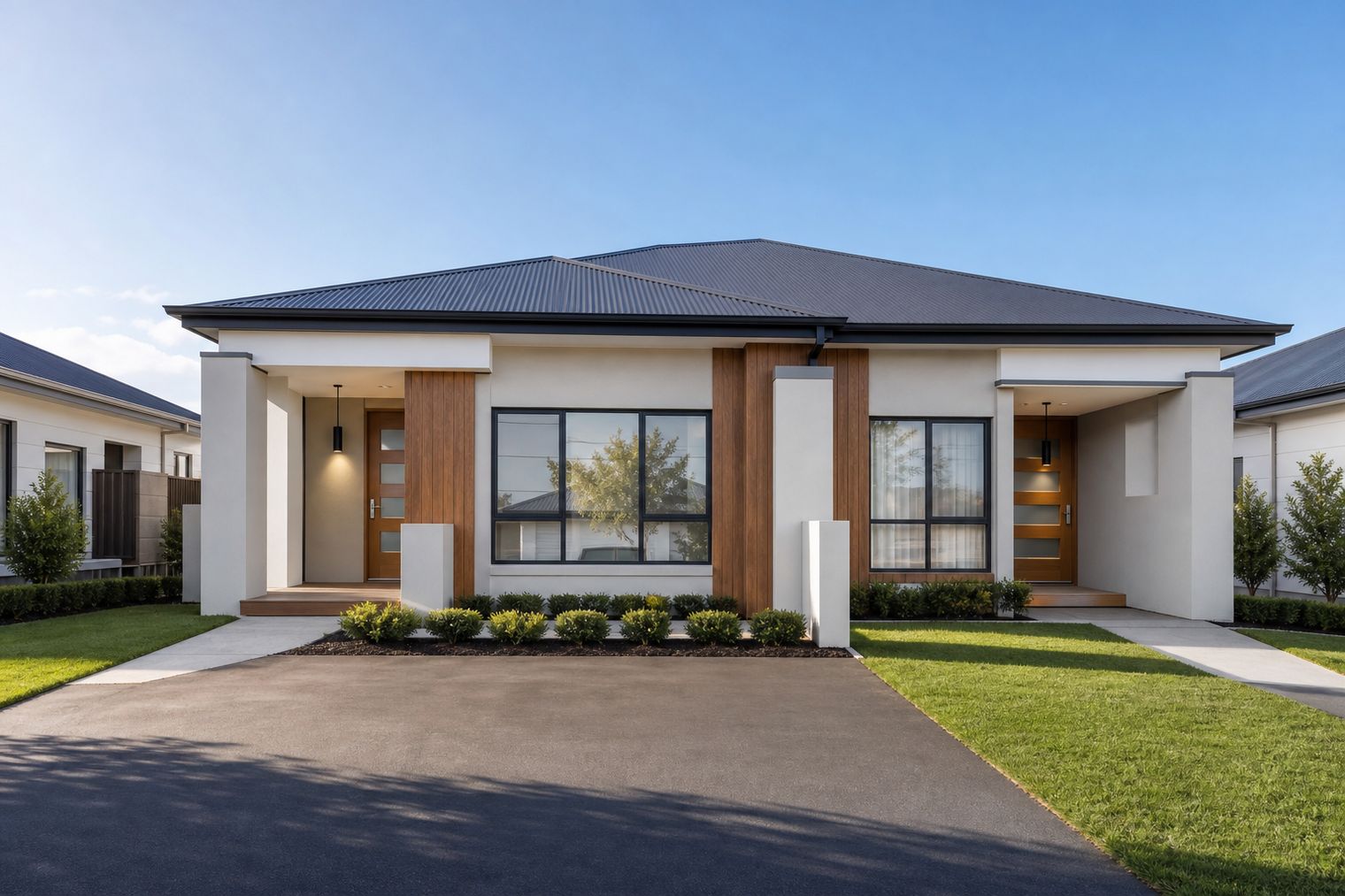
Two new homes on one block, with less to fix in the early years, is an easy picture to like. Whether it adds up to double the rent depends on what each dwelling can realistically rent for, how often each one sits empty, and how the purchase is structured. This post walks through those pieces as general information.
What a duplex actually gives you
A duplex is two self-contained homes on one site, so the income comes from two leases instead of one. That is the core of the appeal, but it also means two tenancies to manage, two sets of outgoings and two chances for a vacancy.
The headline also refers to a tougher market. This post does not rely on a vacancy rate or stock figure for any suburb, so treat that framing as a reason to check local rental evidence rather than as a finding. An independent rental appraisal for each dwelling is the more useful starting point, and a single high estimate deserves caution.
How the SMSF rules change the picture
For SMSF buyers, the biggest change is recent. From 10 August 2026, SMSFs can no longer use a new LRBA to buy residential property. Loans already in place are protected, and SMSFs may still proceed with residential property borrowing where the trustee exchanged or signed a contract of sale before 10 August 2026. For a new purchase today, the route is different.
One route is buying without borrowing. If the fund has sufficient liquidity, it can purchase residential or commercial property directly, with no borrowing involved and no LRBA required. The other route is the structure EWC works with for new residential purchases: the property sits in a unit trust that is unrelated to the fund, and the loan sits in that trust, typically with a 20 to 30% deposit. Whether a trust is unrelated must be confirmed by an SMSF specialist accountant or lawyer. The loan itself comes from a lender through a broker who specialises in these structures, not from EWC.
The related-party test matters here. An in-house asset includes a loan to a related party of your fund, an investment in a related party of your fund, or an asset leased to a related party. You are restricted from having in-house assets that comprise more than 5% of the market value of the SMSF's total assets. A trust the fund's associates control would bring the units inside that cap, which is why the related or unrelated question is the first thing to settle.
When a duplex suits, and when it doesn't
A duplex tends to suit buyers who have the cash flow to hold the property through vacancies and repairs, and who are comfortable managing two tenancies or paying someone to do it. It also suits buyers who want a new asset in a growth corridor and understand that cash flow, not location, is the trade-off to test.
It may not suit a buyer whose numbers only work if both dwellings are let at peak rent with no gaps. It also may not suit a fund with thin cash reserves, because the fund must still meet its own costs.
Tax settings also matter. Inside an SMSF in accumulation phase, super fund investment earnings such as interest, dividends and rental income are generally taxed at 15%. On a sale, there's 15% capital gains tax on returns if your super is in the accumulation phase. This may be reduced to 10% if the super fund has owned the asset for 12 months or more. In retirement phase, there's no capital gains tax (0%) on super returns in this phase. The general transfer balance cap is $2.1 million from 1 July 2026, and it limits how much super can move into retirement phase. Tax treatment depends on the individual fund, so tax questions belong with a registered tax agent or SMSF specialist accountant.
HomePay, the Build Now Pay Later arrangement EWC offers, is another cost to weigh. There are no payments for the first 12 months during construction. The interest for those 12 months is borrowed (added to the loan), not waived, and standard repayments start after that. EWC is not the credit provider for HomePay.
A worked example with illustrative numbers
Suppose a fund buys a new duplex for an illustrative $900,000 with a 25% deposit of $225,000, and a $675,000 loan sits in an unrelated unit trust. Each dwelling is assumed to rent for $600 a week, and the figures below are for illustration only, not a forecast.
A single dwelling at $600 a week over 52 weeks gives $31,200 a year. Two dwellings at the same rent, with two weeks vacant each, give 50 paid weeks at $1,200 a week, or $60,000 a year gross. That is roughly double the single-dwelling figure, but only because both homes are assumed to be let at that rent. It is gross income, before management fees, rates, insurance, repairs and loan interest.
Suppose the fund's share of net income after interest and costs is $20,000 a year, and the fund is in accumulation phase. At 15%, the tax on that income would be $3,000, before any deductions or credits the fund may have. If the same income sat in a fund in retirement phase, the tax on earnings would be nil, subject to the transfer balance cap on what has moved into that phase. These numbers simplify a complex calculation and should be checked by an accountant.
The rent figure is the part most worth testing. The structure and the tax position are the parts most worth getting in writing from a specialist.
What to do next
- Ask an SMSF specialist accountant or lawyer whether the proposed trust is unrelated, and how the 5% in-house asset test would apply to the fund.
- Speak with a broker who specialises in SMSF and unit trust lending about borrowing options. EWC refers loans to its broker network and takes no commission on any loan.
- Obtain an independent rental appraisal for each dwelling, then ask a licensed adviser to model cash flow under a range of occupancy outcomes.
If you want to talk through how a duplex would look against your own fund or savings, you can book a free call. You can also read more on the EWC insights blog.
General information only, not personal financial advice. Speak with a licensed adviser before acting.