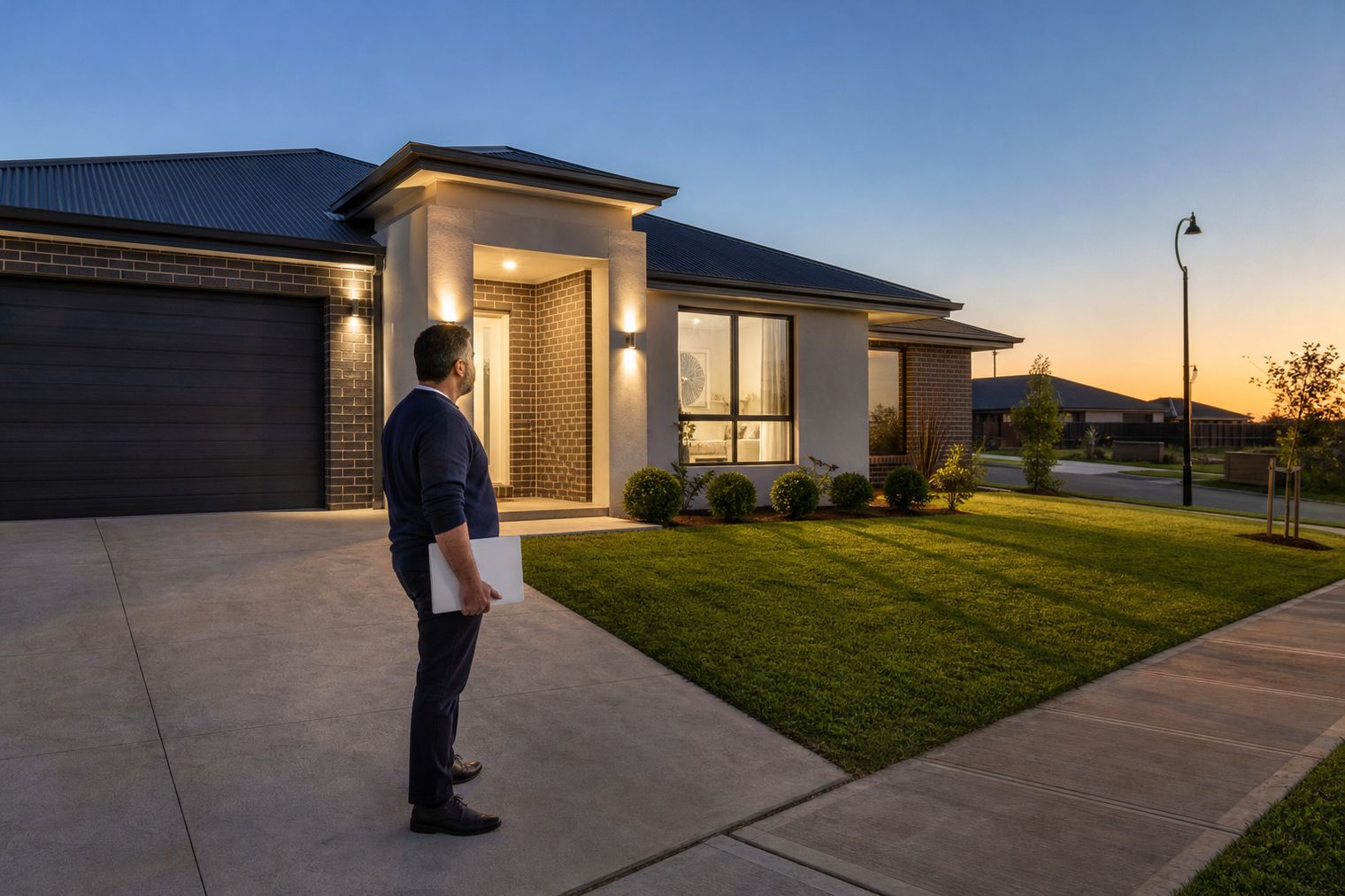
Sam is 42, works PAYG, and is comparing a house and land package with an existing townhouse for a rental. The builder's brochure mentions a depreciation schedule, and Sam wants to understand what that actually means before comparing the two options. This post covers the general rules as they currently stand, so you can ask better questions of the people who advise you.
How depreciation on a rental property works
Depreciation on an investment property has two parts. The building itself is one part, and the removable items inside it are the other. The Australian Taxation Office (ATO) allows property investors to claim depreciation on both the structure (referred to as capital works) and removable items like appliances and carpets (referred to as plant and equipment).
The building side is called Division 43. For residential property where construction started after 15 September 1987, the deduction is 2.5% per year for 40 years. The plant side is Division 40. It covers items such as dishwashers, air conditioners, and ceiling fans, and each item is claimed over its effective life.
The second-hand rule is where the word "brand new" in this topic really matters. Since 7:30 pm AEST on 9 May 2017, most individual investors cannot claim second-hand plant in residential rentals. Newly built properties are treated differently. You can claim a tax deduction if your property was rented out prior to July 2017, is newly built or has been substantially renovated.
The trade-offs to weigh
Depreciation is a deduction, not cash in hand. Because depreciation is a non-cash deduction, it improves cash flow without requiring additional spending. Its value depends on the tax position of whoever owns the property, so the same schedule can mean different outcomes for different investors.
There are also limits to plan around. The law excludes the cost of acquiring land from construction expenditure. The land itself cannot be depreciated under Division 43. That means a builder's contract or a valuation needs to separate land from building before any figure is worked out.
Selling the property can also change the picture. Capital works deductions have a effect on your capital gains tax position, since for capital works (Division 43), yes, through CGT cost base adjustments. Plant and equipment deductions are treated differently, so the schedule should show both categories clearly.
The rules also differ by owner. The ATO second-hand asset page lists exceptions, including carrying on a business of letting rental properties and excluded entities such as corporate tax entities and super funds other than SMSFs. In other words, an SMSF is not in the excluded group, and for residential properties purchased after 9 May 2017, SMSFs generally cannot claim depreciation on second-hand plant and equipment assets.
Key takeaway: the building component of a new property is usually the largest depreciation item, and the second-hand rule makes the new-versus-existing question central to the numbers.
A worked example
Suppose Sam's new build has a construction cost of $350,000, with the land value separated out in the contract. The Division 43 deduction would be $350,000 multiplied by 2.5%, which is $8,750 a year. Over the full 40 years, the total of those building claims would equal the original construction cost, because the deduction is limited so that total claims do not exceed undeducted construction expenditure.
The plant side would depend on what is installed brand new, such as appliances, carpets, blinds and air conditioning. A quantity surveyor's schedule would assign each item an effective life and show a year-by-year figure. The first-year total depends on the item mix, so it is not possible to give a single number without that report.
Now consider the same building held in an SMSF. At a 15 per cent tax rate, this can result in meaningful tax savings each year. That 15% rate applies in the accumulation phase. In the pension phase, the fund's tax rate on this income is 0% up to the Transfer Balance Cap, so the same deduction works differently. As an illustration only, an $8,750 deduction in an accumulation-phase fund with enough taxable income to absorb it would reduce tax by about $1,312.50 in that year. Actual outcomes depend on the fund's income, its phase, and how the ownership structure is set up.
For new residential purchases by an SMSF, EWC uses the unit trust structure, because new residential LRBAs in the fund ended on 10 August 2026. Which entity holds the building and which entity claims the deduction is a question for an SMSF specialist accountant.
What to do next
If you are comparing options, these three steps tend to help the conversation:
- Ask for the cost split. Request the construction cost and land value separated in writing, from the builder or the contract. Depreciation starts from this figure.
- Get a quantity surveyor's schedule. According to the ATO, only a qualified professional, such as a quantity surveyor, can accurately estimate construction costs and prepare a compliant depreciation schedule. A general market guide puts a standard residential schedule around $400 to $700, and fees vary by provider.
- Talk through the finance and the owner. A licensed broker can explain how construction finance fits the purchase. EWC's HomePay product has zero monthly payments for the first 12 months during construction, then standard repayments begin. An accountant or SMSF specialist can explain how depreciation sits within your own tax position.
If you want help putting these pieces together, you can look at the services we coordinate, read more on the insights blog, or book a free call. You can also send an enquiry if you prefer to write first.
General information only, not personal financial advice. Speak with a licensed adviser before acting.