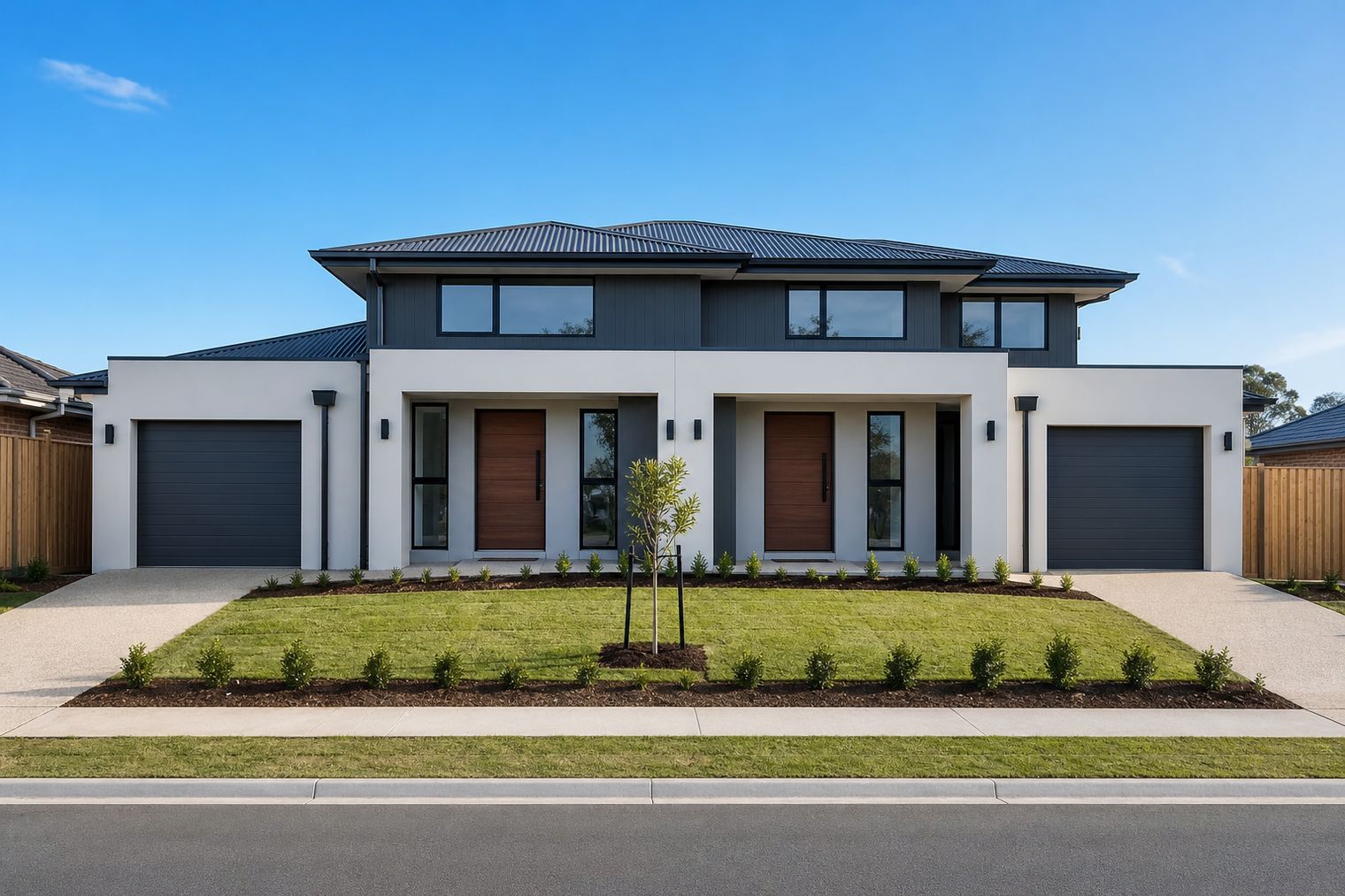
A block with room at the back can look like two homes waiting to happen. Some owners want a second income stream, some want space for family, and others are weighing a future sale. The money side has more moving parts than the design side, so it helps to understand those first.
What a second dwelling does to equity
Equity is generally the current value of a property minus the debt secured against it. A second dwelling can lift value, but that lift only shows up when a valuer assesses the finished result, and build costs can absorb much of it. Planning rules for a second dwelling are set by local councils within state frameworks, so confirm what the block allows before you model any numbers.
Borrowing to build means the debt grows by the build cost as well. Equity therefore rises only by the amount the finished property is worth above what it cost to create. That is the number to test, not the total build bill.
Adding a second dwelling adds value and debt at the same time. The equity gain is the value uplift, not the build cost.
The tax mechanics to understand
The main residence exemption is where most people start, and it has limits. You can only apply the main residence exemption for one property at a time. If you live in one dwelling and rent the other, the full exemption is generally available only where the home was lived in throughout and did not earn any income from renting it or running a business from home. Where rental use starts partway through, the gain is usually apportioned, and the date income use started becomes important evidence.
Land is part of the picture too. The exemption generally applies to the dwelling and up to two hectares of adjacent land. If you build on land you already own, the land normally isn't exempt from CGT until the dwelling becomes your main residence. If you move out and rent, the absence period is also limited, and for an income-producing property it must not exceed six years. How these rules apply to your block is a question for a registered tax agent or accountant.
SMSF property: where the rules have narrowed
SMSF borrowing has changed. New SMSF borrowing (LRBAs) for residential property has been banned since 10 August 2026, and a binding contract exchanged before 10 August is protected. Existing residential loans are grandfathered, allowing trustees to continue managing those borrowing arrangements. Borrowing for qualifying business real property remains available, which is a different asset class from a home or rental dwelling.
For new residential purchases, we generally work with a structure where the fund invests in a unit trust that holds the property, and the borrowing sits in the unit trust rather than the fund. That structure can fund construction, which an LRBA could not. A fund can also buy residential property outright with fund cash, because the ban applies to borrowing.
Two dwellings inside a fund also come with personal-use limits. Trustees and their relatives cannot live in residential property held by the fund, and they cannot rent it from the fund. Contributions into the fund are capped as well. For 2026-27, the concessional contributions cap is $32,500 per the ATO.
Trade-offs to weigh
- Build risk: Costs, timelines and council conditions can all move. Build contracts should be read closely by a solicitor or experienced builder before signing.
- Rental income: Rent for a second dwelling is an estimate until tested. Ask for an independent rental appraisal, and allow for vacancy and maintenance.
- HomePay: This product gives zero monthly payments for the first 12 months during construction. Standard repayments then start, so the post-build repayment is the figure to plan around.
- Liquidity in a fund: An SMSF needs cash outside the property for ongoing costs, so the fund's liquidity position matters before committing.
- Resale: A two-dwelling block may suit a narrower group of buyers, so a future sale is not a given outcome.
Worked example (hypothetical numbers)
The figures below are invented for illustration and are not a forecast. Say a PAYG owner buys a house on a large block for $900,000 with $540,000 of debt, so equity is $360,000. They borrow $320,000 to build a second dwelling. If a valuer later assesses the property at $1,250,000, debt is now $860,000 and equity is $390,000.
The value rose by $350,000, but equity rose by only $30,000, because the $320,000 build cost was borrowed. If the valuation came in lower, the equity gain would shrink further. Now run the same sums inside an SMSF. In accumulation phase, rental income is generally taxed inside the fund at 15%, and the fund cannot have members living in the second dwelling. The result depends on the structure, the costs and the valuation, so these steps need specialist input.
What to do next
- Check what the block allows. Speak with the local council about second-dwelling rules, then ask a builder or quantity surveyor for a cost estimate.
- Get lending options. A licensed mortgage broker can explain standard and SMSF lending for a build, including the current position on SMSF residential borrowing.
- Get tax and fund advice. An accountant, ideally an SMSF specialist accountant for fund purchases, can work through apportionment, CGT and the fund structure. A licensed financial adviser can look at contribution caps and liquidity.
If you want help coordinating these conversations, you can book a free call, read more on the insights blog, or see our services. You can also get in touch with an enquiry.
General information only, not personal financial advice. Speak with a licensed adviser before acting.