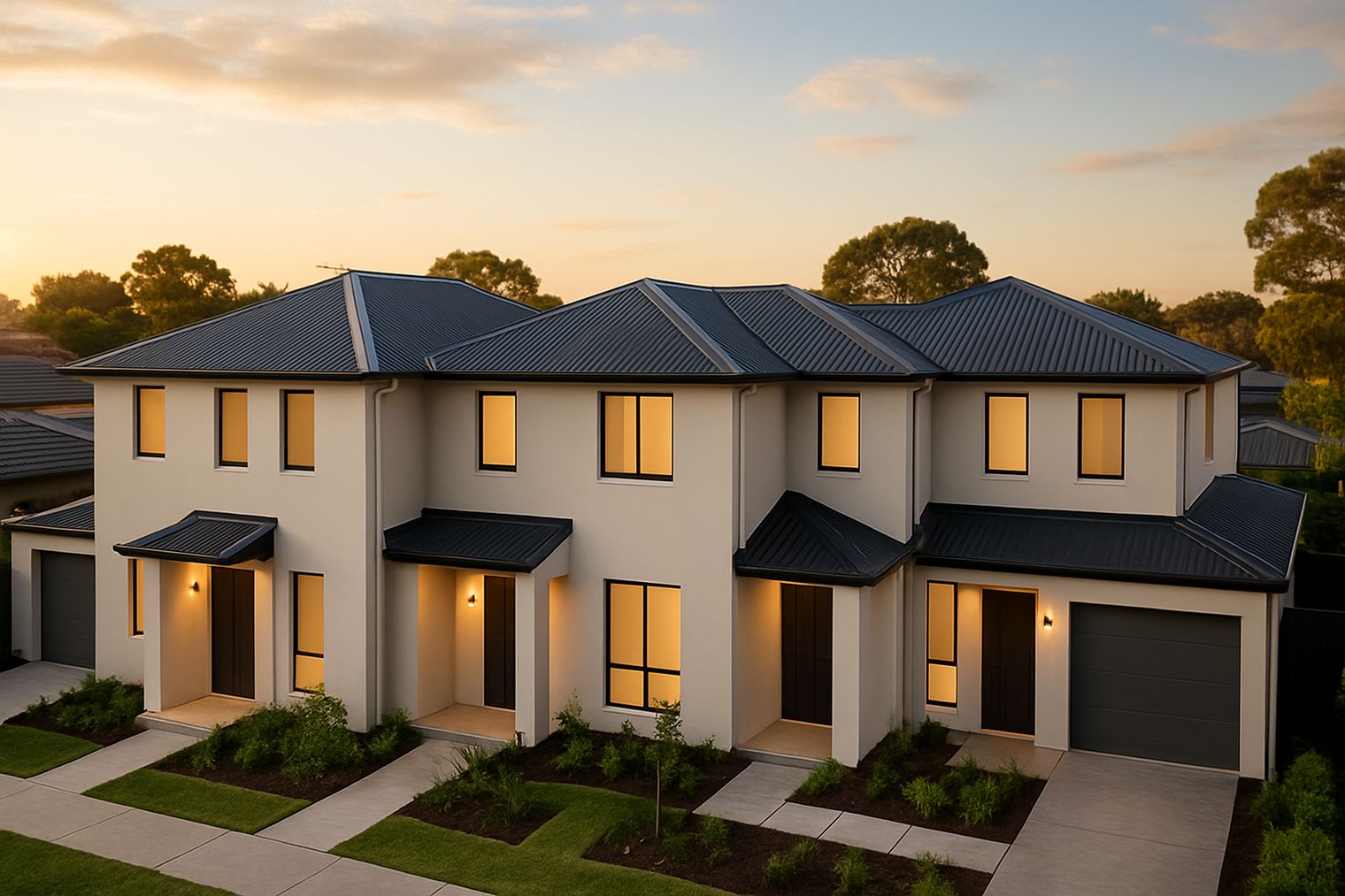
You buy one property. You collect rent from five separate tenants. The building is one title, one loan, one set of council rates, but the income stream is spread across multiple individual agreements. That is the basic idea behind a rooming house, and it is drawing genuine interest from investors who want stronger cash flow from a single asset.
Before going further: rental income from any property is not guaranteed, and past performance of any asset class is not a reliable indicator of future results. What follows is general information about how rooming houses work, not advice about whether one is right for you.
What a Rooming House Actually Is
A rooming house is a building or apartment where one or more rooms are rented out, usually to four or more people, each under separate rental agreements. Unlike share houses, where renters may apply together, in a rooming house the operator typically selects individual occupants and manages their agreements separately. These renters often share facilities such as kitchens and bathrooms.
Rooming houses must be registered with local council and comply with legal and operational requirements under the Residential Tenancies Act. While many rules are the same as those of general rental properties, rooming houses have additional responsibilities and standards specific to their accommodation type.
The income case is straightforward: instead of one household paying, say, $2,000 per month, five individual tenants might each pay $600 to $800 per month. That creates a meaningfully different gross income picture for a comparable property footprint, though vacancy across multiple rooms, management costs, and compliance overheads all affect the net result. Get an independent rental appraisal from a local property manager before running any numbers.
Licensing, Registration, and State Rules
This is not a set-and-forget investment structure. Each state treats rooming accommodation differently, and compliance obligations are real.
Victoria: Rooming house operators are legally required to be licensed, and rooming houses must be registered with the local council. The rooming house operators licensing scheme, established under the Rooming House Operators Act 2016, came into effect on 26 April 2017. The Public Health and Wellbeing (Prescribed Accommodation) Regulations 2020 outline specific requirements that premises must meet. Council policy focuses on educating rooming house operators to improve standards and protecting community health.
Queensland: The Residential Tenancies Authority (RTA) is the Queensland Government statutory body that administers the Residential Tenancies and Rooming Accommodation Act 2008. The Act outlines the rights and responsibilities of residents, providers, and agents in rooming-style accommodation such as boarding houses, supported accommodation, student accommodation, and a residence where four or more rooms are rented.
Investors also need to carefully research local council regulations, as rules around rooming accommodation differ significantly across Australian states and councils.
Minimum standards for room size, bathroom facilities, heating, insulation, and energy efficiency apply and are updated periodically. Check the relevant state consumer affairs or health authority before purchasing or converting a property.
Tax Treatment: What the ATO Says
According to the ATO, all rental income must be declared in your Australian tax return, whether from a property in Australia or overseas. Rooming houses are no different. Each room's rent is assessable income; expenses attributable to the rental activity are deductible against that income.
Where only part of a property is rented, expenses must be apportioned. The ATO's Rental Properties Guide 2025 (ato.gov.au) covers the floor-area method as one accepted basis for apportionment when common areas are shared.
For CGT, the standard rules apply: properties held for more than 12 months by an individual investor attract the 50% CGT discount under the ATO's current rules. Properties held less than 12 months do not. Discuss the interaction of the CGT discount with your cost base and depreciation position with a registered tax agent.
Depreciation on fittings and the building itself (for properties where the construction date qualifies) can be a meaningful deduction for rooming houses, given the higher fitout intensity. A quantity surveyor can prepare a depreciation schedule specific to the property.
Can an SMSF Hold a Rooming House?
This is where the rules get more involved, and professional advice is essential.
An SMSF can hold residential property, including a rooming house, provided the investment satisfies the sole purpose test, that is, the fund exists solely to provide retirement benefits to members. An SMSF's investment strategy must always satisfy the Sole Purpose Test: the fund must exist solely to provide retirement benefits to members or their dependants in case of death before retirement.
Two interlinked compliance requirements serve as the foundation for SMSF property investment: the Sole Purpose Test ensures the property's purpose is legitimate and retirement-focused, while the Arm's Length Test mandates that all transactions, purchases, leases, and sales, be conducted at market value and on commercial terms.
Critically, trustees, their relatives, and related parties cannot live in the rooming house or rent rooms from the SMSF. Some SMSF members erroneously believe that they can live on the fund's investment property as long as they pay rent at the market rate. But the SMSF arm's length and in-house assets rules strictly prohibit members and related parties from deriving personal benefits.
On borrowing: SMSFs can borrow to purchase a completed property via a Limited Recourse Borrowing Arrangement (LRBA) through a bare trust structure. However, a policy negotiated between Labor and the Greens as part of a broader housing and tax reform package will effectively ban new LRBAs for residential property purchases inside SMSFs, while existing arrangements will remain grandfathered. This is a significant legislative development. Anyone considering an SMSF residential LRBA should seek immediate advice from an SMSF specialist accountant and solicitor, as the transition rules and timing are still being clarified.
For properties already purchased outright inside an SMSF (without borrowing), the rooming house structure remains available, subject to the compliance rules above.
Tax inside an SMSF in accumulation phase sits at 15% on net rental income. In pension phase, income and capital gains on assets supporting a member's retirement income stream can be taxed at 0%, up to the Transfer Balance Cap (check the current cap at ato.gov.au for the applicable financial year, as it is indexed periodically).
A Worked Illustration
Consider a property purchased for $650,000 in a regional city, converted to a compliant five-room rooming house. Assume each room achieves $180 per week in rent after an independent rental appraisal.
- Gross weekly income: $900 (five rooms at $180)
- Gross annual income: approximately $46,800
- Less: property management (often 10-15% for rooming houses, higher than standard rentals given the complexity), rates, insurance, maintenance, licensing costs, and periods of vacancy
The net yield after those costs will be meaningfully lower than the gross figure. The above is illustrative only. Actual results depend on occupancy rates, local demand, the operator's management approach, and cost structures specific to the property. This is not a projection.
For an SMSF holding the same property in accumulation phase, rental income would be taxed at 15% rather than the member's marginal rate (which could be 32.5% to 47% depending on their income). That differential is meaningful over time, but it must be weighed against SMSF running costs, audit fees, and the compliance overhead of the rooming house itself.
Three Things to Do Before You Proceed
Talk to a licensed property manager who works specifically with rooming houses in your target state. They can give you a realistic rental appraisal, an estimate of vacancy risk, and a clear picture of what operator licensing and council registration involve in that jurisdiction.
Engage an SMSF specialist accountant and solicitor if you are considering holding the property inside a fund. The current legislative environment around SMSF residential borrowing is shifting. You need current, specific advice on structure, the sole purpose test, and what the proposed LRBA changes mean for your situation.
Speak with a licensed mortgage broker about finance options. Lenders treat rooming houses differently from standard residential investment loans, and some will not lend against them at all. The broker can identify which lender categories are active in this space and what deposit and serviceability requirements apply.
If you want to understand how a rooming house might fit alongside other investment property strategies, our services page outlines how EWC sources and coordinates investment properties. You can also book a call to talk through the approach.
General information only, not personal financial advice. Speak with a licensed adviser before acting.