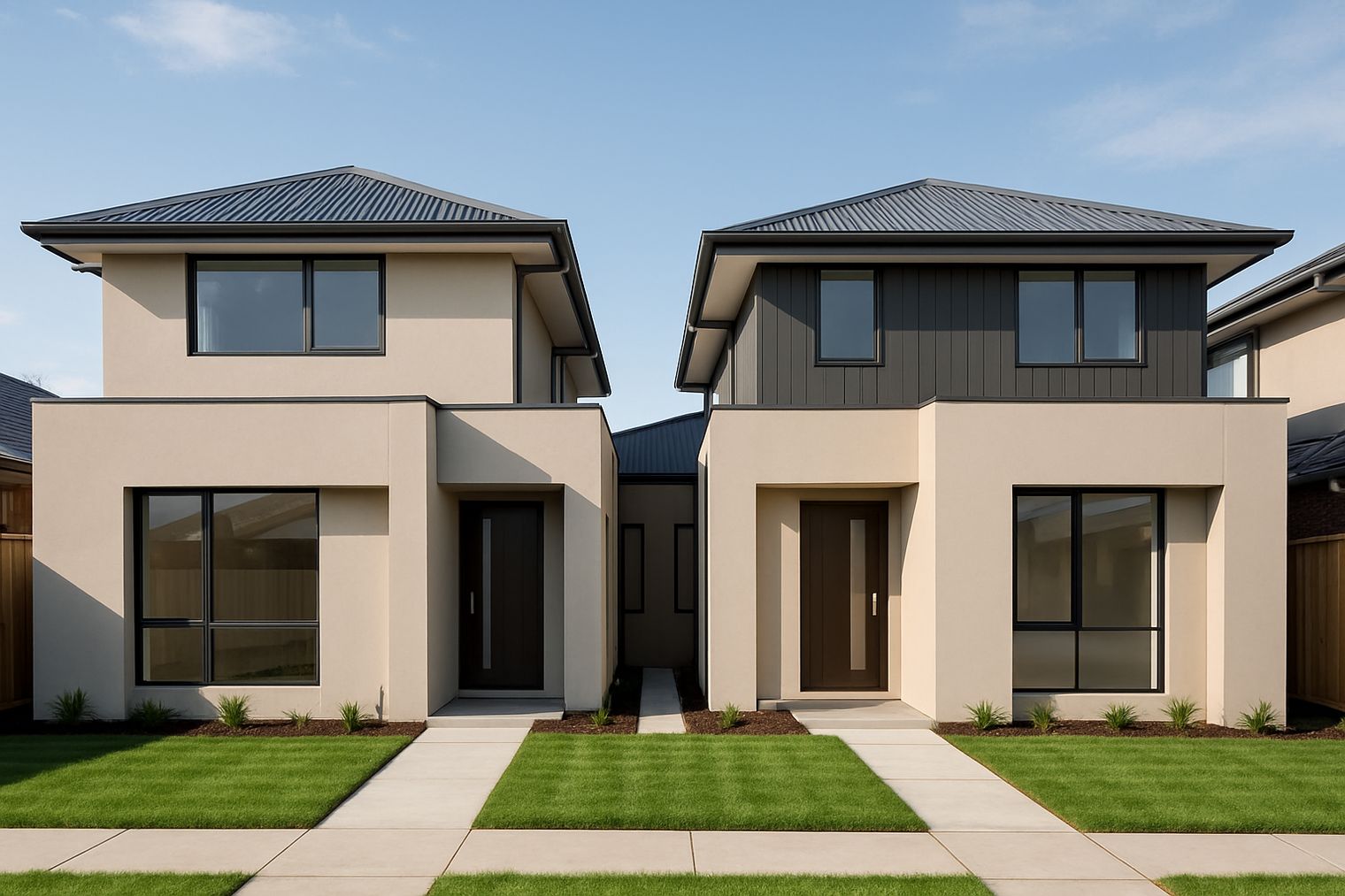
You buy one property. You collect rent from four, five, or six separate residents. Each has their own room agreement, each pays their own rent, and the income streams run independently of one another. That is the core proposition of a rooming house, and it is why more Australian investors are looking at this structure seriously.
Before going further: rooming house investing is not a passive set-and-forget strategy. The income is real, the compliance is real, and understanding both matters.
How the Income Model Works
A standard single-tenancy investment property produces one rent. A rooming house produces several.
Five rooms renting at $200 to $250 per week each, occupied at around 90 per cent on a rolling annual basis, produces gross weekly rent of $900 to $1,100. The same dwelling rented as a single tenancy might generate $500 to $600. The yield difference is structural, not accidental.
Rooming houses can produce gross yields in the range of 8 to 10 per cent when registered and well managed, compared to around 3.3 per cent gross for standard houses in Greater Brisbane (August 2026, Cotality). Gross rental yields on capital city dwellings ranged from 3.3 per cent in Sydney to 6.3 per cent in Darwin in August 2026, according to Cotality.
The income resilience is also different from a single tenancy. If one room is vacant, you still collect rent from the others. A single-tenancy vacancy means the full income stops.
The Compliance Burden: What Investors Need to Know
This is where many first-time rooming house investors underestimate what they are getting into. The regulatory framework varies by state, and it is not light.
Victoria has three separate obligations running in parallel. A Victorian rooming house is a building where four or more people may occupy rooms for rent, per the Residential Tenancies Act 1997 s 3(1). Operating without a licence carries up to 240 penalty units or 2 years imprisonment under the Rooming House Operators Act 2016 s 7(1). Minimum bedroom size is 7.5 m2, with one toilet, one bath or shower, and one wash basin required per 10 residents. Victoria also requires council registration as prescribed accommodation.
From 1 December 2025, rooming house operators in Victoria must install a fixed heater secured to a wall, floor, or ceiling in each resident's room. These ongoing compliance costs are part of the operating picture.
Queensland has its own framework. The Planning Amendment Regulation 2025 extends rooming accommodation provisions for a further 12 months, until 2 December 2026, to support continued housing supply while local governments update their planning schemes. Queensland operators must also comply with the Residential Tenancies and Rooming Accommodation Act 2008.
Key compliance points across states:
- Licences and registrations are operator-specific, not just property-specific
- Rooming houses differ from share houses because individual residents have separate agreements with the operator. Different rules around rent increases, repairs, minimum standards, inspections, and notices to vacate apply.
- Management is more hands-on than a standard tenancy. Factor this into your cost modelling.
A specialist property manager experienced in rooming houses is not optional. It is part of the cost structure.
The Trade-Offs Worth Thinking Through
Higher income does not mean lower risk. It means different risk.
On the income side, all published yields are gross figures before taxes, repair costs, management fees, and vacancy. Net yields are typically around 1.5 to 2 percentage points lower than gross. Rooming houses carry higher management costs than standard rentals, which narrows that gap.
On the lending side, the lender pool for rooming houses is narrower than for standard investment properties, though large enough to be strategic. Maximum LVR can reach 80 per cent on registered properties, though sub-70 per cent is a more common target position. Some lenders treat them as semi-commercial assets and apply different assessment criteria. A broker familiar with this asset class is worth finding early.
On the management side, vacancy does not disappear simply because there are multiple rooms. Room-by-room turnover is more frequent than a standard tenancy. Pricing rooms well, understanding local demand, and getting an independent rental appraisal before purchase are all steps that matter.
And compliance costs are ongoing. Licensing, minimum standards upgrades, and council registration renewals all carry fees and time requirements that a standard landlord does not face.
A Worked Scenario: What the Numbers Might Look Like
This is an illustrative scenario only, not a projection or forecast. Every property, market, and investor situation is different.
Assume a purpose-built five-room rooming house purchased for $750,000 in a mid-ring suburb with solid transport access. Rooms are rented individually at $220 per week each.
- Gross annual income at full occupancy: $57,200
- At 88 per cent occupancy (one room vacant on average): $50,336
- Gross yield at 88 per cent: approximately 6.7 per cent
- Deduct management fees (often 12 to 15 per cent for rooming houses), insurance, rates, maintenance, and compliance costs: net yield could sit in the 4.5 to 5.5 per cent range depending on state and operator
Compare that to a standard single tenancy on the same site at $520 per week: $27,040 gross annually, or around 3.6 per cent gross. The income gap is real. So is the management gap.
What about holding this inside an SMSF?
This is a common question. Since 10 August 2026, new residential purchases inside an SMSF can no longer be funded by borrowing, so the fund must use its own cash. The ATO confirms the new rules apply to LRBAs entered into on or after 10 August 2026. LRBAs are not banned entirely: funds can still borrow to acquire business real property, and existing arrangements continue.
A rooming house is classified as residential property for SMSF purposes. A cash purchase is still possible under the fund's existing rules, provided it satisfies the sole purpose test. The sole purpose test requires the property be an investment for members' retirement, not for their present-day use or enjoyment. Related-party acquisition rules generally prohibit an SMSF from acquiring residential property from a member or other related party, even at market value.
For those who want gearing, the SMSF/unit trust structure is a separate path worth discussing with an SMSF specialist accountant. Tax inside super applies at 15 per cent on rental income in accumulation phase, and at 0 per cent in pension phase (up to the Transfer Balance Cap). This is general information only, and the specifics depend on your fund's circumstances.
What to Do Next
If rooming houses are on your radar, three concrete steps are worth taking:
- Get a licenced property manager's view first. Before you model the numbers, talk to a manager who specialises in rooming houses in your target market. Vacancy rates, room pricing, and compliance obligations vary significantly by suburb and state.
- Commission an independent rental appraisal. Do not rely on vendor-supplied income estimates. An independent appraisal from a local property manager gives you a realistic income range before you commit.
- Speak with a broker familiar with rooming house lending. Standard residential lenders are not always the right fit. A broker who knows this asset class can map out your options before you get to contract.
If you are thinking about the SMSF angle, add an SMSF specialist accountant and a licensed financial adviser to that list. The rules governing what the fund can do, and how income and CGT are taxed inside the fund, require specialist advice before any structure is chosen.
To talk through rooming house investment options or how EWC sources and coordinates these assets for investors, visit our services page or book a call. For further reading on investment property structures and finance, see the insights blog.
General information only, not personal financial advice. Speak with a licensed adviser before acting.