If you are considering an investment property purchase right now, one question sits above almost all others: does this property qualify as a "new build"? The answer affects which tax treatment applies when you hold the asset and when you eventually sell. Getting it wrong is an expensive mistake.
Why the definition suddenly matters
From 1 July 2027, the Government will limit the ability to negatively gear residential investment properties purchased from 7:30pm on 12 May 2026, other than new builds. That is not a minor carve-out. Investors purchasing established properties after 1 July 2027 would no longer be able to offset negative gearing losses against wage income under the proposed changes. Losses relating to established residential investment properties would only be able to be applied against other residential property income, including capital gains. Any excess losses would be quarantined and carried forward to future years.
On the CGT side, for purchases of new builds, access to negative gearing will still be available, with an option to apply either the 50% CGT discount or the concurrently announced indexation and minimum 30% tax upon sale. That optionality does not exist for established properties bought after Budget night.
Two categories are explicitly excluded from the changes: widely held trusts and superannuation funds, including SMSFs. If you are holding property inside an SMSF or a widely held trust, the restrictions do not apply to you. This is general information; discuss the specifics with a licensed adviser and SMSF specialist accountant.
What qualifies as a new build
The Budget papers identify the qualifying categories. These are the types of property that are in:
- Off-the-plan apartments and houses. An off-the-plan purchase occurs when the buyer enters into a contract to buy new residential premises before construction is completed. At this stage the buyer is purchasing a contractual right to have the premises built.
- Vacant land builds. Any residential construction on previously vacant land qualifies, covering standard house-and-land packages and similar contracts where land and construction are coordinated.
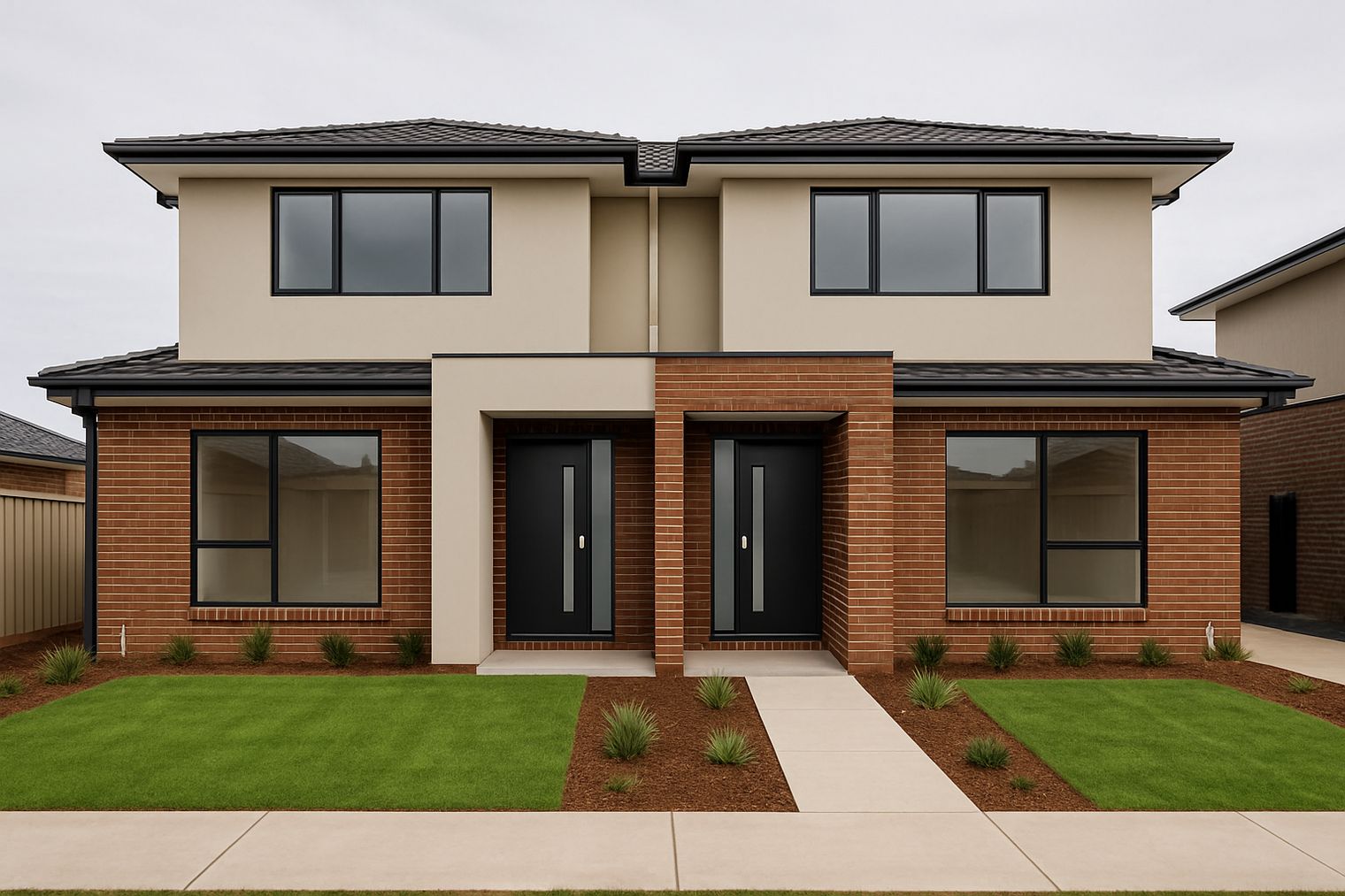
- Duplex-for-house replacements. A duplex constructed through a knock-down rebuild replacing a single, free-standing house, that is, a net increase in the number of residential properties, qualifies. The key word is net increase. Two dwellings replacing one counts. One replacing one does not.
- Newly built properties occupied for under 12 months. A new build cannot have been previously sold, unless the first owner was the builder and it has not been occupied for more than 12 months. So a brand-new house that a builder lived in briefly, then listed, can still qualify in the buyer's hands, provided the 12-month threshold has not been crossed.
The unifying logic is supply. New builds are dwellings constructed on vacant land, or where an existing property was demolished and replaced with a greater number of dwellings. If the project does not add a net new dwelling to the stock, the policy intent says it should not qualify.
What does not qualify
This is where many investors will be caught out. The following are explicitly excluded:
- Like-for-like knock-down rebuilds. A free-standing house constructed through a knock-down rebuild replacing an older, smaller free-standing house does not qualify. One house in, one house out, no net supply gain.
- Substantial renovations. Even large renovation projects would still generally be treated as established housing. The ATO's GST framework does recognise "new residential premises" created through substantial renovations for other purposes, but the Budget's negative gearing test is focused on net housing supply, not renovation scope.
- Extensions and additions to existing properties. An established property that has recently been extended to add additional bedrooms is excluded.
- Granny flats on non-qualifying land. A granny flat built adjacent to an established property that is not eligible for negative gearing inherits the established-property treatment.
- Properties occupied for more than 12 months before investor purchase. A new build occupied for over 12 months before it is sold to an investor falls outside the definition. The clock matters.
A worked scenario
Consider two investors both spending $750,000 in late 2026.
Investor A buys off-the-plan, a two-bedroom apartment in a development of 60 units on what was a car park. Construction completes in mid-2027. The property has never been occupied. Investor A holds it as a rental. From 1 July 2027, the rental loss can be offset against wage income. On sale, Investor A can choose between the 50% CGT discount and the new indexation method.
Investor B buys an established three-bedroom house built in 2005, in the same suburb, from a vendor who has owned it for 15 years. From 1 July 2027, any rental losses are quarantined, they cannot reduce Investor B's salary in the year they arise. The standard CGT discount remains available on gains accrued before 1 July 2027, but the new rules apply to gains accrued after that date, and a valuation point will be required.
These outcomes are illustrative only and based on the rules as proposed at the time of writing. Legislation has not yet been finalised, and a licensed tax adviser should be consulted before acting.
Three things to do before you commit
Confirm the classification in writing. Ask the developer, selling agent, or your solicitor to confirm in writing which Budget category the property falls into. The occupancy history, the number of dwellings being created, and the ownership chain all matter. Do not rely on marketing language alone.
Talk to a tax adviser, not just a property adviser. The interaction between negative gearing, CGT method choice, and your personal marginal rate requires a registered tax agent or financial adviser. EWC coordinates the property and finance side; tax structuring sits with your adviser.
Understand how your finance works for new builds. Construction loans, off-the-plan loans, and SMSF unit trust structures each have different draw-down timing, deposit requirements, and lender appetite. A licensed broker can walk through the options. If you want to understand how EWC coordinates property selection and finance referrals for new builds, visit /services or book a call at elitewealthcreators.com/booking.
The legislation underpinning these changes is still moving through Parliament at the time of writing. Rules can shift. Check ato.gov.au and treasury.gov.au for the latest updates, and speak with a licensed professional before making any purchase decision based on tax treatment.
General information only, not personal financial advice. Speak with a licensed adviser before acting.