

Sorting out your first investment property loan can feel like deciphering a complex puzzle, with each detail impacting how far your money really goes. For Australian investors, loan reviews are not just about ticking boxes—they’re your shield against tax hurdles and compliance risks, especially with strict rules like Division 7A on private company loans. Tackling this process helps you stay compliant, maximise your cash flow, and shape a portfolio that keeps growing, no matter how the credit market shifts. Reviewing investment loans means protecting your strategy and uncovering better ways to reach your property goals.
Table of Contents
- What Reviewing Investment Loans Involves
- Types of Investment Loans in Australia
- How Loan Reviews Impact Portfolio Growth
- Risks of Not Reviewing Your Loans
- Optimising Strategies for Ongoing Loan Health
Key Takeaways
| Point | Details |
|---|---|
| Regular Loan Reviews | Conduct annual reviews or after significant interest rate changes to optimise financial arrangements. |
| Focus on Tax Compliance | Ensure that loan structures comply with Australian tax regulations to avoid unexpected costs. |
| Monitor Market Conditions | Stay informed about interest rate movements to capture refinancing opportunities and enhance cash flow. |
| Adapt Loan Strategies | Adjust loan types and repayment structures to align with evolving personal and investment goals for maximised growth. |
What Reviewing Investment Loans Involves
Reviewing investment loans means taking a hard look at the entire structure, terms, and legal compliance of your borrowing arrangement. This isn’t just paperwork—it’s the foundation that protects your wealth strategy and ensures you’re not paying more tax than necessary.
When you review an investment loan, you’re examining several critical areas:
- Loan agreement terms including interest rates, repayment schedules, and conditions
- Tax compliance to ensure the loan structure aligns with Australian tax law
- Regulatory requirements that govern how the loan functions within your investment structure
- Cash flow impact on your portfolio and personal finances
- Risk exposure and how the loan affects your overall investment position
Understanding loan compliance frameworks is essential if your loan is held through a company structure. Private company loans are subject to specific taxation rules, and reviewing these ensures you avoid unintended tax consequences.
Here’s a summary of core factors to assess during an investment loan review:
| Review Factor | Why It Matters | Typical Impact On Investor |
|---|---|---|
| Loan Terms | Set interest and repayments | Direct cash flow and tax outcomes |
| Tax Compliance | Ensures legal tax position | Reduces risk of extra tax bills |
| Regulatory Suitability | Meets financial services standards | Protects consumer interests |
| Cash Flow Change | Reveals potential optimisation | Improves monthly liquidity |
| Risk Exposure | Shows vulnerability to shifts | Guides portfolio adjustments |
The Compliance Check
Your loan agreement must align with Australian Taxation Office (ATO) requirements. This involves confirming whether your loan qualifies as a complying loan, refinancing loan, or another approved category.
Non-compliance can trigger unexpected tax bills. The ATO has clear frameworks governing how these loans operate, and your review must verify your arrangement meets these standards.
The Regulatory Framework
Beyond tax law, investment loans operate within broader regulatory environments. If your loan is part of a managed investment scheme, you’ll need to assess regulatory compliance within investment schemes to identify systemic risks and ensure consumer protections are in place.
This includes checking suitability of arrangements and whether your loan structure aligns with financial services standards.
The Financial Reality
Review how the loan affects your cash flow month to month. Interest payments, principal repayments, and tax deductions all interact to determine your net position.
Many investors miss opportunities here—a structured review often reveals better repayment options or refinancing possibilities that improve your position significantly.
Reviewing investment loans isn’t a one-time event. Market conditions, interest rates, and your financial circumstances change, requiring regular reassessment to maintain optimal outcomes.
Pro tip: Schedule a formal loan review annually or whenever interest rates shift by more than 0.5%, and always review before making additional property investments to ensure your existing structure supports growth.
Types of Investment Loans in Australia
Australian investment loans come in several distinct varieties, each designed for different borrowing scenarios and investment structures. Understanding which type suits your situation is crucial for optimising your wealth strategy.
The main categories break down by structure, purpose, and repayment method. Your choice directly impacts your tax position, cash flow, and long-term returns.
Loan Structure Types
Investment loans vary significantly based on how they’re established and who’s involved. Private company loans to shareholders represent one major category, governed under Division 7A of the tax law.
These include ordinary loans, loans via promissory notes, and financial accommodations to trust trustees. Closely-held corporate structures and interposed entities also feature their own loan arrangements with specific compliance requirements.
Repayment Structure Options
How you structure repayments fundamentally changes your cash flow and tax outcomes:
- Principal-and-interest loans where you pay down the debt while servicing interest
- Interest-only loans where you pay only interest, keeping principal intact
- Hybrid structures combining both approaches across different loan portions
Each structure carries different interest rates and tax deductibility implications. The Reserve Bank publishes data showing how interest rates vary across loan types, reflecting market conditions and risk assessments.
Compare common investment loan repayment structures in Australia:
| Repayment Type | Typical Interest Rate | Tax Deductibility | Best Suited For |
|---|---|---|---|
| Principal & Interest | Lower, stable | Gradually reduces claim | Long-term wealth building |
| Interest-Only | Slightly higher | Maximises deductions | High earners, investors |
| Hybrid Structure | Mixed | Split combination | Flexible, complex needs |
Loan Purpose Categories
Investment loans can be structured for specific purposes:
- Direct property purchase loans for residential or commercial assets
- Refinancing arrangements consolidating existing debt
- Equipment and fixture financing for investment properties
- Bridging finance for timing gaps between purchases
Your purpose determines which lending products are available and how lenders assess your application.
Corporate vs Personal Loans
Borrowing through a company structure offers different tax and liability protections than personal loans. Company loans fall under specific Division 7A rules ensuring compliance, whilst personal loans operate under different frameworks.
This distinction matters significantly for your overall tax position and asset protection strategy.
Different loan types suit different investor profiles and investment stages—a principal-and-interest loan works differently for wealth accumulation versus an interest-only structure for tax optimisation.
Pro tip: Compare principal-and-interest versus interest-only loans based on your current tax bracket and expected income growth—interest-only often suits higher earners maximising deductions now, whilst principal-and-interest suits those building long-term equity.
How Loan Reviews Impact Portfolio Growth
Regular loan reviews directly shape how your investment portfolio grows. When you assess your borrowing arrangement, you’re essentially tuning the engine that powers your wealth accumulation.
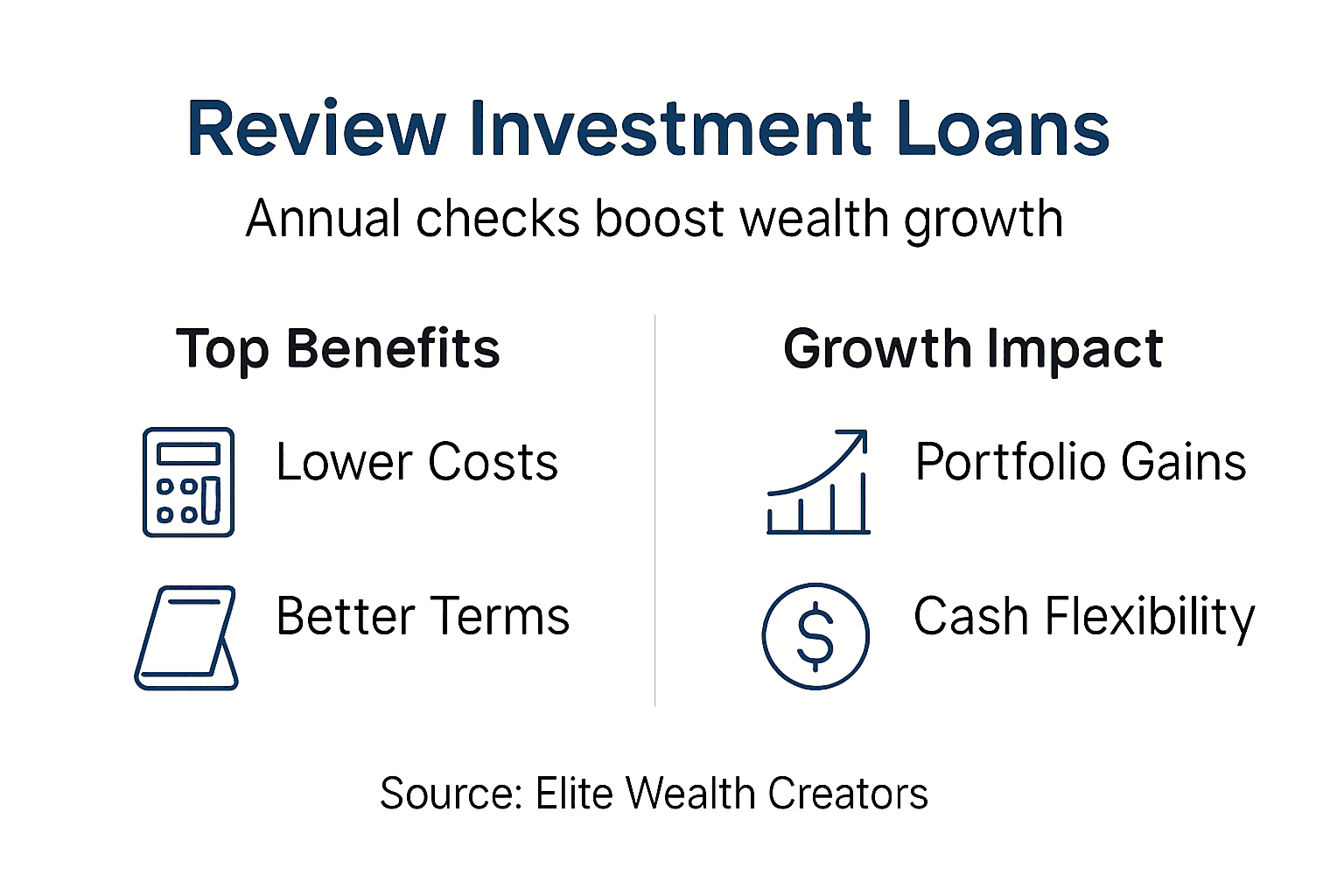
A review reveals opportunities to reduce costs, access capital you’ve been missing, and align your debt structure with your investment goals. These aren’t small tweaks—they compound significantly over years.
Reducing Your Cost of Capital
Every percentage point you save on interest rates matters enormously. Over a 20-year loan term, a 0.5% reduction in interest cost can save tens of thousands of pounds.

Loan reviews identify refinancing opportunities when market conditions shift. Lower rates mean more cash stays in your pocket for further investment or reinvestment.
Accessing Trapped Equity
Your existing properties likely hold substantial equity locked away. A loan review uncovers how to unlock this capital without selling assets.
This accessed equity becomes your fuel for:
- Additional property purchases expanding your portfolio
- Portfolio diversification across asset classes
- Business investments or other wealth vehicles
- Strategic debt consolidation improving cash flow
Aligning Loans with Market Conditions
Credit markets shift constantly, and changes in lending conditions affect what’s available to you. When funding costs decrease and lenders become more flexible, loan reviews help you capture these advantages.
Investors who regularly assess their borrowing position adapt quickly to favourable conditions. Those who don’t miss years of opportunity.
Matching Loan Structure to Life Stage
Your needs change as your income, family situation, and investment timeline evolve. A loan structure that made sense five years ago might now be holding you back.
Reviews ensure your principal-and-interest versus interest-only mix matches your current priorities. Monitoring lending indicators across sectors helps you stay informed about market movements affecting your options.
Improving Cash Flow Flexibility
Better-structured loans mean more usable cash each month. This flexibility funds additional investments, covers unexpected costs, or accelerates debt reduction.
Many investors realise they’re paying $200-$300 more monthly than necessary once reviewed—that’s $2,400 to $3,600 annually.
Portfolio growth accelerates when your loan structure matches your investment strategy—regular reviews ensure you’re not inadvertently handicapping your wealth goals.
Pro tip: Schedule a comprehensive loan review whenever you reach 20% equity growth in your portfolio or experience interest rate movements exceeding 0.5%, ensuring you capture refinancing benefits before windows close.
Risks of Not Reviewing Your Loans
Skipping loan reviews puts your wealth strategy at serious risk. What feels like a time-saving shortcut today becomes a financial liability that compounds silently over years.
When you don’t review, you’re essentially flying blind whilst the lending landscape shifts around you. Market conditions change, your circumstances evolve, and your loan structure becomes increasingly misaligned with your goals.
Missing Refinancing Opportunities
Interest rates fluctuate constantly. A 0.5% rate drop might sound small, but missing it costs you thousands across a loan’s lifetime.
Investors who don’t review their loans regularly miss these windows entirely. By the time they notice, rates have moved again and the refinancing opportunity has closed.
Bearing Higher Costs Than Necessary
Outdated loan structures often cost significantly more than modern alternatives. You might be paying higher interest rates, unnecessary fees, or suboptimal repayment terms without realising it.
The cost difference between reviewed and unreviewed loans typically ranges from $2,000 to $5,000 annually for a standard investment portfolio. Over a decade, that’s $20,000 to $50,000 in unnecessary expenses.
Exposure to Market Volatility
Credit markets shift constantly, and unfavourable shifts in borrowing conditions can leave unreviewed loans vulnerable. When lenders tighten conditions or rates spike, borrowers without review strategies struggle to adapt.
Regular reviews position you to anticipate and manage these changes rather than react to them in crisis mode.
Unsuitable Loan Structures
Your financial situation changes. A principal-and-interest loan might have made sense five years ago, but today an interest-only structure would better suit your goals.
Without reviews, you remain locked into structures that no longer serve you. This misalignment compounds annually, costing you cash flow flexibility and investment opportunities.
Risk of Unsuitable Products and Undisclosed Costs
Lending arrangements sometimes hide costs or include unfavourable clauses. Unsuitable loan products and undisclosed fees represent common complaints to financial regulators.
Regular reviews expose these issues before they become major problems. You discover:
- Hidden fees or charges not properly explained
- Clauses restricting your flexibility or redraw options
- Rate premium components that no longer apply
- Insurance products you’ve outgrown
Reduced Portfolio Growth Potential
Without reviews, you cannot optimise capital access. Trapped equity remains locked in properties. Growth opportunities pass by because you lack the borrowing capacity to capitalise on them.
Your portfolio stagnates whilst actively managed investors around you advance.
Unreviewed loans don’t just cost money—they actively prevent wealth growth by trapping capital and limiting your investment flexibility when opportunities emerge.
Pro tip: Set calendar reminders for annual loan reviews every January and immediately after major life changes, ensuring you never miss refinancing windows or opportunities to restructure your debt for better outcomes.
Optimising Strategies for Ongoing Loan Health
Loan health isn’t something you achieve once and forget. It requires consistent attention, proactive monitoring, and strategic adjustments as your circumstances and the lending market evolve.
Think of it like maintaining a car—regular servicing prevents breakdowns and keeps performance optimal. The same principle applies to investment loans.
Monitor Interest Rate Movements
Interest rates rarely stay static for long. When rates shift, your loan’s competitiveness changes dramatically.
Set alerts when rates move by 0.25% or more. This triggers a refinancing review to determine whether switching lenders or restructuring makes financial sense.
Negotiate Better Terms Annually
Lenders compete constantly for business. A proactive call to your lender or a competing institution can unlock better rates, waived fees, or improved terms you didn’t know were available.
You don’t need to switch lenders—simply asking often results in rate reductions of 0.1% to 0.3%, saving thousands annually across your portfolio.
Exploit Lower Funding Costs
When market competition reduces funding costs, lenders pass savings to borrowers. Alert investors capture these opportunities quickly through refinancing.
Delaying even a few months can mean missing windows where rates are genuinely competitive. Your loan health depends on acting when conditions favour you.
Diversify Your Loan Sources
Relying on a single lender creates vulnerability. Diversifying across multiple lenders provides flexibility and competitive leverage.
Multiple loans also allow strategic structuring:
- Separating investment loans from home loans for clarity
- Allocating different loan types to different purposes
- Spreading across lenders with varying rate competitiveness
- Creating flexibility for future refinancing opportunities
Maintain Ethical Lending Compliance
Lenders operating under the Banking Code of Practice have obligations to communicate clearly and assess your circumstances. Ensuring your arrangement complies with these standards protects you from regulatory issues.
Regular reviews verify your lender maintains proper communication and your loan structure remains appropriate for your situation.
Manage Repayment Strategically
Timely repayments are non-negotiable, but strategy matters. Accelerating principal payments during high-income years reduces interest costs significantly.
Inverse strategies work too—maintaining interest-only during low-income periods preserves cash flow. Strategic repayment planning optimises your position constantly.
Track Loan Performance Metrics
Monitor key indicators monthly:
- Interest rate compared to market rates
- Fees and charges (often hidden in statements)
- Repayment schedule progress
- Equity growth in underlying properties
- Your personal financial position changes
Loan health isn’t passive—it requires quarterly attention to interest rates, annual refinancing reviews, and ongoing strategic adjustments aligned with your wealth goals.
Pro tip: Create a simple spreadsheet tracking each loan’s rate, term, and next review date, then set quarterly reminders to compare your rates against current market offerings and contact lenders about improvements.
Maximise Your Wealth Growth by Reviewing Your Investment Loans
Are you confident your investment loans are driving your wealth forward rather than holding you back? The article highlights how skipping regular loan reviews can lead to higher costs, missed refinancing opportunities, and trapped equity that limits your portfolio growth. With changing market conditions and complex loan structures like principal-and-interest or interest-only options, staying ahead requires clear strategies tailored to your financial situation.
At Elite Wealth Creators, we understand these challenges and turn them into your advantage. Through our precise wealth engineering solutions, you can unlock instant liquidity from your properties and benefit from unique programs such as the Homepay Advantage to boost your cash flow. Don’t let ineffective loan structures stop your progress — discover how our expert team guides you in optimising investments within compliance frameworks like Division 7A, ensuring your loan reviews translate into real growth.
Take the first step towards smarter loan management and portfolio growth by visiting Elite Wealth Creators. Explore how our Precision Sourcing connects you to investments aligned with your loan strategies while we help engineer your financial freedom. Act now to secure your pathway to wealth with expert guidance tailored to Australia’s dynamic market.
Frequently Asked Questions
Why should I review my investment loans?
Reviewing your investment loans helps identify opportunities to reduce costs, improve cash flow, and ensure compliance with tax regulations, ultimately optimising your wealth growth.
What factors should I consider when reviewing my investment loan?
Key factors include loan agreement terms, tax compliance, regulatory requirements, cash flow impacts, and risk exposure. Assessing these areas can lead to better financial outcomes.
How often should I conduct a review of my investment loans?
It’s advisable to schedule a formal loan review annually or whenever interest rates shift by more than 0.5%. Regular reviews help ensure your loan structure aligns with your current financial goals and market conditions.
What are the potential risks of not reviewing my investment loans?
Not reviewing your investment loans can lead to missed refinancing opportunities, higher costs, exposure to market volatility, and inadequate loan structures that no longer align with your financial situation.
Recommended
- Investment Property Loans in Australia: What You Need to Know | Elite Wealth Creators
- Unlock Wealth with Home Equity Loans in Australia | Elite Wealth Creators
- Equity for Property Investing & Wealth | Elite Wealth
- Unlock Equity for Investment Gains | Elite Wealth Creators
- Blog – DayProp Funding
- Business plan pour investisseurs : méthode efficace