

TL;DR:
- Bridging finance is a short-term, property-secured loan designed to cover timing gaps between property transactions. It offers fast access to capital, typically within 24 to 72 hours, with a clear exit strategy essential for approval. Its strategic use provides buyers with flexibility and confidence when competing in a fast-moving property market.
You’ve found the right property. The timing is off. Your existing home hasn’t sold yet, or settlement dates don’t line up, and the opportunity is about to walk out the door. This is exactly where most buyers freeze — and exactly where bridging finance steps in. Understanding what is bridging finance could be the difference between securing your next asset and watching it go to someone else. It is not just another loan product. It is a short-term, property-secured funding tool designed to give you the certainty to act when traditional finance moves too slowly.
Table of Contents
- Key takeaways
- What is bridging finance?
- Types of bridging loans
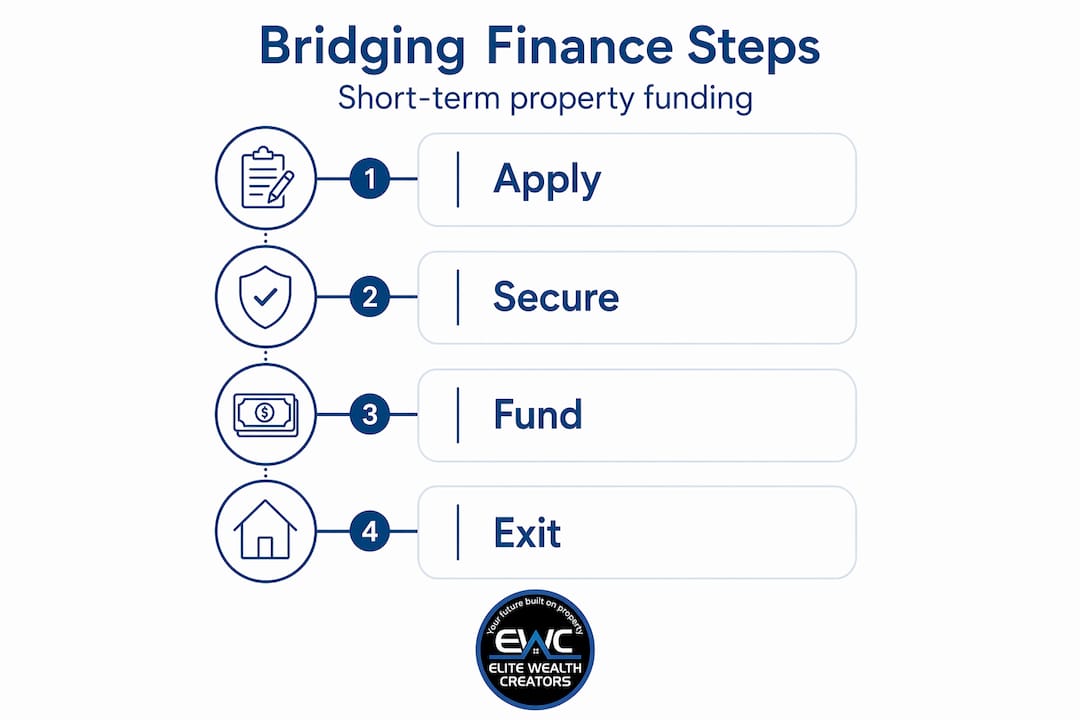
- How bridging finance works in practice
- Bridging finance vs other short-term options
- Practical tips for using bridging finance
- My take on bridging finance in the Australian market
- Ready to act with confidence?
- FAQ
Key takeaways
| Point | Details |
|---|---|
| Short-term by design | Bridging loans typically run from one to 24 months, making them a temporary rather than permanent solution. |
| Speed is the core advantage | Straightforward deals can be funded in as little as 24 to 72 hours, far faster than standard mortgage approval. |
| Exit strategy is non-negotiable | Lenders require a concrete, documented exit plan before approving any bridging facility. |
| Higher cost than a mortgage | Interest is priced monthly and rates are higher than long-term loans, so cost management matters. |
| Property security required | Bridging loans are secured against real property, with loan-to-value ratios typically capped at 70 to 80 per cent. |
What is bridging finance?
Bridging finance is a short-term, secured lending facility that covers a funding gap between two financial events — most commonly, the purchase of a new property before the sale of an existing one settles. You may also hear it called a bridge loan or bridging loan. The names are interchangeable, but the purpose is the same: provide fast access to capital when timing works against you.
Bridging loans typically last one to 24 months and can fund transactions in as little as 24 to 72 hours for straightforward cases. That speed is the defining feature. Standard mortgage applications can take weeks or months. Bridging finance collapses that timeline dramatically.
The loan is secured against property, which gives lenders the confidence to move quickly. Loan-to-value ratios are typically capped at 70 to 80 per cent, meaning you need genuine equity in an existing asset. Because the risk profile is different from a standard mortgage, interest rates are higher. Globally, monthly interest rates average around 0.82 per cent, which compounds quickly if the facility runs longer than planned.
Every bridging loan requires a clear exit strategy. This is how you will repay the facility. The two most common exits are the sale of an existing property or a refinance into a long-term mortgage. Without a credible exit, no reputable lender will proceed.
Pro Tip: Treat bridging finance as a precision instrument, not a fallback option. Use it only when you have a defined, evidence-backed exit and a firm property transaction in motion.
Types of bridging loans
Understanding the different structures helps you choose the right facility for your situation. The four key categories are:
Closed vs open bridging loans. A closed bridging loan has a fixed repayment date, usually because a property sale is already under contract and settlement is confirmed. An open bridging loan has a flexible repayment date, often used when a sale is expected but not yet contracted. Closed loans carry less risk for lenders and typically attract lower rates.
Regulated vs unregulated loans. Regulated bridging loans apply where the borrower or an immediate family member will live in the secured property. These carry stronger consumer protections. Unregulated loans apply to investment and commercial scenarios. In Q1 2026, 59 per cent of bridging loans globally were unregulated, reflecting the dominance of investor-driven activity.
Here is a clear comparison:
| Feature | Closed bridging loan | Open bridging loan |
|---|---|---|
| Repayment date | Fixed | Flexible |
| Interest rate | Generally lower | Generally higher |
| Best suited for | Confirmed property sale | Sale expected but not contracted |
| Lender risk | Lower | Higher |
| Documentation needed | Signed sale contract | Strong evidence of exit plan |
Pro Tip: If your property sale is already under contract, push for a closed bridging loan. You will almost always secure a better rate and faster approval.
How bridging finance works in practice
The process is more straightforward than most buyers expect. Here is how it typically unfolds:
- Application submitted. You approach a lender or broker with details of the property to be purchased, the security being offered, and your proposed exit strategy.
- Valuation and assessment. The lender orders a valuation of the security property and reviews your exit plan. For simple cases, this can be completed within 24 to 72 hours.
- Offer issued. Once satisfied, the lender issues a formal offer with interest rate, fees, term, and conditions.
- Funds released. You complete your property purchase. The bridging loan sits as a short-term liability against your security asset.
- Exit executed. You sell your existing property or refinance into a long-term mortgage, and the bridging loan is repaid in full including accrued interest and exit fees.
Interest on bridging loans is priced on a monthly basis, and fees including arrangement and exit charges are common. These costs accumulate, so a clean, timely exit is critical.
A clear and verifiable exit strategy is the single most important factor in bridging loan approval. Lenders expect repayment to be supported by a signed contract or a confirmed mortgage offer — not a best-case projection.
The consequences of a failed exit are serious. If you cannot repay on time, the lender may extend the facility at penalty rates, or in the worst case, move to recover their security. Weak or speculative exit strategies are the most common reason bridging applications fail.
Pro Tip: Never rely on a verbal agreement or an expected offer as your exit evidence. Lenders require documentation. Get the signed contract or the mortgage offer in writing before you apply.

Bridging finance vs other short-term options
Bridging finance is not the only short-term funding tool available, and it is not always the right one. Here is how it compares to the main alternatives:
| Feature | Bridging finance | Unsecured short-term loan | Revolving credit facility |
|---|---|---|---|
| Speed of access | 24 to 72 hours | 1 to 5 days | Pre-approved, immediate |
| Typical term | 1 to 24 months | 3 to 12 months | Ongoing |
| Security required | Yes (property) | No | Sometimes |
| Loan size | Large (property-scale) | Small to medium | Variable |
| Interest rate | Higher, monthly basis | Higher, but smaller amounts | Variable |
| Best for | Property transactions | Cash flow gaps | Business working capital |
Bridging finance suits scenarios where completion certainty is non-negotiable, property security is available, and a fixed deadline exists. When you are competing at auction or racing against a settlement date, no other short-term product delivers the same combination of speed and loan size.
Where bridging finance is the wrong choice:
- When your exit strategy is speculative or unconfirmed
- When the costs of the facility would erode your investment return to an unacceptable level
- When the amount needed is small enough to be covered by a revolving credit facility or personal loan
- When the property transaction timeline is long enough to allow conventional mortgage approval
Completion certainty outranks cost when deadlines are fixed. That is the central truth of bridging finance for property. If you need to exchange contracts by Friday and your long-term mortgage is still three weeks from formal approval, cost is secondary to certainty. You look at property finance options more broadly only when timing gives you the flexibility to do so.
Practical tips for using bridging finance
Getting bridging finance right comes down to preparation and discipline. Here is what experienced investors and buyers do differently:
- Document your exit before you apply. A signed sale contract or a formal mortgage offer in writing is your strongest asset in the application process. Lenders who see concrete exit evidence move faster and price better.
- Borrow only what you need. Interest accrues monthly on the full facility. Every dollar borrowed beyond necessity adds to the cost of your exit.
- Scrutinise all fees. Arrangement fees, valuation fees, legal fees, and exit charges are all standard. Understand the total cost of the facility before you sign, not after.
- Watch for aggressive lender tactics. Pressure to borrow more, hidden fees buried in the fine print, and unclear lender credentials are red flags. Work only with licensed, transparent providers.
- Use a qualified mortgage broker. A broker with bridging finance experience can structure the facility to minimise cost, match it to your specific exit, and identify lenders suited to your profile.
- SMSF trustees: seek specialist advice. Bridging finance within a self-managed super fund structure carries specific compliance obligations. The ATO’s rules on related-party lending and in-house assets are strict. An experienced adviser is not optional here. Explore SMSF property investment strategies with a specialist before committing to any facility.
Pro Tip: Ask every lender for a full fee schedule in writing before proceeding. If they hesitate, that tells you everything you need to know.
My take on bridging finance in the Australian market
I have watched buyers lose properties they genuinely wanted because they were waiting for the “perfect” financing alignment. It almost never comes. The Australian property market, particularly in growth corridors, does not slow down while you weigh your options.
In my experience, the buyers who use bridging finance well share one trait: they have done the preparation before the deal presents itself. Their exit strategy is ready. Their security is identified. When the opportunity arrives, they act. The ones who hesitate, who treat bridging finance as a last resort rather than a planned tool, pay for it in missed acquisitions or rushed decisions under pressure.
The real value of bridging finance is not just the funding itself. It is the strategic flexibility it creates. When you can exchange contracts with confidence, knowing your finance is in place regardless of where your existing property sale sits, you negotiate from a position of strength. That is worth more than the cost of the facility in most competitive scenarios.
For SMSF trustees specifically, I would say this: the compliance complexity is real, but it is not a reason to avoid property altogether. It is a reason to get the right team around you before you commit to any short-term financing structure. The benefits of SMSF property are substantial when approached correctly.
— Nick
Ready to act with confidence?
At Elitewealthcreators, we work with Australian buyers, investors, and SMSF trustees who are done watching opportunities pass. Our team understands the exact scenarios where bridging finance creates a decisive edge, and where a different structure serves you better. We do not deal in generic advice. We build a financing plan around your specific property goals, timeline, and exit strategy. If you are ready to stop analysing and start acquiring, our property investing insights give you a practical starting point. We limit new client intake monthly to maintain the quality of advice our clients rely on. Spots are limited. If you are serious about your next move, now is the time to act.
FAQ
What is a bridging loan in simple terms?
A bridging loan is a short-term, property-secured facility that covers a funding gap between two transactions, typically the purchase of a new property before an existing one sells. It provides fast access to capital, usually within 24 to 72 hours for straightforward cases.
How does bridging finance differ from a mortgage?
A mortgage is a long-term loan used to purchase property, repaid over decades. Bridging finance is a short-term facility, typically lasting one to 24 months, designed to cover a temporary timing gap. Interest rates on bridging loans are higher and structured on a monthly basis rather than an annual rate.
What exit strategies do lenders accept for bridging loans?
Lenders accept two primary exit strategies: the confirmed sale of an existing property supported by a signed contract, or refinance into a long-term mortgage supported by a formal offer. Speculative or undocumented exits are consistently rejected.
Is bridging finance available for SMSF property purchases?
Bridging finance within an SMSF is possible but subject to strict compliance requirements under ATO rules, particularly around in-house assets and related-party lending. SMSF trustees should always engage a specialist adviser before structuring any short-term facility within the fund.
What loan-to-value ratio applies to bridging loans?
Bridging loans are typically capped at a loan-to-value ratio of 70 to 80 per cent of the security property’s assessed value. The average LTV in active bridging markets sits around 52 per cent, reflecting the fact that many borrowers hold significant equity in their security assets.