

TL;DR:
- Property values mainly increase when demand exceeds supply due to location, macroeconomic factors, and infrastructure growth.
- Improvements and renovations influence a property’s position within its market but do not override fundamental supply-demand dynamics.
Most people assume property values rise because of a fresh coat of paint, a renovated kitchen, or a new deck. That is a costly misconception. The real drivers of property value appreciation, the formal term used in real estate appraisal for the increase in an asset’s market-clearing price, are rooted in forces far beyond what any tradesperson can deliver. Understanding why property value appreciates means studying supply and demand, location economics, and macroeconomic conditions. Get this right, and your investment decisions shift from guesswork to strategy.
Key takeaways
| Point | Details |
|---|---|
| Supply and demand rule | When housing demand exceeds supply, market prices rise regardless of property condition. |
| Location drives lasting growth | Proximity to schools, transport, and employment centres consistently generates stronger appreciation over time. |
| Macro conditions matter | Interest rates and inflation shape buyer affordability, directly affecting how fast or slow values move. |
| Individual property still counts | Quality improvements and consistent maintenance determine where your property sits within the market’s price range. |
| Long-term view protects you | Short-term fluctuations are normal; strategic positioning across market cycles builds real wealth. |
Why property value appreciates: supply and demand first
Real estate appreciation results primarily from demand exceeding supply, not from property upkeep alone. That is the definition used by the Counselors of Real Estate, and it matters because most investors never fully internalise it.
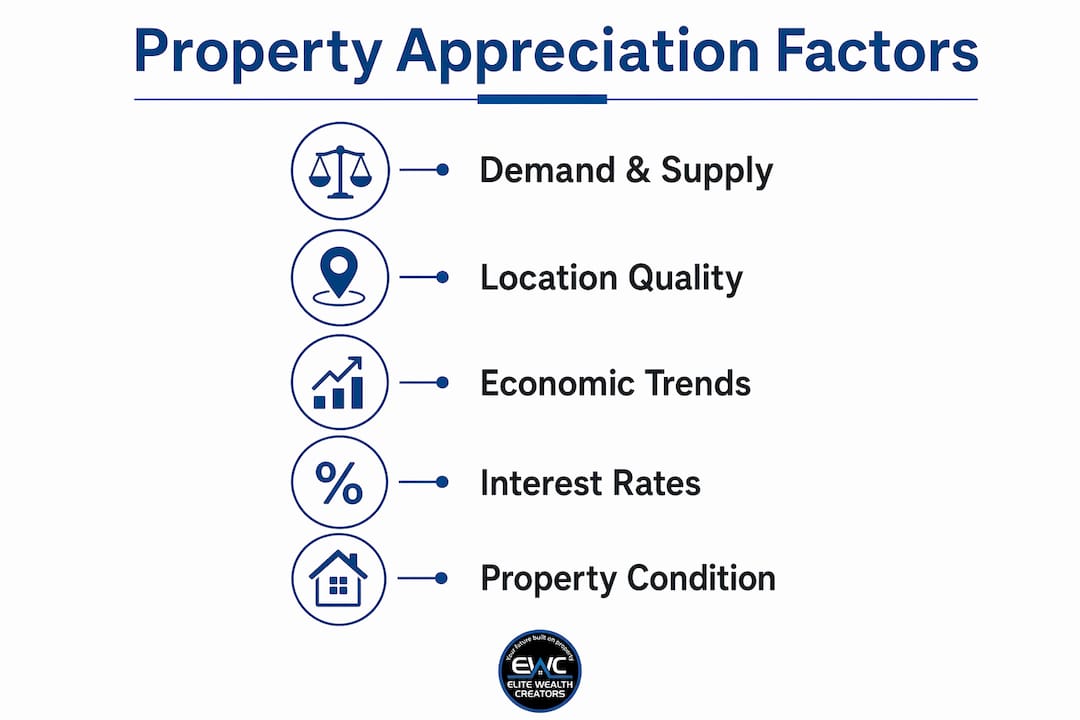
When more buyers compete for fewer properties, prices rise. Simple in theory. Complicated in practice because both sides of that equation are shaped by forces you cannot always see coming.
On the supply side, the constraints are structural and persistent:
- Limited buildable land in established urban areas
- Zoning restrictions that slow or block new residential development
- Labour shortages and material costs that delay construction timelines
- Existing homeowners choosing not to sell, which further tightens available stock
The inelastic housing supply due to zoning, land scarcity, and labour costs pushes prices higher because supply simply cannot keep pace with demand. This is not a short-term phenomenon. It is a structural feature of most Australian capital city markets.
On the demand side, growth is driven by:
- Population increases through natural growth and migration
- Job creation and wage growth in the local economy
- Lifestyle shifts that change where people want to live
- Investor appetite responding to yield and capital growth expectations
What many investors miss is that income composition and job types within a local labour market significantly affect appreciation rates. A suburb with growing numbers of high-income professional workers will see different price pressures than one dominated by lower-wage employment, even if both are experiencing population growth. This is the kind of demand-side analysis that separates informed investors from those chasing headlines.
You can track current property investment trends to identify which local labour markets are shifting in ways that signal future appreciation.
Pro Tip: Do not just look at population growth figures. Dig into what types of jobs are being created in the area. High-wage employment growth is a far stronger signal for price appreciation than raw population numbers.
Location’s real role in appreciation
The phrase “location, location, location” has been repeated so often it has lost its precision. Here is what it actually means in terms of property value increase reasons.
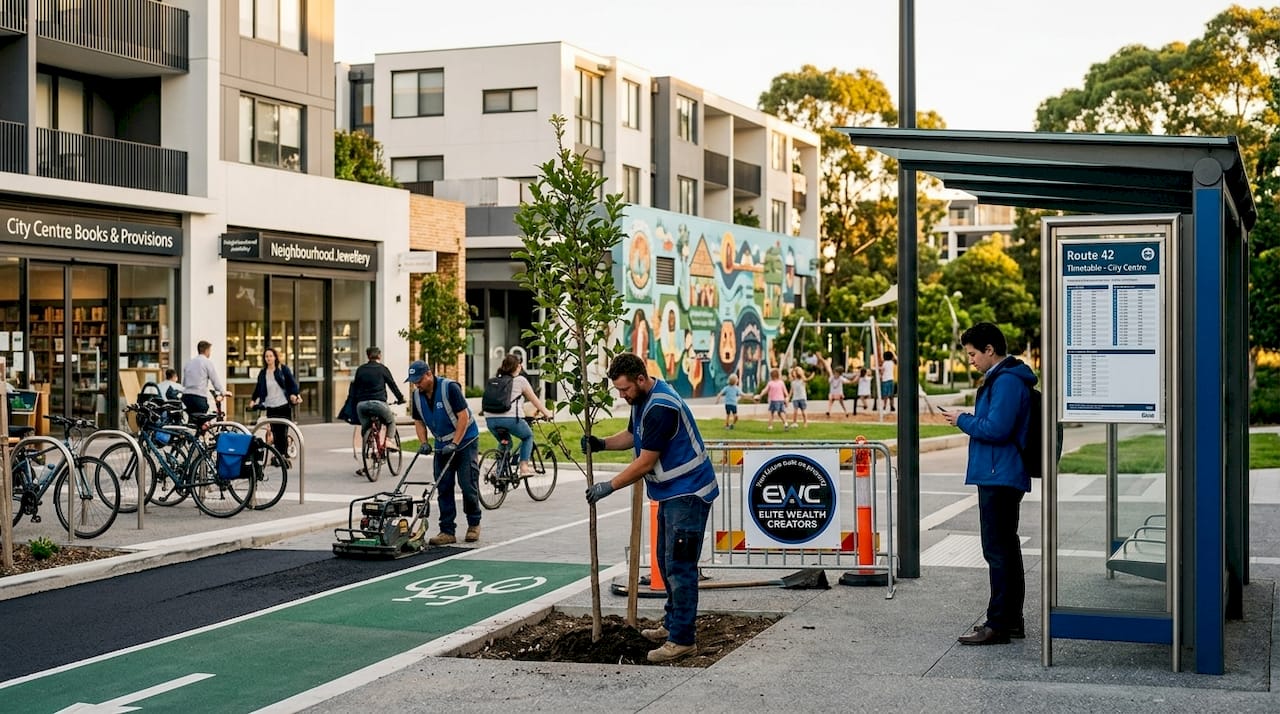
Proximity to schools, shops, green spaces, and transport increases demand and speeds up appreciation. Zillow data reported that 62% of buyers place very high value on walkability, which directly translates into price premiums in walkable neighbourhoods.
The table below shows how key location factors typically affect buyer demand and long-term value growth:
| Location factor | Impact on demand | Effect on appreciation |
|---|---|---|
| Top-rated schools nearby | High, attracts families consistently | Strong, sustained long-term growth |
| Walkable retail and dining | High, especially for younger buyers | Moderate to strong, particularly in urban areas |
| Public transport access | High, reduces car dependency costs | Strong in corridors with infrastructure investment |
| Parks and green spaces | Moderate to high | Steady appreciation premium |
| Proximity to major employment hubs | Very high | Often the strongest single appreciation driver |
What many investors overlook is the relationship between land and structure value. Land value appreciates over the long term while structures depreciate without reinvestment. This explains why two similar houses in different suburbs can produce dramatically different returns over a decade. You are not really buying a building. You are buying a position on a piece of land.
The economic health of the surrounding area compounds this effect. Infrastructure investment, such as new rail lines, motorway upgrades, or major employment precincts, can reshape a suburb’s desirability and push values up well ahead of completion. Identifying these catalysts early is one of the clearest advantages an informed investor can hold.
For a deeper look at how location intersects with capital growth in property, Elitewealthcreators has put together a thorough guide for Australian investors.
Interest rates, inflation, and what they do to prices
Macroeconomic conditions are not abstract. They directly affect how many people can afford to compete for the same property, and that competition is what sets prices.
Lower mortgage interest rates increase purchasing power and push demand higher, raising prices. When rates fall, buyers who were previously priced out re-enter the market. More buyers competing for the same stock pushes prices upward. When rates rise sharply, some buyers exit, reducing competition and slowing appreciation. This is why the Reserve Bank of Australia’s interest rate decisions have immediate ripple effects on property prices across the country.
Inflation adds a separate layer. Rising construction costs mean new supply becomes more expensive to deliver, which further constrains the pipeline of new homes. At the same time, property is widely regarded as an inflation hedge. When the purchasing power of cash declines, tangible assets including residential real estate tend to hold or grow their real value.
Lender policy also shapes the market in ways that are easy to underestimate. When credit conditions tighten, fewer buyers can access finance. When they loosen, more buyers enter the market. Lending standards, deposit requirements, and serviceability buffers all quietly influence how much demand the market can sustain at any given time.
Pro Tip: Watch the gap between what lenders are willing to approve and what buyers actually need to borrow. When that gap widens, you will see demand compress before prices follow. That lag is where patient investors find opportunity.
How property condition shapes individual results
Supply-demand dynamics and location set the price floor and ceiling for any given area. Your individual property’s condition determines exactly where within that range it sits. This distinction is one that experienced appraisers apply consistently when assessing value.
Think of the market as setting the rules of the game. Your property’s condition determines your score within those rules.
Specific factors that affect individual property value include:
- Livable space additions: A well-executed extension or granny flat can meaningfully increase buyer willingness to pay, particularly in high-demand areas where space is scarce.
- Energy efficiency upgrades: Solar panels, insulation improvements, and double glazing are increasingly valued by buyers who factor ongoing costs into their purchase decisions.
- Kitchen and bathroom quality: These remain the rooms buyers scrutinise most. Dated fittings signal deferred maintenance, which lowers perceived value.
- Structural integrity and ongoing maintenance: A property that has been consistently maintained holds its relative position in the market. One that has been neglected slides down the range, even as the broader market moves up.
- Street appeal: First impressions affect offer prices. Landscaping and facade presentation influence how buyers emotionally value a property before they walk through the door.
The contrast between land value and structure depreciation is stark. Without reinvestment, structures lose condition and relative appeal. This is why two properties on the same street can follow very different appreciation trajectories over ten years.
Renovation choices that genuinely add property value and ROI require understanding what the local buyer pool actually values, not what looks impressive in a renovation show.
Learn how to grow equity through improvements with Elitewealthcreators’ practical framework for Australian investors.
Market cycles, regional variation, and the long view
Property value appreciation is not a straight line. It never has been. The property appreciation timeline across Australian markets shows repeated cycles of growth, consolidation, and occasional decline, followed by recovery.
In Q1 2026, 71% of metro areas recorded price increases, with the strongest gains concentrated in markets where inventory shortages persisted. That same data shows how uneven appreciation can be. Markets without supply constraints experienced far more modest gains.
Regional differences matter enormously for investors. Consider the divergence between different Australian capital cities over the past decade. Some markets delivered consistent double-digit growth across multiple years, while others experienced flat or negative periods for sustained periods before recovering. Regional economic shifts, population trends, and infrastructure investment drive these divergences.
The table below illustrates how different market conditions affect appreciation outcomes:
| Market condition | Typical appreciation outcome | Investor implication |
|---|---|---|
| High demand, low supply | Strong price growth | Most favourable conditions for appreciation |
| High demand, rising supply | Moderate, stabilising growth | Values grow but at a slower pace |
| Low demand, low supply | Flat to modest growth | Limited upside unless demand catalyst emerges |
| Low demand, high supply | Flat or declining values | Significant risk; requires long holding period |
Experienced appraisers assess multiple market signals, including inventory levels, days on market, and sale-to-list-price ratios, rather than relying on a single indicator. You should do the same. A property in a market where homes are selling above asking price within days is sitting in a very different appreciation environment than one where listings linger for months.
The SMSF investors Elitewealthcreators works with often struggle here. They understand the tax benefits of property within their fund, but they freeze when it comes to choosing which market conditions actually support appreciation. You can explore how housing supply constraints are redirecting SMSF capital into residential markets, and what that means for your own positioning.
My take on what most investors get wrong
I have worked with enough investors to recognise a pattern. They spend months researching renovations, comparing finishes, and debating whether a second bathroom will attract better tenants. All of that has its place. But it is not what determines whether their portfolio grows over the next decade.
What actually moves the needle is understanding the supply-demand equation in the specific market you are buying into. A beautifully renovated property in an area with flat population growth, declining employment, and rising vacancy rates will underperform a tired but structurally sound property in a market where demand is structurally outpacing supply.
Market demand and supply dynamics primarily set price ceilings. Improvements help you capture more of what the market allows. Confuse the two, and you will over-capitalise in the wrong locations, or miss growth in the right ones because the property did not look polished enough.
The investors I have seen build real wealth are not paralysed by perfection. They back fundamentals, choose locations with structural demand tailwinds, and hold long enough to let compounding do its work. They also know when to act, because waiting for perfect conditions means watching other investors take the positions that should have been theirs.
Understanding the true drivers of appreciation is not academic. It is the difference between a portfolio that grows and one that stagnates.
— Nick
Ready to back your knowledge with action?
Understanding why property values appreciate is the first step. Knowing exactly where and when to act is where Elitewealthcreators delivers the edge that most investors never access on their own.
The Elitewealthcreators team analyses supply-demand conditions, local employment trends, and infrastructure pipelines to identify properties positioned for genuine appreciation, not just superficial appeal. Whether you are building your first investment portfolio, scaling an existing one, or managing property within an SMSF structure, there is a strategy that fits your position.
Explore smart property investment strategies built around the fundamentals covered in this article. If you are an SMSF investor, find out how to maximise SMSF property gains without triggering compliance risk. And if you already hold property, discover how to unlock your equity to fund your next move.
Spots for new clients are limited. The investors who act on what they know are already moving.
FAQ
What is the main reason property values rise?
Property appreciation is driven primarily by demand exceeding available housing supply, which pushes the market-clearing price upward. Location desirability, income growth, and infrastructure investment all strengthen this demand-side pressure.
Does renovating a property guarantee it will appreciate faster?
Renovations improve where your property sits within the local market’s price range, but they do not override market-wide supply and demand conditions. A well-maintained property in a high-demand location will outperform a renovated one in a stagnant market.
How do interest rates affect property appreciation?
Lower interest rates increase buyer borrowing capacity, which brings more purchasers into the market and drives prices higher. Rising rates have the opposite effect, reducing demand and slowing appreciation.
Why do some suburbs appreciate faster than others?
Regional differences in job creation, income growth, infrastructure investment, and housing supply constraints create uneven appreciation across suburbs. Markets where inventory shortages persist consistently record stronger price growth than those with adequate or oversupplied stock.
How long does it take to see meaningful property appreciation?
Property appreciation timelines vary by market cycle and location, but most financial advisers and experienced investors recommend a minimum holding period of seven to ten years to ride out short-term fluctuations and capture the compounding effect of sustained demand growth.