

Many Australian property investors hesitate to hire a property manager, viewing the fees as an unnecessary drain on rental income. Yet this perspective overlooks the comprehensive value professional managers deliver through expert tenant screening, proactive maintenance coordination, legal compliance, and strategic rent optimisation. A skilled property manager doesn’t just collect rent; they actively protect your asset, minimise vacancy periods, and maximise returns through local market knowledge and proven systems. This guide reveals exactly what property managers do, how their services justify the costs, and when hiring one becomes essential for building sustainable wealth through Australian real estate.
Table of Contents
- Key takeaways
- Understanding the core responsibilities of a property manager
- Costs of property management and value for money
- Navigating challenges: tenant disputes and legal compliance
- Weighing self-management versus hiring a property manager
- Explore expert property investment support
- Frequently asked questions about the role of a property manager
Key Takeaways
| Point | Details |
|---|---|
| Core manager duties | Property managers perform marketing, tenant screening, rent collection, maintenance, compliance and reporting to protect assets and maximise returns. |
| Fees and charges | Typical management fees range five to twelve per cent of rent, with letting fees one to two weeks’ rent. |
| Self management risks | Self management saves fees but increases risk of legal mistakes and stress for investors. |
| Market rent optimisation | Local market knowledge and systems help set competitive rents and capitalise on rent growth for well managed properties. |
Understanding the core responsibilities of a property manager
Property managers serve as the operational backbone of successful rental investments, handling far more than basic rent collection. Their role encompasses six critical functions that directly impact your investment returns and asset protection.
Property managers in Australia handle marketing and leasing properties, tenant screening and selection, rent collection and arrears management, routine inspections, maintenance coordination, legal compliance, and financial reporting. Each responsibility demands specialised knowledge and consistent attention that most investors struggle to provide whilst managing their primary careers and personal lives.
Marketing your property effectively requires understanding local rental demographics, pricing strategies, and presentation standards that attract quality tenants quickly. Professional managers leverage multiple listing platforms, professional photography, and targeted advertising to minimise vacancy periods. They conduct property viewings, answer enquiries promptly, and create competitive rental listings that stand out in crowded markets.
Tenant screening represents perhaps the most critical function, as one poor tenant can cost thousands in damages, legal fees, and lost rent. Managers verify employment history, conduct reference checks, review rental ledgers, and assess applicants against strict criteria. This systematic approach dramatically reduces the risk of problematic tenancies that plague amateur landlords.
Quality tenant screening is the foundation of successful property management. A thorough process that verifies income, references, and rental history prevents 90% of future tenancy problems.
Rent collection and arrears management ensure consistent cash flow whilst maintaining professional landlord-tenant boundaries. Managers implement automated payment systems, issue timely reminders, and follow escalation procedures for late payments. When arrears occur, they navigate the legal notice requirements and tribunal processes that many owners find overwhelming.
Routine inspections and maintenance coordination protect your asset value whilst ensuring tenant satisfaction. Quarterly inspections identify maintenance issues early, verify property condition, and document any concerns. Managers maintain networks of reliable tradespeople, obtain competitive quotes, and coordinate repairs efficiently. They also understand property manager duties in Australia regarding urgent versus non-urgent maintenance, balancing cost control with tenant rights.
Compliance with Australian tenancy legislation prevents costly legal disputes and penalties. Managers stay current with evolving regulations across different states and territories, ensuring lease agreements, bond lodgement, rent increases, and termination notices meet legal requirements. This expertise becomes invaluable during disputes or tribunal hearings.
Financial reporting provides owners with transparent records for tax purposes and investment analysis. Monthly statements detail income, expenses, and account balances whilst annual summaries simplify tax return preparation. This documentation proves essential for claiming deductions and demonstrating rental income to lenders.
Costs of property management and value for money
Understanding property management fees requires looking beyond simple percentages to evaluate the actual value delivered through reduced vacancy, optimised rents, and professional risk management.
Management fees typically range from 5-12% of weekly rent collected, with letting fees of 1-2 weeks’ rent when new tenancies commence. Regional areas often charge higher percentages due to smaller property portfolios and increased travel requirements. Metropolitan managers in Sydney, Melbourne, and Brisbane typically charge 6-8% for standard residential properties, whilst regional Queensland or Tasmania may command 10-12%.

Letting fees compensate managers for the intensive work involved in marketing properties, conducting viewings, screening applicants, and preparing lease documentation. These one-off charges apply each time a new tenant moves in, making tenant retention strategies financially beneficial for both owners and managers.
Additional fees may apply for specific services beyond standard management. These include tribunal representation, detailed property condition reports, lease renewal administration, or coordinating major maintenance projects. Transparent managers clearly outline all fees upfront, avoiding surprise charges that damage trust.
Pro Tip: Request detailed fee schedules and performance metrics from prospective managers. Ask specifically about their average vacancy rates, median days to lease, and percentage of tenancies that renew. These statistics reveal far more about value than fee percentages alone.
Expert analysis shows that low-fee managers often overload portfolios with 200+ properties per manager, leading to poor service quality, delayed maintenance responses, and higher vacancy rates. This penny-wise, pound-foolish approach ultimately costs owners more through lost rent and property deterioration than the fee savings deliver.
| Fee component | Typical range | What it covers |
|---|---|---|
| Management fee | 5-12% of rent | Ongoing tenant management, rent collection, inspections, maintenance coordination, compliance |
| Letting fee | 1-2 weeks’ rent | Marketing, viewings, tenant screening, lease preparation, bond lodgement |
| Lease renewal | $100-300 | Negotiating renewal terms, preparing new lease documentation |
| Tribunal representation | $500-1500 | Legal preparation and attendance at tenancy tribunal hearings |
Quality managers justify their fees by delivering measurable outcomes that directly impact your bottom line. They achieve market rents through strategic positioning and regular appraisals, maintain vacancy rates below 1% through proactive tenant retention, and reduce maintenance costs through preventative inspections and trusted tradesperson networks.
The value equation shifts dramatically when you factor in opportunity costs. Self-managing a property typically demands 10-15 hours monthly for a trouble-free tenancy, escalating to 30+ hours during tenant transitions or disputes. For professionals earning $50-150 per hour, this time investment quickly exceeds management fees whilst exposing you to legal risks that managers’ professional indemnity insurance covers.
Smart investors evaluate rental property management cost factors alongside performance metrics rather than selecting the cheapest option. A manager charging 8% who maintains 99% occupancy and achieves 4% annual rent growth delivers far superior returns than a 5% manager with 95% occupancy and stagnant rents.
Navigating challenges: tenant disputes and legal compliance
Even well-managed properties occasionally face tenant disputes, maintenance conflicts, or legal challenges that test a property manager’s expertise and problem-solving capabilities.
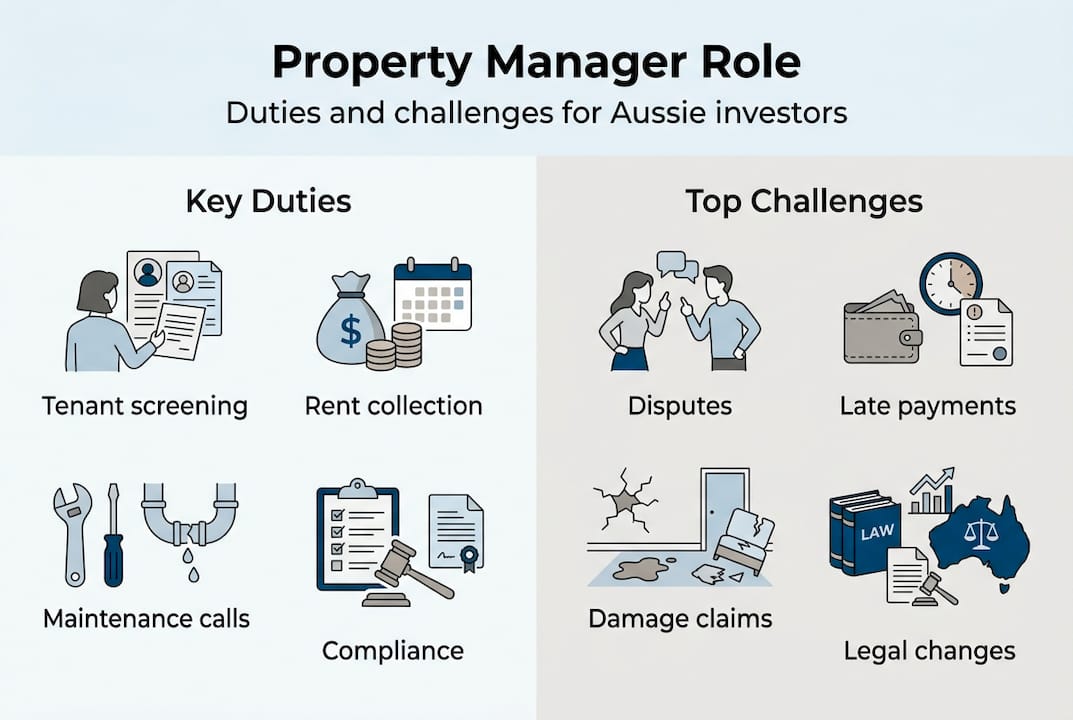
Common challenges include rent arrears, property damage beyond normal wear and tear, neighbour complaints, unauthorised occupants, and disputes over bond deductions. Each situation demands careful navigation of tenancy laws whilst protecting owner interests and maintaining professional relationships.
Resolving tenant disputes effectively requires a systematic approach:
- Listen carefully to all parties and gather complete information before forming conclusions or taking action.
- Investigate thoroughly by reviewing lease terms, inspection reports, photographic evidence, and communication records to establish facts.
- Communicate clearly with all stakeholders, explaining rights, responsibilities, and proposed solutions in plain language that avoids legal jargon.
- Document everything meticulously, as written records become crucial evidence if disputes escalate to tribunal hearings.
- Negotiate reasonable solutions that comply with legislation whilst addressing legitimate concerns from both owners and tenants.
- Escalate appropriately to state tribunals like NCAT in New South Wales or VCAT in Victoria when informal resolution fails.
Rent arrears represent the most common dispute, requiring prompt action to prevent escalating losses. Professional managers issue payment reminders immediately upon late payment, follow up with phone calls to understand circumstances, and issue formal breach notices when arrears exceed acceptable thresholds. They understand the specific notice periods and formats required in each state, ensuring legal validity whilst maintaining enforcement options.
Property damage disputes often arise during end-of-tenancy inspections when owners and tenants disagree about responsibility for repairs. Detailed entry and exit condition reports with photographic evidence prove essential for fair bond deduction decisions. Managers distinguish between normal wear and tear, which owners must accept, and tenant-caused damage requiring compensation.
Pro Tip: Proactive communication prevents most disputes from escalating. Quality managers conduct mid-lease check-ins, address minor maintenance promptly, and build rapport with tenants that encourages cooperation during challenging situations.
Legal compliance extends beyond dispute resolution to encompass all aspects of tenancy management. Australian states and territories maintain distinct residential tenancy acts with specific requirements for lease terms, rent increases, entry notices, and termination procedures. Managers stay current with legislative changes, ensuring your investment operations remain compliant whilst maximising your legal protections.
Maintenance responsibilities carry particular legal weight, as landlords must maintain properties in reasonable repair and comply with health and safety standards. Managers understand urgent repairs that require immediate attention, such as burst pipes or electrical faults, versus routine maintenance that can be scheduled normally. They also navigate the complex rules around managing tenant disputes legally when tenants request repairs that owners consider unnecessary or excessive.
Proactive risk management through thorough tenant screening and regular inspections prevents most serious disputes from arising. Managers who invest time in selecting quality tenants and maintaining properties consistently experience far fewer tribunal cases, bond disputes, and enforcement actions than those who prioritise speed over diligence.
Weighing self-management versus hiring a property manager
The decision between self-managing your rental property and engaging professional management represents a critical strategic choice that impacts returns, stress levels, and long-term investment success.
Self-management saves the 5-12% management fees but demands significant time investment, carries legal risks, and often results in emotional stress from direct tenant interactions. Property managers offer expertise, compliance assurance, and reduced vacancy but at ongoing cost. The optimal choice depends on your circumstances, skills, and investment strategy.
Self-management appeals to hands-on investors who enjoy property operations, live near their investments, and possess strong organisational skills. Successfully managing your own property requires understanding tenancy legislation, maintaining detailed records, responding promptly to tenant requests, and handling maintenance coordination efficiently. You’ll conduct property viewings, screen applicants, collect rent, arrange repairs, and manage disputes personally.
The financial savings appear attractive initially, but hidden costs quickly accumulate. Self-managers typically achieve longer vacancy periods due to limited marketing reach and slower response times. They often underprice rents through lack of market data or overprice them, extending vacancies further. Poor tenant screening leads to problematic tenancies that cost thousands in damages, legal fees, and lost rent. Legal mistakes around notices, bond handling, or discrimination can trigger tribunal penalties and compensation orders.
| Factor | Self-management | Professional management |
|---|---|---|
| Cost | Save 5-12% fees | Pay ongoing management fees |
| Time investment | 10-30+ hours monthly | Minimal owner involvement |
| Legal knowledge | Must self-educate on tenancy laws | Manager handles compliance |
| Tenant screening | Limited resources and experience | Professional systems and checks |
| Vacancy periods | Often 2-4 weeks longer | Typically under 2 weeks |
| Stress level | High, especially during disputes | Low, manager buffers issues |
| Market rent optimisation | Often suboptimal pricing | Regular appraisals and adjustments |
Professional management suits busy professionals, interstate investors, portfolio builders, and anyone uncomfortable with tenant confrontations or legal complexities. Managers provide emotional distance that proves invaluable during difficult situations, maintaining professional boundaries whilst you preserve your mental energy for wealth-building activities.
The expertise gap matters enormously in tight rental markets where tenant selection and rent optimisation directly impact returns. Professional managers understand local market nuances, seasonal demand patterns, and competitive positioning that amateur landlords struggle to match. Their established tradesperson networks deliver faster, more cost-effective maintenance than owners sourcing contractors ad hoc.
Investors building substantial portfolios almost universally engage professional management as self-managing multiple properties becomes unsustainable. The systems, processes, and scale advantages that managers offer become increasingly valuable as your holdings grow. Attempting to self-manage five or more properties typically results in declining service quality, missed opportunities, and burnout.
Consider self management versus professional property manager options by calculating your true hourly cost. If you earn $80 per hour in your profession and spend 15 hours monthly managing a property generating $2,000 rent, your time costs $1,200 versus a typical $160 management fee. The financial logic becomes compelling even before factoring in expertise gaps and stress reduction.
Hybrid approaches exist where owners handle tenant selection and lease signing but engage managers for ongoing rent collection, inspections, and maintenance coordination. These arrangements reduce fees whilst maintaining professional systems for routine operations. However, they require clear agreements about responsibility boundaries and may not deliver the full benefits of comprehensive management.
Explore expert property investment support
Maximising your rental property returns requires more than just capable management; it demands strategic investment planning that aligns property selection, financing structures, and portfolio growth with your wealth-building goals.
Elite Wealth Creators specialises in engineering financial freedom through precision property strategies tailored to Australian investors. Whether you’re building your first investment portfolio or optimising an established one, our team provides the strategic edge that transforms properties into genuine wealth engines. We offer property investing insights that go beyond surface-level advice to deliver actionable frameworks for sustainable growth.
Our exclusive advantages include instant liquidity solutions that unlock up to $100,000 from existing investment properties, providing capital for your next strategic acquisition without traditional refinancing delays. The Homepay Advantage allows you to build dream homes or investment properties with deferred interest payments, optimising cash flow exactly when you need it most.
For sophisticated investors, we provide comprehensive guidance on SMSF investment property benefits that leverage superannuation for tax-effective wealth accumulation. Our precision sourcing delivers off-market opportunities tailored specifically to your long-term strategy, accessing properties that never reach public listings. Discover how to unlock wealth with property through proven systems that have delivered impossible wins for Australian investors across every market condition.
Frequently asked questions about the role of a property manager
How do property managers set the right rent?
Property managers conduct comprehensive rental appraisals by analysing recent comparable lettings in your suburb, assessing property features and condition, and evaluating current market demand. They provide evidence-based recommendations that balance maximising income with minimising vacancy risk. Regular rental appraisals for income maximisation ensure rents track market movements.
What tenancy laws should landlords be aware of in Australia?
Landlords must comply with state-specific residential tenancy acts covering lease requirements, bond lodgement procedures, rent increase limitations, entry notice periods, and termination rules. Key areas include minimum housing standards, urgent repair obligations, discrimination prohibitions, and tribunal dispute processes. Professional managers maintain current knowledge as legislation evolves frequently.
Can a landlord switch property managers easily if unhappy?
Yes, management agreements typically require 30-60 days’ notice for termination by either party. Review your contract for specific notice periods and any exit fees. Ensure the new manager receives all tenancy documentation, bond records, and key sets. Inform tenants in writing about the management change and new contact details.
How do property managers help reduce property vacancy periods?
Managers minimise vacancies through professional photography and marketing across multiple platforms, prompt responses to enquiry calls and emails, flexible viewing schedules including evenings and weekends, and streamlined application processing. Their market knowledge also ensures competitive pricing that attracts quality tenants quickly without undervaluing your property.
Are property management fees tax deductible for Australian investors?
Yes, property management fees represent fully deductible expenses against your rental income for Australian tax purposes. This includes ongoing management fees, letting fees, and other charges for services directly related to earning rental income. Keep detailed records and receipts for all management costs to support your annual tax return claims.