

TL;DR:
- Certified property valuers provide independent, legally recognized market value assessments, unlike agents’ estimates.
- Different valuation types, from desktop to full inspection, impact loan approval timelines and requirements.
- Understanding and preparing for valuations can improve bargaining power and streamline the property buying process.
Most Australian buyers walk into the property market believing a real estate agent’s price estimate is the same as a formal valuation. It is not, and this confusion can cost you tens of thousands of dollars. Whether you are a first home buyer trying to secure financing or an investor building a portfolio, understanding what a property appraiser (known in Australia as a valuer) actually does will directly shape your loan eligibility, your deposit requirements, and your negotiating position at the table. This guide breaks down the valuer’s role, the types of valuations available, and the practical steps you can take to use this knowledge to your advantage.
Table of Contents
- What does an appraiser do in Australian home buying?
- Types of property valuations and when they’re used
- How valuations influence loan eligibility and property price
- Practical tips for working with appraisers and getting the most value
- Why understanding valuations is the real edge for buyers and investors
- Next steps: Get expert support for your property journey
- Frequently asked questions
Key Takeaways
| Point | Details |
|---|---|
| Independent assessment matters | A certified valuer’s report provides an unbiased property value, crucial for fair buying and financing. |
| Know your valuation type | Understanding desktop, kerbside, and full valuations helps buyers avoid surprises and plan their finances. |
| Preparation is key | Presenting the property well and providing documentation can improve your valuation outcome. |
| Valuation impacts loan | The lender uses the valuer’s figure to set your borrowing limits and approval chances. |
What does an appraiser do in Australian home buying?
Now that you understand why the appraiser matters, let’s get specific about what they actually do.
In Australia, the term “appraiser” refers to a qualified property valuer, not simply someone who estimates prices. Certified Practising Valuer (CPV) or Residential Property Valuer (RPV) is the formal designation, both accredited by the Australian Property Institute (API). These are trained professionals bound by a code of conduct, ethical standards, and ongoing education requirements. Their assessments carry legal weight in ways that an agent’s estimate simply does not.
To become a CPV or RPV, a valuer must complete a recognised tertiary qualification in property or valuation, undertake a period of supervised practical experience, and pass a formal assessment by the API. This rigorous pathway ensures that the valuation you receive reflects genuine market expertise, not a sales target.
“A certified valuer’s assessment is an independent opinion of market value, prepared without any interest in the outcome of a sale or purchase. This independence is what makes it so powerful.”
Here is how valuers differ from real estate agents in practical terms:
- Real estate agents provide a sales appraisal, which is an estimate designed to attract a listing or set an asking price. It is not certified or legally binding.
- Certified valuers provide a formal report based on comparable sales, property condition, location, and market data. Lenders rely on this figure.
- Who engages the valuer? Typically the lender orders the valuation when you apply for a mortgage, but buyers can also commission an independent valuation before making an offer.
- When is a valuer called in? At loan application, before a major purchase, during a legal dispute, or when reviewing an investment portfolio.
Understanding property buying essentials means knowing which professionals to trust at each stage of your purchase. The valuer’s role is distinct from the role of a buyer’s agent, who negotiates on your behalf, but both are valuable allies.
Pro Tip: When choosing a valuer, confirm their API accreditation and check that they have recent, hands-on experience with your specific property type, whether that’s an apartment, rural block, or suburban house. Experience in your local market is just as important as formal credentials.
Types of property valuations and when they’re used
Understanding who the valuer is draws us naturally to their tools of the trade: the different types of valuations.
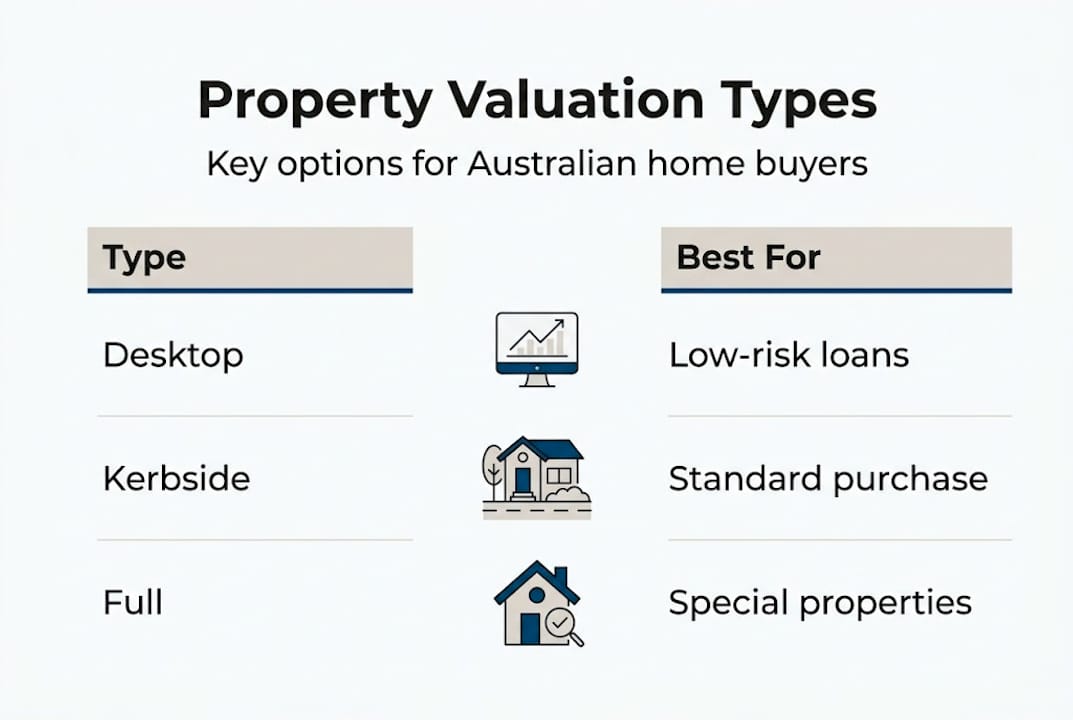
Not every valuation involves a full inspection. Valuation types range from desktop assessments with no physical inspection at all, through to detailed internal inspections. The method used depends on the lender’s risk appetite, the loan size, and the complexity of the property.
Here is a breakdown of the four main types:
- Desktop valuation: Completed entirely from the office using available data, council records, and recent comparable sales. No inspection occurs. It is quick and low cost, but carries higher margin for error.
- Kerbside valuation: The valuer views the exterior of the property only. They do not enter. This adds a layer of physical verification without the cost of a full inspection.
- Full valuation: The valuer inspects the interior and exterior thoroughly, reviews comparable sales, and prepares a detailed written report. This is the gold standard and is required for higher-risk lending scenarios.
- Automated Valuation Model (AVM): A data-driven algorithm that generates an estimate based on historical sales and property characteristics. Banks use AVMs for low-risk, straightforward refinances.
| Valuation type | Inspection level | Typical cost | Speed | Best used for |
|---|---|---|---|---|
| Desktop | None | Low | Fast | Low-risk refinances |
| Kerbside | External only | Moderate | Medium | Mid-range purchases |
| Full | Internal and external | Higher | Slower | High LVR, unique properties |
| AVM | Automated, no visit | Minimal | Very fast | Data-rich standard properties |
When you explore different ways to finance property, the valuation type required will often dictate your timeline. Similarly, if you are comparing investment property loans, understanding which valuation your lender requires can help you plan your cash flow and avoid delays.
Pro Tip: If your loan-to-value ratio (LVR) exceeds 80%, most lenders will insist on a full internal valuation. For unique or heritage-listed properties, always expect this level of scrutiny regardless of the loan size. Factor it into your purchase timeline.
How valuations influence loan eligibility and property price
With a grasp of valuation types, you’re likely asking: why do values matter so much to the bank and your bargaining position?

The answer is straightforward. The figure a certified valuer assigns to a property determines how much a lender will advance you, plain and simple. Lenders use valuations to assess their risk exposure. If a property is valued below the agreed purchase price, the lender will base your loan on the lower figure. That gap becomes your problem to solve, usually by increasing your deposit.
| Scenario | Purchase price | Valuation | Loan at 80% LVR | Gap you must cover |
|---|---|---|---|---|
| At value | $750,000 | $750,000 | $600,000 | $0 |
| Undervalued | $750,000 | $700,000 | $560,000 | $40,000 extra deposit |
| Overvalued | $750,000 | $780,000 | $624,000 | No gap (rare, beneficial) |
For first home buyers, an undervaluation can be devastating. Suddenly, the deposit you saved is no longer enough, and you may need to renegotiate the purchase price or walk away. For investors, it affects property buying steps and portfolio leverage calculations.
Here are the key actions to take if your valuation comes back low:
- Request the full report from your lender and review the comparable sales the valuer used.
- Gather evidence of recent, higher sales in the same suburb or street and present them formally.
- Commission an independent valuation to cross-check the lender’s result.
- Renegotiate the purchase price with the vendor, using the valuation as objective leverage.
- Explore a different lender, as some use different valuation panels and may reach a different figure.
One often-overlooked strategy is using boosting your home’s value before a valuation visit, particularly through landscaping and exterior presentation. Valuers absolutely factor in street appeal as part of their assessment. Review the key steps to property ownership to understand where the valuation fits within your overall purchasing roadmap.
Practical tips for working with appraisers and getting the most value
Now, put your knowledge into action with these practical steps for working smoothly with valuers.
CPV accreditation requires tertiary study and supervised experience, meaning valuers are trained to spot detail. How you present a property and the information you provide can legitimately influence the final figure within the bounds of an accurate assessment.
Here is a numbered checklist to follow before the valuer visits:
- Clean and declutter every room. First impressions count, even for professionals.
- Complete minor repairs. Leaking taps, cracked tiles, and broken fixtures signal deferred maintenance, which affects condition ratings.
- Compile a list of all renovations and improvements with dates, materials used, and approximate costs. Include permits where applicable.
- Prepare a folder of comparable recent sales from your suburb or nearby streets. Focus on sales within the last three to six months.
- Provide council rates notices and strata records if applicable, so the valuer has immediate access to accurate lot details.
- Be available but not intrusive. Let the valuer move freely through the property without pressure.
- Point out any improvements that may not be visually obvious, such as rewiring, insulation upgrades, or new plumbing.
If you disagree with a valuation outcome, you have options. You can formally request a review through the lender, providing your own evidence of comparable sales. You can also ask whether a different panel valuer can be assigned. Most lenders have a dispute process, and a well-prepared submission can shift the result.
For investors managing multiple assets, reviewing guides like the Australian Homes Guide helps you understand which property types attract stronger valuations and why. Knowledge of property types gives you a strategic edge when acquiring new assets.
Pro Tip: Provide written records of every improvement made to the property, including tradesperson invoices and before-and-after photos. Valuers can only credit what they can verify, and documentation removes ambiguity from their assessment.
Why understanding valuations is the real edge for buyers and investors
Most articles on this topic stop at explaining what a valuation is. We want to go further, because the readers who actually win in the Australian property market are those who treat the valuer’s report as a strategic instrument, not just a formality.
Here is an insight that seasoned investors understand but rarely share: the valuation is often more powerful after the deal than before it. Professional investors use a strong post-purchase valuation to release equity, fund the next acquisition, and accelerate portfolio growth without touching their original savings. This is not luck. It is the result of deliberate preparation, the right property type, and a clear understanding of what valuers reward.
First home buyers, by contrast, tend to treat the valuation as something that happens to them. Flipping that mindset, knowing how to prepare, what to provide, and how to challenge a result, turns a passive experience into an active one. It also reduces the anxiety that comes with waiting for a lender’s approval.
We have seen buyers lose their ideal property because a low valuation caught them off guard and they had no plan to respond. We have also seen buyer’s agent supported clients walk into valuations with comparable sales evidence already prepared, resulting in smoother approvals and faster settlement. Preparation is not a bonus step. It is the step that changes outcomes.
Next steps: Get expert support for your property journey
You now know how crucial the right property valuation is. Here’s how to put this insight to work with expert help.
At Elite Wealth Creators, we work alongside first home buyers and seasoned investors to make sure every stage of the property journey is handled with precision and confidence. From identifying the right property type for your goals to navigating lender requirements, our team brings the strategic edge that turns knowledge into results. Explore our Property Investing Insights to deepen your understanding of the Australian market. When you are ready to take action, book a consultation and let us build a personalised roadmap tailored to your financial goals.

Frequently asked questions
What is the difference between a property valuer and a real estate agent in Australia?
A valuer provides an independent, certified assessment of a property’s market value, while a real estate agent gives a sales-focused estimate to attract buyers or set a listing price. Only the valuer’s report carries legal weight with lenders.
When is a full valuation required in the home buying process?
A full internal valuation is required for high-risk or low-deposit loans, unique or heritage-listed properties, and any situation where the lender needs complete assurance of market value before approving finance.
How can I prepare for a property valuation as a buyer or investor?
Provide clear records of all upgrades and renovations, present the property in its best condition, and prepare a folder of comparable recent sales from your suburb to support the valuer’s assessment.
Does a valuation affect my ability to get a home loan?
Yes. Lenders use the valuation to determine your borrowing limit, set your loan amount, and decide whether your application is approved. A low valuation can reduce your borrowing capacity significantly.
Recommended
- Property buying essentials for first-timers in Australia | Elite Wealth Creators
- Key steps to property ownership for Australian buyers | Elite Wealth Creators
- Maximise rental income with effective appraisals | Elite Wealth Creators
- Buying Property: Tips for First-Home Buyers & Investors | Elite Wealth Creators