

Every property investor faces the challenge of balancing immediate cash flow goals with long-term wealth creation. The appeal goes beyond owning real estate, hinging on the power of generating rental income and capital growth while navigating a complex mix of financing, legal rules, and market conditions. This article clearly sets out the foundational concepts and practical considerations for building a profitable property portfolio in Australia.
Table of Contents
Key Takeaways
| Point | Details |
| Property Investment Fundamentals | It focuses on generating income through rental payments and capital appreciation, requiring strategic decision-making. |
| Types of Property Investments | Investors should understand the differences between residential, commercial, and specialised properties to align with their financial goals. |
| Financial Planning | Effective property investment requires careful cash flow management, including upfront costs, ongoing expenses, and tax implications. |
| Risk Management | Awareness of common risks and mistakes, like financial overextension and emotional investing, is essential for success in property investment. |
Property investment: definition and key concepts
Property investment represents a strategic approach to building wealth through real estate acquisition and management in Australia. At its core, it involves purchasing property with the primary objective of generating financial returns through capital growth and rental income.
Key characteristics of property investment include:
-
Generating Income: Earning regular rental payments from tenants
-
Capital Appreciation: Increasing property value over time
-
Long-term Wealth Creation: Building equity and financial assets
-
Potential Tax Benefits: Leveraging deductions and investment structures
Successful property investment requires understanding multiple financial dimensions. Investors must evaluate several critical factors before committing capital:
-
Market Location and Potential
-
Property Type and Condition
-
Potential Rental Yields
-
Financing Options
-
Long-term Investment Strategy
Property investment is not just about buying real estate—it’s about making informed, strategic decisions that align with your financial goals.
The Australian property investment landscape is complex and nuanced. Different states and territories present unique opportunities and challenges, influenced by local economic conditions, population growth, and infrastructure development. Investors must conduct thorough research and potentially seek professional guidance to navigate these intricacies effectively.
Pro tip: Always conduct comprehensive due diligence and consider consulting a professional property investment advisor before making significant financial commitments.
Australian property investment types explained
Australian property investment offers diverse strategies for wealth creation, with each investment type presenting unique opportunities and challenges. Strategic property selection remains crucial to achieving financial success in the real estate market.
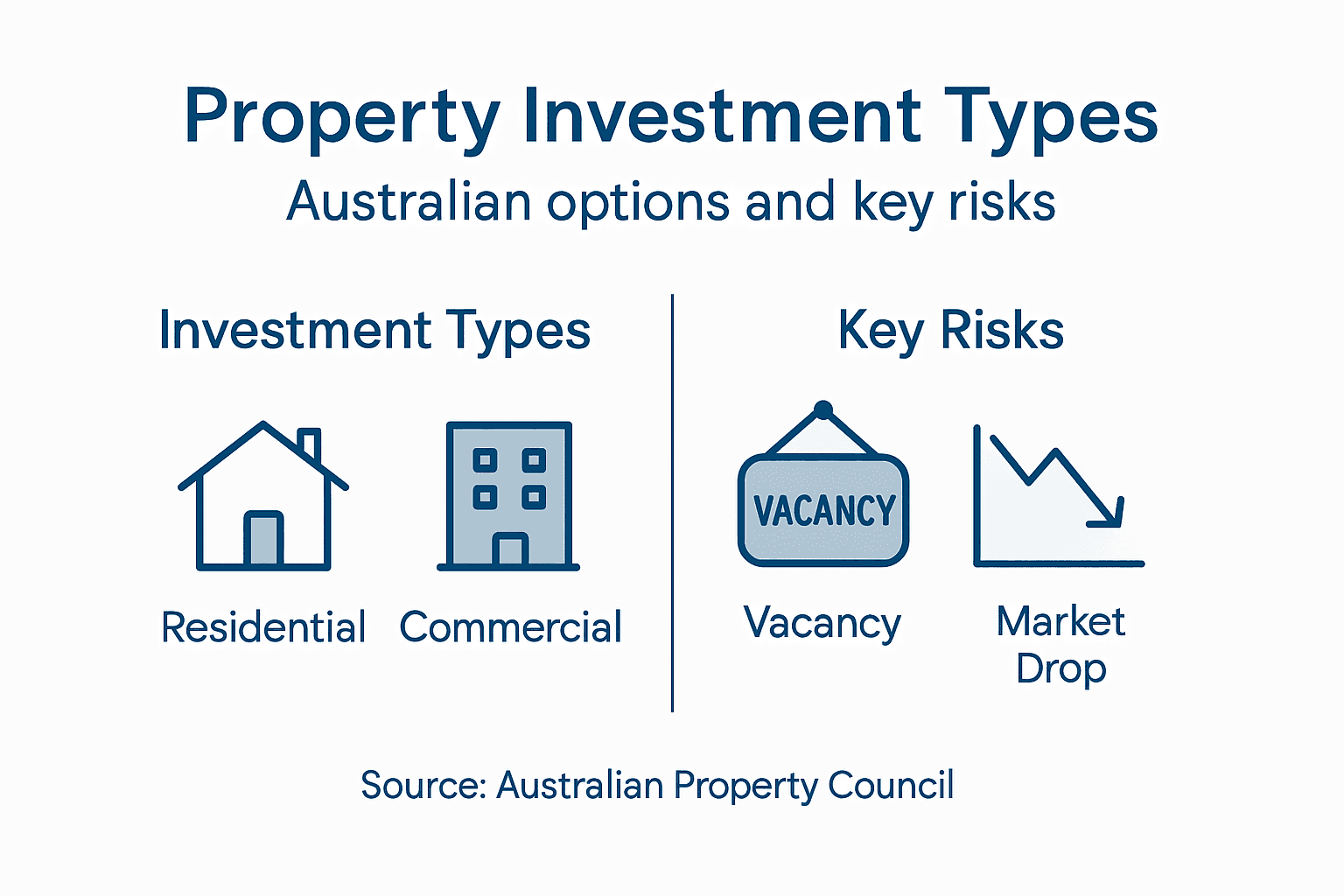
The primary property investment types in Australia include:
-
Residential Properties
-
Standalone houses
-
Apartments and units
-
Townhouses
-
-
Commercial Properties
-
Office spaces
-
Retail premises
-
Industrial warehouses
-
-
Specialised Investment Properties
-
Student accommodation
-
Serviced apartments
-
Healthcare facilities
-
Each property type offers distinct advantages and requires different investment approaches. Residential properties typically provide more stable rental income and potential for consistent capital growth, while commercial properties often deliver higher rental yields but come with more complex management requirements.
Successful property investment is about understanding the unique characteristics of each property type and aligning them with your financial goals.
Investors must consider multiple factors when selecting a property type, including:
-
Personal investment goals
-
Available capital
-
Risk tolerance
-
Local market conditions
-
Potential for capital appreciation
-
Ongoing maintenance costs
Understanding the nuances of each property type enables investors to make informed decisions that maximise potential returns and minimise risks in the Australian property market.
Here’s a comparison of major Australian property investment types to help guide your strategy:
| Property Type | Typical Returns | Management Required | Suitability |
| Residential | Moderate, stable growth | Low to moderate | Long-term investors |
| Commercial | Higher yield potential | Complex, hands-on | Experienced investors |
| Specialised (e.g. student, healthcare) | Variable, niche markets | Specialised knowledge needed | Targeted, informed investors |
Pro tip: Diversify your property investment portfolio across different property types to spread risk and optimise potential returns.
How property investment works in practice
Property investment in Australia requires a strategic approach that goes beyond simply purchasing real estate. Maximising investment potential involves understanding the intricate mechanics of property acquisition, management, and wealth creation.
The practical process of property investment typically unfolds through several key stages:
-
Property Acquisition
-
Market research
-
Financial assessment
-
Property selection
-
Due diligence
-
-
Financing Strategy
-
Mortgage evaluation
-
Loan structuring
-
Deposit requirements
-
Leveraging equity
-
-
Income Generation
-
Rental market analysis
-
Tenant screening
-
Rental pricing
-
Property management
-
Rental income and capital appreciation form the two primary mechanisms of wealth creation in property investment. Investors generate ongoing revenue through tenant rent while simultaneously building equity as property values increase over time.
Successful property investment is a long-term strategy that requires patience, research, and strategic financial planning.
The practical mechanics of property investment involve multiple critical considerations:
-
Initial capital requirements
-
Ongoing maintenance costs
-
Tax implications
-
Market trend analysis
-
Risk management strategies
-
Exit strategy planning
Investors must develop a comprehensive understanding of market dynamics, financial leveraging, and property management to transform real estate from a simple asset into a powerful wealth-building tool.

Pro tip: Develop a detailed investment strategy that accounts for potential market fluctuations and aligns with your long-term financial objectives.
Legal rules for property investors and SMSFs
Australian property investment involves navigating a complex legal landscape with specific regulations for different investor types. Comprehensive SMSF compliance guidelines are critical for investors seeking to maximise their investment potential while remaining within legal boundaries.
Key legal considerations for property investors include:
-
Foreign Investment Regulations
-
FIRB approval requirements
-
Restrictions on established dwelling purchases
-
Reporting obligations
-
-
SMSF Specific Rules
-
Sole purpose test compliance
-
In-house asset restrictions
-
Limited recourse borrowing arrangements
-
-
Taxation Frameworks
-
Capital gains tax implications
-
Negative and positive gearing rules
-
Rental income reporting
-
Self-Managed Super Funds (SMSFs) face particularly stringent legal requirements. The Australian Taxation Office mandates that these investment vehicles must be structured exclusively to provide retirement benefits, with strict guidelines governing property acquisitions and management.
Legal compliance is not optional—it’s the foundation of sustainable and successful property investment.
Investors must understand and adhere to multiple legal obligations:
-
Obtaining necessary investment approvals
-
Maintaining proper documentation
-
Complying with ATO regulations
-
Understanding borrowing limitations
-
Managing potential conflicts of interest
-
Regularly reviewing investment strategy
Successful property investment requires a proactive approach to legal compliance, ensuring that every investment decision aligns with regulatory requirements and long-term financial objectives.
Pro tip: Consult with a qualified legal and financial professional who specialises in property investment to navigate complex regulatory landscapes effectively.
Costs, taxes, and cash flow considerations
Property investment demands comprehensive financial planning, with strategic cash flow management being crucial to long-term success. Investors must carefully navigate the complex landscape of upfront expenses, ongoing costs, and potential tax implications.
Key financial components of property investment include:
-
Upfront Expenses
-
Stamp duty
-
Legal fees
-
Loan establishment costs
-
Building and pest inspections
-
-
Ongoing Costs
-
Property management fees
-
Maintenance expenses
-
Insurance premiums
-
Council rates
-
Utility charges
-
-
Tax Considerations
-
Rental income taxation
-
Capital gains tax
-
Depreciation deductions
-
Negative and positive gearing impacts
-
Negative gearing represents a significant tax strategy where investment property expenses exceed rental income, potentially creating tax deductions. This approach can provide financial advantages for strategic investors willing to absorb short-term losses for long-term gains.
Effective cash flow management transforms property investment from a financial burden into a wealth-creation mechanism.
Investors must carefully balance multiple financial considerations:
-
Ensuring rental income covers mortgage repayments
-
Maintaining adequate financial buffers
-
Understanding tax implications
-
Tracking all deductible expenses
-
Planning for potential vacancy periods
-
Regularly reviewing investment performance
Successful property investment requires a holistic approach to financial management, combining strategic tax planning with robust cash flow analysis.
The following table summarises key costs and their impact on property investment outcomes:
| Cost Category | Example Cost | Impact on Cash Flow |
| Upfront | Stamp duty, legal fees | Reduces initial capital |
| Ongoing | Maintenance, insurance | Continuous financial outlay |
| Tax-related | CGT, negative gearing | Affects net investment return |
Pro tip: Maintain detailed financial records and consult a qualified tax professional to maximise potential deductions and investment efficiency.
Risks and mistakes to avoid in property investment
Property investment requires strategic thinking and careful risk management. Understanding potential investment pitfalls is crucial for protecting your financial future and maximising returns.
Common risks and mistakes in property investment include:
-
Financial Overextension
-
Insufficient cash reserves
-
Overleveraging investment properties
-
Inadequate financial buffers
-
-
Market Misunderstandings
-
Neglecting thorough market research
-
Buying in declining suburbs
-
Ignoring local economic indicators
-
-
Investment Strategy Errors
-
Emotional decision-making
-
Lack of long-term planning
-
Failing to diversify portfolio
-
Emotional investing represents one of the most significant risks, where investors make decisions based on impulse rather than comprehensive financial analysis. Successful property investors maintain a disciplined, data-driven approach to property selection and management.
Property investment success is determined by strategic planning, not luck.
Investors must actively mitigate potential risks through:
-
Comprehensive market research
-
Maintaining substantial financial reserves
-
Regular portfolio performance review
-
Professional financial advice
-
Staying informed about market trends
-
Understanding personal risk tolerance
Each property investment decision carries inherent risks, but a systematic approach and continuous learning can significantly reduce potential negative outcomes.
Pro tip: Always conduct independent due diligence and never rely solely on a single source of investment advice.
Take Control of Your Australian Property Investment Journey
Navigating the complexities of property investment in Australia requires more than just knowledge of capital growth and rental income. Many investors face challenges such as managing financing strategies, understanding tax implications, and selecting properties that align with long-term wealth goals. If you are seeking precision sourcing, exclusive opportunities, and innovative financial solutions to unlock your investment potential, Elite Wealth Creators is here to help.
Explore our tailored services in the Investors & Owner Occupied category and discover how our Homepay advantage and instant liquidity options can transform your cash flow. Don’t wait to turn your property ambitions into real wealth. Visit Elite Wealth Creators today and start engineering your financial freedom.
Frequently Asked Questions
What is property investment in Australia?
Property investment in Australia involves purchasing real estate with the aim of generating financial returns through rental income and capital appreciation. It is a strategic approach to building wealth over time.
What are the different types of property investments available?
The main types of property investments in Australia include residential properties (houses, apartments, townhouses), commercial properties (office spaces, retail premises), and specialised properties (student accommodations, healthcare facilities).
What should I consider before investing in property?
Key considerations before investing in property include evaluating market location, property type and condition, potential rental yields, financing options, and your long-term investment strategy.
How can I manage cash flow effectively in property investment?
Effective cash flow management in property investment involves ensuring rental income covers mortgage payments, maintaining adequate financial buffers, understanding tax implications, and tracking deductible expenses.