

TL;DR:
- 2026 offers opportunities for disciplined buyers due to rising rental demand and limited supply.
- Successful investors focus on quality assets, strong fundamentals, and long-term holding strategies.
- Proper preparation, including research, financial buffers, and understanding market dynamics, is essential.
Navigating the Australian property market as a first home buyer or seasoned investor can feel like reading a map with half the roads missing. Prices shift, interest rates move, and the difference between a sound purchase and a costly mistake often comes down to preparation. The good news is that 2026 presents genuine opportunities for those who approach the market with clarity and discipline. This guide walks you through the current market landscape, the tools you need, and the step-by-step process to buy with confidence, whether you are acquiring your first home or expanding a growing portfolio.
Table of Contents
- Understanding the 2026 Australian property market
- Building your property investment toolkit: Requirements and research
- Executing your first or next property purchase: Step-by-step process
- Strategic frameworks for long-term real estate growth
- Common mistakes and advanced tips for the 2026 market
- What most property guides miss: Hard-won lessons for 2026
- Take your property investment journey further with expert support
- Frequently asked questions
Key Takeaways
| Point | Details |
|---|---|
| Know the market | Australia’s 2026 property market is segmented; understanding where and what to buy is crucial. |
| Prepare and research | Build your investment toolkit and use solid research before making decisions or purchases. |
| Follow proven steps | A clear procedure from pre-approval to settlement greatly increases your chances of success. |
| Think long-term | Building buffers and prioritising quality property delivers sustainable growth over time. |
| Avoid common errors | Steer clear of emotional buying, over-leverage, and always budget for all potential costs. |
Understanding the 2026 Australian property market
Before you commit a single dollar, you need to understand the terrain. The 2026 market is not uniform. It rewards informed buyers and punishes those who rely on gut instinct alone.
According to the Australian property market outlook Q1 2026, the national vacancy rate sits between 1.1% and 1.4%, with Perth recording an extraordinary 0.6% and Adelaide and Brisbane holding at 0.8%. These figures signal intense rental demand and limited supply, which directly supports landlord returns. Gross rental yields nationally average around 4.0%, though Perth is pushing up to 6% in select suburbs. The 2026 property trends data confirms that yields above 4.5% represent the sweet spot for cash flow positive investing.
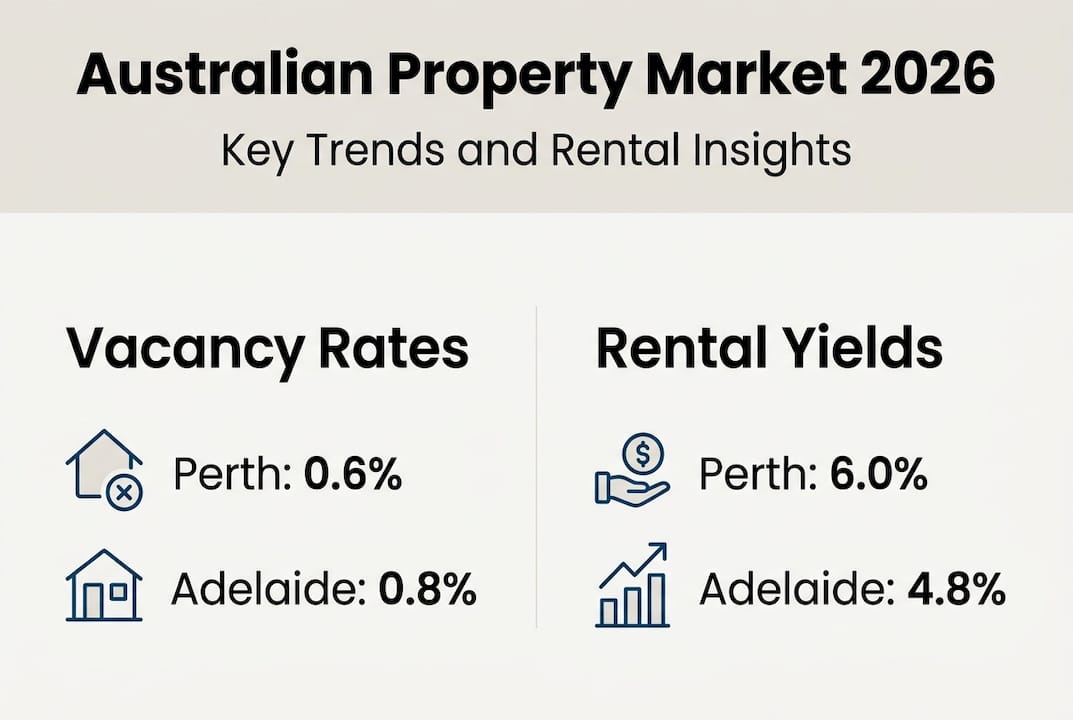
| City | Vacancy rate | Gross rental yield |
|---|---|---|
| Perth | 0.6% | Up to 6.0% |
| Adelaide | 0.8% | ~4.8% |
| Brisbane | 0.8% | ~4.6% |
| National average | 1.1-1.4% | ~4.0% |
National resale profits are at a remarkable high, with 95.9% of sales returning a profit and a median gain of $365,000. Price growth is forecast at 4 to 6% nationally, down from 2025’s strong 8.6%, but still meaningful for long-term wealth building.
The market is operating in two distinct speeds. Western Australia and residential dwellings lead the pack, scoring 8.7 and 7.3 out of 10 respectively on the API performance index. Outer affordability zones, by contrast, carry more risk as serviceability pressures mount. Key factors shaping your decisions right now include:
- Interest rate movements and their effect on borrowing capacity
- The gap between inner and outer ring suburb performance
- Rental demand driven by population growth and constrained supply
- The shift away from commercial and unit-heavy markets toward residential houses
For deeper context on navigating rental decisions, the rental property tips resource offers practical guidance on maximising returns in this environment. A complete property investment guide is also worth reviewing to benchmark your knowledge before moving forward.
Once you have a sense of the current market, it is vital to build your property investing toolkit before jumping in.
Building your property investment toolkit: Requirements and research
Knowing the market is one thing. Being ready to act on it is another. The investors who move with speed and confidence do so because they have prepared their toolkit well in advance.

The property investment complete guide outlines the core steps every buyer must work through: researching suburbs based on supply and demand balance, demographics, and owner-occupier ratios; shortlisting properties against clear criteria like land size and proximity to infrastructure; and conducting thorough pre-purchase inspections. Establishing fair value through comparable sales is non-negotiable, as is understanding whether a property will be sold by private treaty or auction.
Key prerequisites before you begin your search:
- A savings buffer covering your deposit plus at least 10% for purchase costs
- Finance pre-approval from a lender who understands investment structures
- Access to suburb-level data tools for yield, vacancy, and growth trends
- A shortlisting checklist that filters properties by your non-negotiables
- Clarity on your ownership structure (individual, joint, trust, or SMSF)
| Research factor | Why it matters |
|---|---|
| Owner-occupier ratio | Higher ratios signal stronger capital growth potential |
| Supply vs demand | Low vacancy drives rental yield and reduces risk |
| Infrastructure pipeline | Future amenity lifts long-term property values |
| Comparable sales | Anchors your offer price to market reality |
Government support remains available for eligible first home buyers in 2026. Grants of up to $15,000 in VIC are on offer, with similar schemes across other states. These can meaningfully reduce the upfront burden when combined with a disciplined savings plan. Stamp duty concessions and the First Home Guarantee scheme also reduce the deposit threshold for eligible buyers.
Pro Tip: Before you inspect a single property, define your investment criteria in writing. Include your target yield, preferred suburb profile, and maximum purchase price. This prevents emotional decision-making when you find a property that feels right but does not stack up financially.
For a structured starting point, the property buying essentials resource and first-home buyer tips page cover the foundational steps in practical detail. The investment commandments from Michael Yardney are also worth bookmarking as a strategic reference.
With your toolkit ready, it is time to move through the step-by-step investment process, from search to settlement.
Executing your first or next property purchase: Step-by-step process
Buying property in Australia follows a clear sequence. Deviating from it, or skipping steps under pressure, is where costly errors occur.
- Secure finance pre-approval. Know your borrowing capacity before you search. Pre-approval gives you negotiating confidence and sets a realistic price ceiling.
- Define your target market. Use your research toolkit to narrow your focus to two or three suburbs that meet your yield and growth criteria.
- Inspect and shortlist. Attend open homes with a checklist. Look beyond cosmetic presentation and assess structural integrity, zoning, and neighbourhood demand drivers.
- Conduct due diligence. Commission a building and pest inspection. Review the contract of sale with a solicitor before signing anything.
- Negotiate or bid. Understand the difference between private treaty and auction processes. Each requires a different negotiation approach and level of preparation.
- Exchange contracts. Pay your deposit (typically 10%) and enter the cooling-off period if applicable. Review all conditions carefully.
- Prepare for settlement. Arrange your final loan documents, building insurance, and a pre-settlement inspection to confirm the property’s condition.
- Settle and take ownership. Your solicitor or conveyancer manages the transfer of funds and title. Budget for stamp duty, legal fees, and loan establishment costs.
“Saving a 5 to 20% deposit while budgeting for LMI, stamp duty, and ongoing costs is a foundational requirement for every Australian property buyer in 2026.” Property investment complete guide
Pro Tip: Always factor Lenders Mortgage Insurance (LMI) into your budget if your deposit is below 20%. LMI can add thousands to your upfront costs, but it can also allow you to enter the market sooner and capture growth while you would otherwise still be saving.
For a detailed walkthrough of each milestone, the buying property step by step guide and property ownership steps resource provide practical checklists. The property investment checklist is also a reliable reference to keep handy throughout the process.
Completing your purchase is just the beginning. Understanding how to create long-term wealth and avoid common errors is the real differentiator.
Strategic frameworks for long-term real estate growth
Buying a property is an event. Building wealth through property is a discipline. The investors who consistently outperform the market follow proven frameworks rather than chasing headlines.
The 10 commandments of property investment highlight several core methodologies worth internalising. Buying below replacement cost protects your downside. Value-adding through strategic renovations, particularly bathrooms which can lift yield by 10 to 30%, manufactures equity rather than waiting passively for growth. Holding long term allows compounding to do the heavy lifting: a $500,000 property growing at 7% per annum becomes $1.4 million in 15 years.
Negative gearing and the capital gains tax discount remain powerful tools for Australian investors, particularly those in higher income brackets. Used correctly, they reduce your tax liability while you build equity. However, they should support a sound investment decision, not justify a poor one.
Key strategic principles for 2026:
- Prioritise investment-grade properties in inner and middle ring suburbs where scarcity and owner-occupier demand drive consistent growth
- Build financial buffers of at least three to six months of holding costs before purchasing
- Avoid over-diversifying across too many markets before mastering one
- Focus on properties with genuine scarcity, not those reliant on population migration or government infrastructure promises
- Treat holding power as your greatest strategic asset in a higher-for-longer interest rate environment
The creating financial security resource explores how to structure your portfolio for resilience, not just growth. The updated strategies for 2026 article is also essential reading for anyone whose investment approach has not evolved with the market.
By mastering these frameworks, you are equipped for resilient growth. But even experienced investors make critical mistakes. Avoiding them is what separates good outcomes from great ones.
Common mistakes and advanced tips for the 2026 market
The 2026 market is unforgiving of avoidable errors. The good news is that most mistakes follow predictable patterns, which means you can plan around them.
The 10 commandments of property investment identify the most damaging behaviours: emotional buying based on personal taste rather than investment merit, purchasing in outer suburbs reliant on migration-driven demand, and taking on excessive leverage without adequate buffers. Vacancy should be budgeted at two to four weeks per year, and your cash reserves should cover at least 10% of the purchase price in holding costs.
Common mistakes to avoid:
- Buying off-plan in new estates where supply can outpace demand rapidly
- Ignoring SMSF compliance rules, particularly related-party transaction restrictions
- Underestimating the impact of rate rises on serviceability and cash flow
- Treating outer ring suburbs as equivalent to inner ring in terms of growth potential
- Speculating on short-term price movements rather than focusing on long-term compounding
“Sophisticated investors are increasingly shifting from direct multi-property ownership to managed trusts and funds, seeking diversification and protection from rising land tax and regulatory complexity.” The new property playbook
Pro Tip: If you are considering a property flipping strategy, understand that the 2026 market rewards patient, strategic holds far more than quick resales. Transaction costs alone can erode short-term gains significantly.
The property rules 2026 resource is essential reading for anyone pivoting their strategy in response to shifting rates and demand patterns.
Having covered both proven frameworks and the latest market-specific strategies, here are the hard-won truths the experts rarely share.
What most property guides miss: Hard-won lessons for 2026
Most property guides focus on timing. Buy when rates are low. Sell before the peak. Wait for the correction. The reality is that the investors who build lasting wealth rarely get the timing perfect. What they get right is quality and holding power.
The obsession with market timing distracts from the variables that actually matter: the quality of the asset, the strength of the location’s fundamentals, and your financial capacity to hold through inevitable downturns. A small move in interest rates, say 0.5%, can shift your annual holding costs by thousands of dollars. Most investors underestimate this impact until they feel it.
Our view, shaped by watching countless investors succeed and stumble, is that the trends for 2026 matter less than your ability to hold a quality asset through them. The market will always create noise. Your strategy should be built to absorb it, not react to it. Compounding, patience, and disciplined purchasing decisions are the real engines of property wealth.
Take your property investment journey further with expert support
If this guide has clarified your thinking, the next step is applying it with the right support behind you. At Elite Wealth Creators, we work with first home buyers and experienced investors to build strategies that are grounded in current market data and tailored to your financial goals. Whether you need guidance on structuring your first purchase or want to explore our SMSF property investment guide for advanced portfolio building, we are here to help. Access our latest property investing insights or take the first step toward unlocking wealth with property by connecting with our team today.
Frequently asked questions
What is the minimum deposit needed to invest in Australian property in 2026?
Most lenders require a deposit of 5 to 20%, but you must also budget for LMI if your deposit is below 20%, plus stamp duty and other purchase costs.
What ongoing costs do I need to consider as a property investor?
Beyond your mortgage, budget for council rates, property management fees, maintenance, landlord insurance, and periods of vacancy each year, typically two to four weeks.
How can I maximise my rental yield in Australia?
Targeting high-demand, low-vacancy suburbs and making value-adding renovations such as bathroom upgrades can lift your rental yield by 10 to 30%.
Are there government grants available for first home buyers in 2026?
Yes, state-based grants of up to $15,000 in VIC are available, with similar schemes in other states, alongside stamp duty concessions and federal deposit guarantee programmes.
What is the biggest mistake to avoid as a new property investor?
Emotional buying and insufficient financial buffers are the most common traps. Prioritise holding power over timing and ensure your reserves can sustain you through market fluctuations.