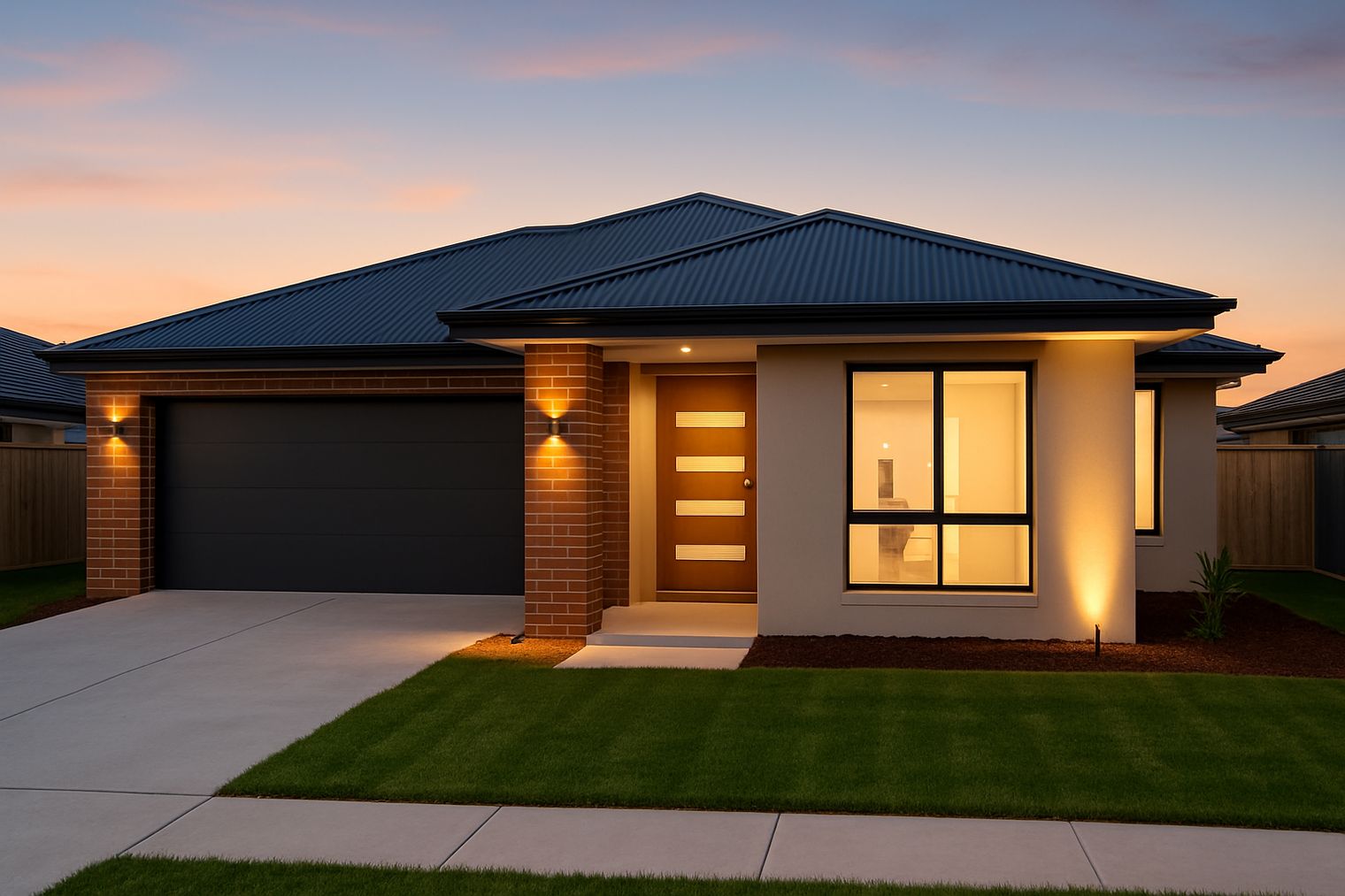
You are comparing two properties. One is a brick veneer from the 1980s in a suburb you know well. The other is a new house-and-land package in a growing corridor. The older one feels familiar. But once you look at the tax position, the maintenance exposure, and the stamp duty treatment side by side, the picture shifts.
The Tax Depreciation Difference
Australian tax law draws a hard line between new and established investment properties, and it generally favours new builds.
Under Division 43 of the Income Tax Assessment Act 1997, capital works deductions are typically claimed at a rate of 2.5 per cent over the life of the property, 40 years, from the construction completion date. That clock starts fresh with a new build, so you capture the full 40 years. Buy a 20-year-old property and you are inheriting whatever remains of that clock.
The second layer is plant and equipment, covered by Division 40. This is where new builds pull further ahead. Purchasers of second-hand residential properties who bought after 9 May 2017 remain ineligible to claim depreciation on existing plant and equipment assets like dishwashers or blinds. You can claim the decline in value of new depreciating assets, including those purchased with a newly built or substantially renovated property, provided no one was previously entitled to a deduction for the decline in value, and either no one resided at the property before you acquired it, or the asset was installed for use at the property and you acquired it within 6 months of it being newly built.
In practical terms, a new build gives you both streams, structural and plant and equipment, while an established property often gives you only the structural remainder. A qualified quantity surveyor can prepare a depreciation schedule that itemises both, and that fee is itself tax-deductible per the ATO (ato.gov.au).
Stamp Duty: Where New Builds Get Another Edge
For investor-purchasers, stamp duty is payable at standard rates regardless of property age in most states. The advantage for new builds appears most clearly for owner-occupiers and first home buyers, but it is worth understanding because it affects the pool of end buyers when you eventually sell.
Several state governments have recently shifted concessions firmly toward new construction:
- Queensland: Starting 1 May 2025, first home buyers are exempt from transfer duty when purchasing newly constructed homes or vacant land for building purposes. First home buyers in Queensland receive a full stamp duty exemption when purchasing or building a new home, with no value cap. This replaces the previous tiered concession system.
- New South Wales: In 2025, first-home buyers do not pay any stamp duty on homes up to $800,000, with concessions applying for homes up to $1 million.
- South Australia: The key feature, and critical limitation, is that relief applies only to new homes. Unlike NSW, Victoria, and Queensland, SA first home buyers purchasing established properties receive no stamp duty concession whatsoever.
- Victoria: First-home buyers in Victoria pay no stamp duty on homes up to $600,000, and pay a discounted rate on homes up to $750,000. Off-the-plan buyers can deduct the cost of construction work occurring after the contract date, which can significantly reduce the property's taxable value.
For investors, this matters because a new build property tends to have a wider pool of potential buyers at resale, including first home buyers who face lower entry costs on new stock.
The Practical Trade-offs
New builds are not without drawbacks. It is worth being honest about the full picture.
What typically works in favour of a new build:
- Maximum depreciation from day one, across both Division 40 and Division 43.
- Lower maintenance costs in the early years, warranties on structure, fixtures, and appliances.
- Compliance with current building codes (energy efficiency, accessibility), which matters for rental demand and insurance.
- Broader buyer pool at resale, particularly in states where stamp duty relief is tied to new construction.
What to weigh carefully:
- New builds in growth corridors can carry a premium above comparable established stock. That premium takes time to be absorbed by the market.
- Construction delays affect your cash flow timeline. Your rental income and depreciation clock do not start until the property is completed and tenanted.
- Rental yield on new outer-ring properties can differ meaningfully from inner-ring established stock. Get an independent rental appraisal before committing, do not rely on developer estimates.
- Body corporate fees on new apartments and townhouses can be substantial and reduce net yield. Review the strata budget carefully.
A Worked Example
Consider two hypothetical properties, each purchased for $650,000 in the same financial year.
Property A: 25-year-old established house. Construction was completed in 2000. Only 15 years of Division 43 deductions remain (40 years minus 25 elapsed). No plant and equipment depreciation is claimable on the existing fixtures due to the post-2017 rules.
Property B: New house-and-land package. Construction cost estimated at $380,000 by a quantity surveyor. Division 43 claim: $380,000 × 2.5% = $9,500 per year for 40 years. Plant and equipment (carpets, hot water system, oven, blinds, etc.) adds a further deductible amount in the first years under Division 40, often several thousand dollars annually on a new property.
At a marginal tax rate of 37%, the Division 43 deduction alone on Property B generates roughly $3,515 in tax relief per year, before plant and equipment is counted. Property A's remaining Division 43 entitlement would be based on its original construction cost, which a quantity surveyor would need to estimate, and at 25 years in, that pool is substantially depleted.
These figures are illustrative only. Actual deductions depend on the verified construction cost, which only a qualified quantity surveyor can confirm.
What to Do Next
If you are comparing new versus established options, three things are worth doing before you sign anything:
Get a depreciation estimate on the specific property. A quantity surveyor can provide a preliminary indication of likely annual deductions for a new build based on the construction cost. For an established property, they can assess what, if anything, remains claimable. This is general information to help you compare, actual tax outcomes depend on your individual circumstances and should be confirmed with a registered tax agent.
Confirm the stamp duty position in your state. Thresholds and concessions are updated regularly by state revenue offices. Check the relevant revenue office website directly or speak with a solicitor or conveyancer who works in your purchase state.
Talk to a licensed broker about your finance structure. The tax benefits of depreciation only flow if your loan and ownership structure are set up correctly from the start. A broker can also walk you through options like HomePay, EWC's Build Now Pay Later product, which allows zero monthly payments for the first 12 months during construction before standard repayments begin.
To explore which property types suit your situation, visit our services page or book a call with the EWC team.
General information only, not personal financial advice. Speak with a licensed adviser before acting.