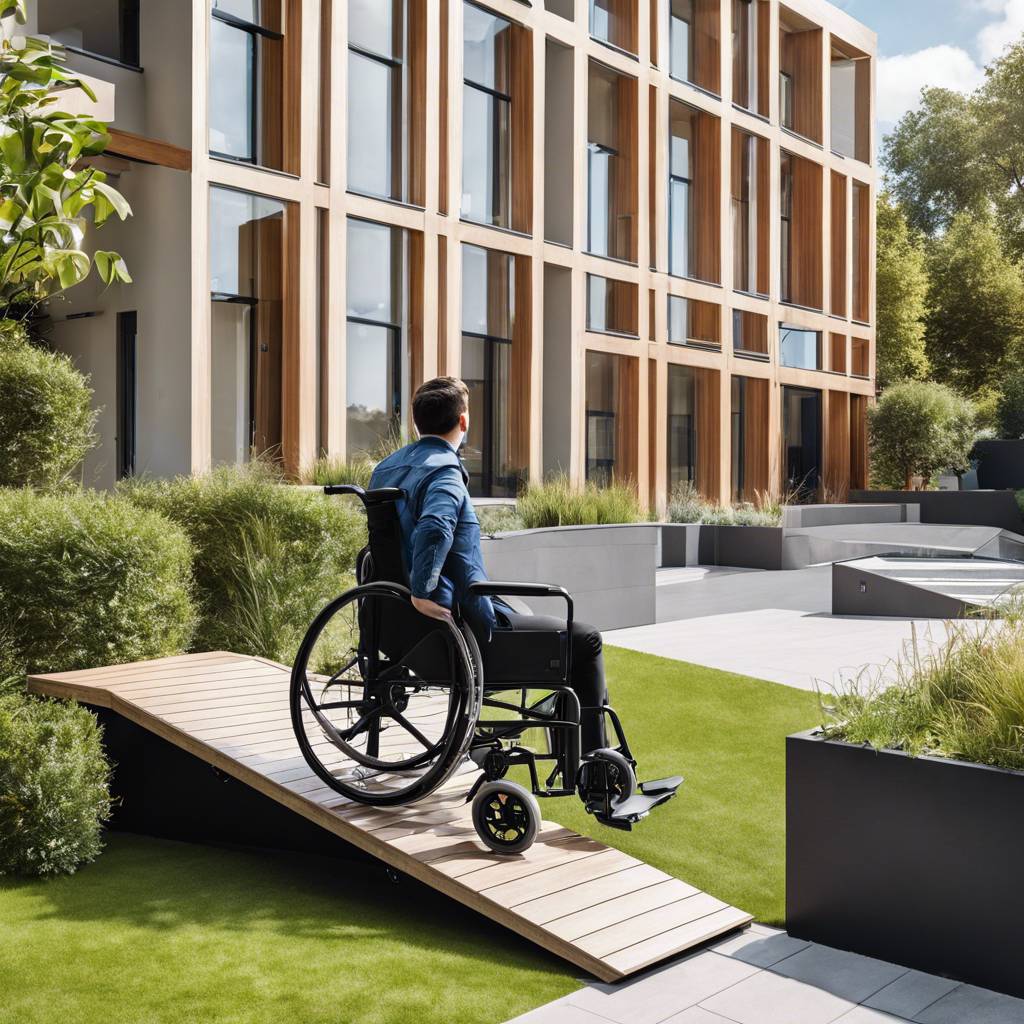
NDIS property is one of the most aggressively marketed strategies in Australian property investment, and one of the most widely misunderstood. The pitch usually arrives as a yield number and a line about social impact. What is almost always missing is the part that determines whether the investment works: who actually lives in these dwellings, how the money is paid, and what happens when a home sits empty.
This guide covers the mechanics. It is written for investors weighing SDA against other strategies, not as a sales piece for one of them. Some of what follows is unflattering to the sector.
”NDIS property” and SDA are not the same thing
This is the single most important distinction, and the one most marketing blurs.
The National Disability Insurance Scheme funds a wide range of supports for Australians with disability. Most NDIS participants live in ordinary housing: private rentals, their own homes, or with family. A property rented to someone who happens to be an NDIS participant is simply a residential rental. It earns market rent and carries market risk.
Specialist Disability Accommodation (SDA) is a specific, separately funded category of housing. It is purpose designed and built for participants with extreme functional impairment or very high support needs, and it attracts a dedicated SDA payment from the National Disability Insurance Agency on top of rent. That payment is what produces the elevated yields the sector advertises.
When someone offers you an “NDIS investment property”, the first question is whether the dwelling is genuinely SDA enrolled and SDA eligible, or whether it is a standard house being marketed with NDIS language attached. Those are entirely different assets with entirely different economics.
The eligible population is small, and that is the whole risk
SDA funding is not available to most NDIS participants. It is reserved for those whose support needs cannot reasonably be met in mainstream housing. The eligible cohort is a small fraction of total scheme participants, numbering in the tens of thousands nationally rather than the hundreds of thousands.
That matters more than any yield figure, because it means demand for your specific dwelling is not “people who need housing”. It is “SDA funded participants, with your dwelling’s design category, who want to live in your suburb, and who choose your home over the alternatives”.
In a well matched location that is a workable market. In an oversupplied one it is a very thin market, and a thin market is what turns an advertised yield into a vacant asset.
The four SDA design categories
SDA dwellings are built and enrolled against defined design standards. The category determines both who can live there and what the dwelling is paid.
- Improved Liveability. Improved physical access and enhanced provision for people with sensory, intellectual or cognitive impairment. The lowest support tier of the four.
- Fully Accessible. Full wheelchair access throughout the dwelling.
- Robust. Resilient construction, designed to reduce the risk of damage and to be safe for the resident and the people around them, typically for participants with complex behaviours.
- High Physical Support. The highest tier, for participants needing very high levels of support, with provision for assistive technology, ceiling hoists, structural allowances and similar.
Higher categories attract higher SDA payments, and also cost materially more to build and maintain. A High Physical Support dwelling is not a normal house with grab rails. The build specification is fundamentally different, and so is the capital cost.
How the income actually works
An SDA dwelling generates income from two separate sources, and they behave very differently.
1. The SDA payment. Paid by the NDIA in respect of an enrolled dwelling with an eligible participant living in it. The amount is set by the NDIS SDA Pricing Arrangements, not negotiated with a tenant. It varies by design category, building type (apartment, villa, duplex, townhouse, house, group home), the location’s SDA price area, and features such as fire sprinklers and provision for onsite overnight assistance.
2. The Reasonable Rent Contribution. Paid by the participant, calculated as a proportion of the Disability Support Pension plus any Commonwealth Rent Assistance they receive. This is the smaller of the two streams.
Two consequences follow, and both are routinely glossed over:
- The SDA payment follows the participant, not the property. If nobody eligible is living there, the payment is not being made. An empty SDA dwelling also produces far less than a standard rental would if re-let normally, because its purpose built features command no premium in the general rental market.
- The pricing arrangements are set by policy and are reviewed. The figures underpinning any projection you are shown can change. Model with current published figures, and understand what your position looks like if they move.
Anyone presenting SDA income to you as assured, or using language implying the rent is underwritten, is misrepresenting how the scheme works. Projections are projections. We do not use that framing, and you should treat it as a warning sign when others do.
What drives the return
Assuming a genuinely enrolled, well located dwelling, the variables that decide the outcome are:
Design category and building type. These set the payment. A High Physical Support villa and an Improved Liveability apartment are different businesses.
Location, at the SDA price area level. SDA pricing is geographically banded, and demand is local. Proximity to hospitals, allied health, transport and existing support provider networks is not a nice to have. It determines whether participants will actually choose to live there.
Vacancy assumptions. This is where most modelling is dishonest. Ask what vacancy rate the projection assumes, and what the outcome looks like at six or twelve months vacant. If the model cannot survive a realistic vacancy period, it is not a model, it is a brochure.
The provider relationship. Most investors engage a registered SDA provider to manage tenancy, participant matching and compliance. The quality of that provider is one of the largest single determinants of whether your dwelling is tenanted. Ask how long they have operated, how many dwellings they manage, and what their current portfolio vacancy rate actually is.
Build cost and quality. SDA specification adds real cost over a standard build. If the acquisition price does not reflect a genuine SDA build, you are paying an SDA price for a standard asset.
The risks, stated plainly
We would rather lose a deal than have a client discover these afterwards.
- Vacancy risk is the dominant risk. It is not comparable to standard residential vacancy. Re-tenanting depends on a small pool of eligible participants choosing your dwelling, and can take months.
- Concentration risk. In many SDA dwellings a large share of income depends on a very small number of residents. Losing one is not a marginal event.
- Resale is a thin market. A purpose built SDA dwelling appeals mainly to other SDA investors. That is a narrower buyer pool than a standard house in the same street, which affects both liquidity and exit price.
- Policy risk. SDA is a government funded programme. Pricing, eligibility and design requirements are subject to review and change.
- Compliance risk. Enrolment and design category certification must be correct. Errors here can affect the payment.
- Oversupply in specific locations. Capital moved into this sector quickly. Some markets now have more SDA dwellings than local eligible demand. This is location specific and needs checking property by property.
None of that makes SDA a bad investment. It makes it a specialist one, where the gap between a well selected dwelling and a poorly selected one is far wider than in standard residential.
How a location actually gets assessed
“Good area” is not an SDA assessment. The sector is geographically lumpy, and a suburb that works for a standard investment can be wrong for SDA while the suburb next door is right. What matters:
Existing supply within the catchment. Count the enrolled dwellings already in the area, by design category. Ten Improved Liveability dwellings nearby does not tell you much about demand for High Physical Support, and vice versa. Supply and demand have to be matched at the category level, not the postcode level.
Support infrastructure. SDA residents generally require ongoing support services. Distance to hospitals, allied health, and the operating footprint of support providers determines whether a participant can realistically live there. A dwelling an hour from services is a harder match regardless of its build quality.
Where participants already are. People rarely relocate far from family, carers and established support relationships. Demand is stickier and more local than in standard residential, which cuts both ways: harder to attract from outside, more durable once matched.
The price area band. SDA payments are banded geographically. Two dwellings of identical specification in different bands earn different amounts, which changes the entire return calculation. Confirm the band before modelling anything.
What happens when a resident leaves
This is the scenario to model properly, because it is the one that decides whether the investment holds up.
When a participant moves out, the SDA payment for that place stops. Re-tenanting is not a matter of listing the property. Your provider must identify an eligible participant whose funded design category matches the dwelling, who wants to live in that location, and for whom the placement is appropriate. That process can take weeks in a well matched market and many months in a poorly matched one.
During that period you are carrying the holding costs of a purpose built dwelling that cannot easily be let on the open market at a comparable rent. The features that make it valuable to an SDA resident do not add value for a standard tenant, and in some cases reduce the pool of interested renters.
Practical implications:
- Hold a cash buffer sized for a realistic vacancy period, not a best case one.
- Ask your provider for their actual average re-tenanting time, in writing.
- Understand who bears costs during vacancy under your provider agreement.
- Treat any model that assumes continuous occupancy as incomplete.
Questions to ask before you commit
If you are being shown an SDA opportunity, these questions separate a real asset from a marketed one:
- Is the dwelling SDA enrolled, or only “SDA eligible” in the vendor’s opinion?
- Which design category, and what certification supports that?
- What is the current SDA payment for this category, building type and price area under the current pricing arrangements?
- Who is the registered SDA provider, and what is their actual portfolio vacancy rate right now?
- How many SDA dwellings already exist within a reasonable radius, and what is the demonstrated local participant demand?
- What does the return look like with six months vacancy? With twelve?
- What is the build cost premium over a standard dwelling of the same size, and is that premium reflected in the price?
- Who would buy this property from me in ten years, and what would they pay?
If the answer to question 4 or 5 is vague, that is your answer.
NDIS, SDA and SMSFs
A large share of SDA marketing is aimed at self managed super funds, so the current policy position matters.
The proposed changes affecting Limited Recourse Borrowing Arrangements for residential property inside SMSFs, flagged for around August 2026, target the borrowing mechanism rather than an SMSF’s right to own property. Existing arrangements are expected to be grandfathered, and commercial property is not the target. We have written separately about what the August 2026 proposal actually says and about the structures that remain available.
Our practical position: if your SDA strategy only works because of a specific borrowing structure, you are carrying policy risk on top of the vacancy and concentration risk already inherent in the asset. That is a lot of risk stacked in one place.
Elite Wealth Creators is a property firm. We source, finance and coordinate property acquisitions. We are not your licensed financial adviser or your SMSF accountant, and SDA inside a super structure needs both. We work alongside yours, and if you do not have them we will tell you to get them before you buy, not after. There is more detail on our SMSF property finance page.
Where SDA sits against the alternatives
SDA is one strategy among several, and it is not automatically the strongest cash flow option. For investors whose primary goal is yield, compare it directly against:
- Co-living and rooming house models, which also target above average yield but draw on a much broader tenant pool.
- Duplex and dual occupancy developments, where two income streams come from one title and the resale market stays mainstream.
- Standard house and land in a growth corridor, where the return profile weights toward capital growth rather than yield.
The right answer depends on your borrowing capacity, time horizon, tolerance for vacancy, and whether you need income now or growth later. Anyone recommending SDA before asking those questions is selling stock, not advising you. Our services overview sets out how the strategies compare.
How we approach it
We do not maintain a public catalogue of SDA stock, and we do not treat SDA as a default strategy. When a client brief genuinely suits it, we assess dwellings on the criteria above, particularly local participant demand and provider vacancy history, and we model returns with realistic vacancy assumptions rather than best case ones.
If SDA is not the right fit for your position, we will say so and show you what is.
Book a strategy call and we will work through where SDA sits in your plan, or whether it belongs there at all. Fifteen minutes, no cost, no obligation.
General information only. This article does not take account of your objectives, financial situation or needs, and is not financial, legal or tax advice. SDA pricing, eligibility and design requirements are set by the NDIS and are subject to change; confirm current figures before relying on any projection. Rental and SDA income figures are projections, not assured outcomes. Seek advice from appropriately licensed professionals before investing.