

TL;DR:
- Understanding and improving net yield is crucial for determining true rental profitability in Australia.
- Strategies such as rigorous tenant screening, reducing vacancy periods, making targeted upgrades, controlling costs, and adding ancillary income can significantly boost actual returns without relying solely on rent increases.
Most landlords know their gross rental yield. Far fewer know their net yield, and that gap is where real money disappears. The most effective ways to increase rental yield go well beyond raising rent. They involve tightening vacancy periods, screening tenants rigorously, making targeted improvements, and managing your cost base with the same discipline you apply to income. This guide cuts straight to the strategies that move the needle on your actual after-tax returns in the Australian market right now.
Table of Contents
- Key takeaways
- 1. Ways to increase rental yield: understand net yield first
- 2. Screen tenants professionally to protect income
- 3. Reduce vacancy periods to protect annual yield
- 4. Price rent strategically using market data
- 5. Make targeted upgrades that justify a rent premium
- 6. Control costs and use tax strategies to lift net returns
- 7. Improve tenant retention as a yield multiplier
- 8. Add ancillary income streams without major capital expense
- My take on what actually moves the needle
- How Elitewealthcreators helps you increase property earnings
- FAQ
Key takeaways
| Point | Details |
|---|---|
| Net yield is the real measure | Gross yield flatters your returns; net yield after expenses and vacancy tells the true story. |
| Vacancy is a silent killer | A single vacant month erases approximately 8.3% of your annual rental income. |
| Tenant screening pays dividends | Professional screening reduces eviction rates by up to 74%, protecting income stability. |
| Targeted upgrades beat full renovations | In-unit laundry and kitchen refreshes deliver far stronger ROI than costly full remodels. |
| Ancillary income adds up fast | Pet fees, parking, and storage can add $50 to $300 per month without major capital outlay. |
1. Ways to increase rental yield: understand net yield first
Before you apply any strategy, you need to measure the right thing. Gross rental yield is simply annual rent divided by property value. It is a useful starting point, but it is not your actual return. Net yield tells the true story by accounting for all operating expenses, vacancy periods, and management fees.
Here is how the three yield types compare:
| Yield type | What it measures | What it excludes |
|---|---|---|
| Gross yield | Annual rent ÷ property value | All expenses, vacancy |
| Net yield | Income minus expenses ÷ property value | Tax treatment |
| After-tax yield | Net yield adjusted for tax | N/A — most accurate measure |
As one UK analysis demonstrated, net yield vs gross yield can differ so significantly that a seemingly profitable property produces a pre-tax loss once expenses and voids are accounted for. The same risk applies to Australian investors who base acquisition decisions on gross yield figures alone.
The key expenses that compress your net yield include:
- Property management fees (typically 7 to 12% of rent in Australia)
- Maintenance, repairs, and council rates
- Insurance, land tax, and body corporate fees
- Vacancy periods between tenancies
Once you know your net yield baseline, every strategy below has a precise target: widen that gap between income and outgoings.
2. Screen tenants professionally to protect income
This is the lever most landlords underestimate. A bad tenant does not just cause stress. They eliminate months of income through non-payment, property damage, and eviction proceedings. Professionally screened tenants have an eviction rate of 4.1% compared to 15.8% for unscreened applicants. That is a 74% reduction in eviction risk.
A thorough screening process covers:
- Credit history and debt obligations
- Rental history and references from prior landlords
- Income verification (typically requiring income of 2.5 to 3 times monthly rent)
- Identity verification and background checks
- Previous tenancy disputes or tribunal appearances
The tenant application checklist you use should be consistent and documented, both to protect you legally and to make faster, better-informed decisions.
Pro Tip: Pre-screening applicants before arranging property inspections filters out unqualified prospects early. Research shows that 24% of prospects are disqualified before they ever reach a showing, which means your tours are reserved for serious, qualified tenants and leasing moves faster.
3. Reduce vacancy periods to protect annual yield
Every week a property sits empty is income you will never recover. A 30-day vacancy period can eliminate 4 to 5% of your target annual ROI in a single stroke. At scale, across a portfolio, the cumulative impact is significant.
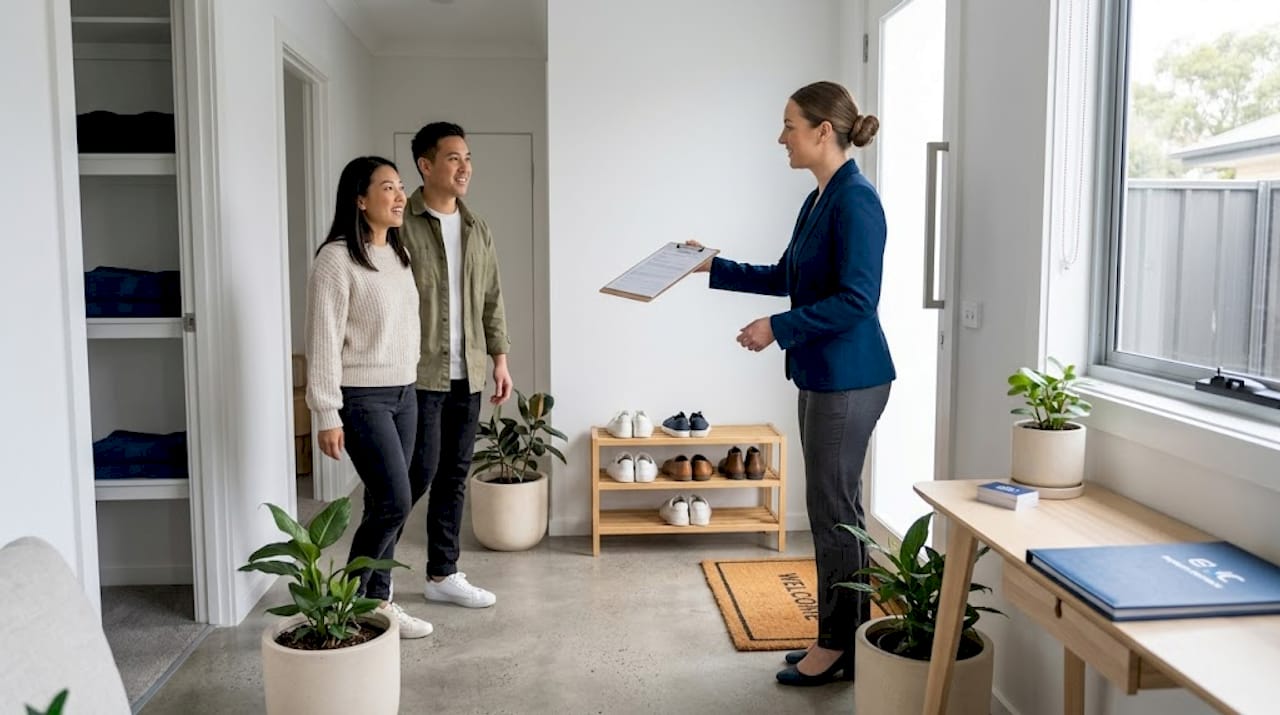
Vacancy reduction is not just about finding tenants faster. It is about engineering the conditions that make good tenants stay. Proactive vacancy rate management starts the moment a current lease approaches expiration, not after the tenant leaves.
Practical steps to cut vacancy duration include:
- Start re-marketing the property at least 60 days before lease expiry
- Offer lease renewal incentives to quality tenants before they start shopping elsewhere
- Respond to maintenance requests within 24 hours. Tenants who feel ignored leave.
- Schedule inspections and listing photography while the current tenant is in place
- Price the renewal rate at market, not above. A $30 per week overshoot can cost you weeks of vacancy.
The financial logic is straightforward. Keeping a proven tenant at market rent is almost always cheaper than re-letting at a slightly higher rate with a four-week gap.
4. Price rent strategically using market data
Many landlords either undercharge out of habit or overprice out of hope. Both hurt yield. Undercharging is obvious. Overpricing is more damaging than most investors realise because it extends vacancy, attracts lower-quality applicants who have been rejected elsewhere, and eventually forces a price reduction anyway.
Rent should be set using genuine comparable properties in the immediate area, adjusted for your property’s specific features, condition, and inclusions. Review pricing quarterly, not just at lease renewal.
For short-term rental properties, the data on dynamic pricing is compelling. Operational improvements and pricing recalibration have been shown to lift occupancy from 61% to 79% and increase net operating income by 78%. These are not structural upgrades. They are management decisions.
Pro Tip: For long-term rentals, use listing platforms to track average days on market for comparable properties in your suburb. If similar listings are leasing in under seven days and yours is sitting at three weeks, your price is the problem, not the property.
5. Make targeted upgrades that justify a rent premium
Not all renovations are equal in rental terms. A full kitchen remodel with stone benchtops and custom cabinetry might increase your property’s sale value. It rarely translates into proportional rental income because market rent ceilings exist in every suburb. You cannot charge $650 per week in a $550 per week market, regardless of how premium the finish is.
The upgrades that consistently deliver rental premiums are those that solve genuine tenant problems or reduce tenant costs:
- In-unit laundry: Adding a washing machine and dryer connection costs $3,000 to $5,000 and can command $50 to $150 more per month in rent. That is a payback period of 20 to 100 months, often better than many shares or term deposits.
- Energy efficiency improvements: Solar panels, LED lighting, and insulation reduce tenant energy bills, which is a tangible, marketable benefit.
- Air conditioning: In most Australian climates, split-system air conditioning is a decision-driver, not a luxury.
- Secure parking or additional storage: Covered or secure parking adds consistent value, particularly in urban areas.
- Cosmetic refreshes: Fresh paint, updated tapware, and modern light fittings significantly improve first impressions at low cost.
The rule is to renovate to the market rent ceiling, then stop. Anything beyond that ceiling enriches future buyers but does not improve your current yield.
6. Control costs and use tax strategies to lift net returns
Income growth gets all the attention. Cost control and tax planning are where sophisticated investors quietly outperform. The difference between a 4.2% net yield and a 5.1% net yield on a $700,000 property is $6,300 per year. That kind of gap is often closed by expense management, not rent increases.
Key cost control strategies include:
- Obtain at least three quotes for every significant maintenance job
- Use annual service contracts for recurring work such as garden maintenance and pest control, which typically cost less than ad-hoc callouts
- Self-manage where your time and capability allow, but calculate the real cost of your time honestly
- Review property management agreements annually. Fees and service levels vary significantly between agencies.
On the tax side, the strategies available to Australian property investors are genuinely powerful. Depreciation deductions and interest expenses reduce your taxable rental income, which improves after-tax yield without requiring any rent increase. A quantity surveyor’s depreciation schedule is a one-off cost that often returns many multiples of that investment across the life of a property.
Ownership structure also matters. Some investors holding multiple properties in personal names are paying more tax than necessary. Speak with a specialist property accountant about whether alternative structures would be appropriate for your situation.
7. Improve tenant retention as a yield multiplier
Tenant turnover is expensive in ways that rarely appear in a single line item. When a tenant leaves, you face re-letting fees, potential vacancy, cleaning, minor repairs to bring the property to market standard, and advertising costs. Combined, these costs typically range from two to six weeks of rent per turnover event.
Vacancy reduction and tenant retention yield immediate income benefits that many investors overlook when they focus exclusively on expensive renovations. The maths are unambiguous: a tenant who renews for a second three-year term at market rent is worth considerably more to your yield than a tenant who pays $30 per week more but stays for 12 months.
Retention strategies that work include offering a small rent discount below market for a long-term lease commitment, addressing maintenance requests promptly and without dispute, maintaining open and respectful communication, and sending renewal offers proactively at least 90 days before lease expiry.
Good rental property management is not reactive. It is a programme of ongoing engagement with your tenants that makes staying easier than leaving.
8. Add ancillary income streams without major capital expense
Once you have optimised your base rent and operating costs, ancillary income is the next frontier for strategies for higher yield. These are revenue streams layered on top of base rent without requiring additional properties or significant capital investment.
Common ancillary income sources for Australian landlords include:
- Pet fees: A monthly pet fee or non-refundable pet bond covers wear and provides additional income. Ancillary income streams including pet fees can add $50 to $300 per month per property.
- Parking: If your property has additional parking spaces, renting them separately to tenants or third parties is straightforward income.
- Storage: Lockable storage areas or garages not included in the primary lease can generate $50 to $150 per month.
- Furnished units: Offering a furnished configuration for short to medium-term tenants allows a premium of 20 to 40% above unfurnished rates in the right locations.
- Charging stations: In strata-suitable properties, EV charging infrastructure is becoming a genuine differentiator as demand grows.
The practical step is to audit your property for assets that are currently unmonetised. Many landlords are sitting on genuine revenue potential that simply has not been structured and offered to tenants.
My take on what actually moves the needle
I have worked with enough Australian property investors to recognise a clear pattern. The landlords who consistently outperform are not the ones who spend the most on renovations or push the hardest on rent. They are the ones who treat yield as a system, not a single dial.
In my experience, the two highest-leverage moves available to most landlords right now are tenant quality and turnover frequency. Every month a good tenant stays in your property is a month you are not paying re-letting fees, cleaning costs, and vacancy. Yet I see investors spending $30,000 on a bathroom renovation when they have never done a structured tenant screening process in their life.
The other mistake I see constantly is using gross yield to make acquisition decisions. You can buy a property with a 6% gross yield that delivers 3.8% net once you account for management fees, land tax, insurance, maintenance, and realistic vacancy. That is not a yield play. That is wishful thinking dressed up in numbers.
My honest advice for 2026: start with the cheapest levers first. Tighten your screening process, price rent to market, add ancillary income where you can, and get a depreciation schedule if you do not already have one. Then, and only then, consider capital upgrades. The investors who do this in order consistently outperform those who reach for the renovation hammer first.
— Nick
How Elitewealthcreators helps you increase property earnings
If you are serious about finding more ways to increase rental yield, the analysis and strategy work required to do it well can be genuinely complex. That is exactly where Elitewealthcreators provides a distinct advantage. From cash flow modelling and yield projection to identifying off-market acquisition opportunities tailored to your growth strategy, the team at Elitewealthcreators applies real expertise to your specific portfolio goals. You can explore property investing insights built specifically for Australian investors ready to move from analysis to action. Spots for new clients are limited each month, not for exclusivity, but because quality advice demands genuine time and attention. If you are ready to stop watching your portfolio underperform, now is the time to act.
FAQ
What is a good rental yield in Australia?
A gross rental yield of 4 to 6% is considered reasonable in most Australian markets, but net yield is the more meaningful figure. After expenses, a net yield of 3 to 4.5% is typical for well-managed residential properties.
How much does vacancy affect rental yield?
A single month of vacancy reduces your annual rental income by approximately 8.3%, and a 30-day vacancy period can eliminate 4 to 5% of your target annual ROI. Minimising vacancy is one of the fastest ways to boost rental profits.
Does tenant screening really improve rental income?
Yes. Professional tenant screening reduces eviction rates from 15.8% to 4.1%, a 74% reduction in eviction risk. Fewer evictions means fewer costly vacancy events and more stable, predictable income.
What upgrades give the best return for rental properties?
In-unit laundry connections, split-system air conditioning, and energy efficiency improvements consistently deliver the strongest rental premiums relative to their cost. Full kitchen or bathroom remodels rarely recoup their cost through higher rent alone.
Can I increase rental yield without raising rent?
Yes. Tax strategies including depreciation schedules and expense deductions, adding ancillary income streams such as parking or pet fees, and reducing vacancy frequency can all increase property earnings without a single dollar increase in base rent.