
TL;DR:
- In Australia, thorough property inspections are essential to identify safety hazards and avoid costly surprises after purchase.
- Inspection reports reflect conditions only at the time of inspection and are valuable negotiation tools for buyers and investors.
Skipping or misunderstanding the property inspection process is one of the most expensive mistakes a buyer or investor can make in the Australian market. A cracked foundation, failing electrical system, or hidden pest infestation can turn a promising acquisition into a financial drain within months of settlement. This guide gives you a clear, step-by-step picture of how the process works, what to look for, how to read your report, and how to use those findings to negotiate with confidence. Whether you are buying your first home or expanding a portfolio, what you learn here will pay for itself many times over.
Table of Contents
- Key takeaways
- Preparing for the property inspection
- What happens on inspection day
- Reading and using your inspection report
- Negotiating after the inspection
- My perspective on where buyers go wrong
- How Elitewealthcreators supports your due diligence
- FAQ
Key takeaways
| Point | Details |
|---|---|
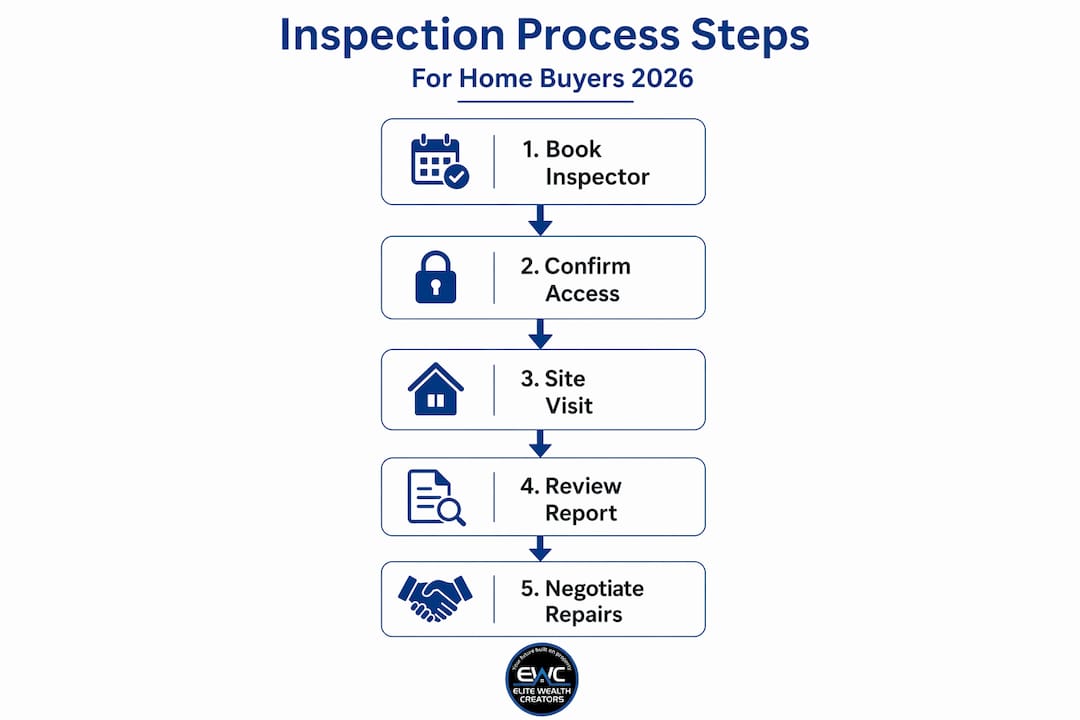
| Schedule inspections promptly | Book your inspection within 7 to 10 days of offer acceptance to protect your negotiation timeline. |
| Know the inspection types | Building, pest, strata, and PCAs serve different purposes; match the inspection type to the property. |
| Treat reports as a snapshot | Inspection reports reflect conditions on the day only and carry no warranty over future property performance. |
| Prioritise findings by severity | Address urgent safety issues first, then maintenance items, then end-of-life components when reviewing results. |
| Use findings to negotiate | Inspection results give you leverage to request repairs, credits, price adjustments, or a clean exit. |
Preparing for the property inspection
The quality of your inspection is decided before the inspector even arrives on site. Preparation is the difference between a thorough assessment and a costly blind spot.
Choosing a qualified inspector in Australia
In Australia, building inspectors should hold a current licence relevant to your state or territory, along with professional indemnity insurance. Look for inspectors who carry membership with recognised bodies such as the Australian Institute of Building Surveyors or the Master Builders Association. Ask directly what their report covers, how long they have been practising, and whether they carry out the inspection personally or sub-contract it. A phone call before booking tells you a great deal about their rigour.
Matching the inspection type to the property
Not every inspection serves the same purpose. The table below outlines the four most common inspection types used in Australian residential and investment property transactions.
| Inspection type | What it covers | When to use it |
|---|---|---|
| Building inspection | Structural integrity, roof, walls, drainage, moisture | All residential purchases |
| Pest inspection | Termites, borers, fungal decay | All properties, particularly older homes |
| Strata inspection | Common property records, levies, disputes, by-laws | Apartments and townhouses in strata schemes |
| Property condition assessment (PCA) | Document review, cost planning, capital expenditure forecast | Commercial and investment-grade assets |
For investors acquiring commercial assets, PCAs combine document review with walk-throughs and deliver cost and capital planning opinions that support lender underwriting. That level of structured analysis goes well beyond what a standard residential inspection provides.
Timing and contract considerations
Buyers typically schedule inspections within 7 to 10 days of offer acceptance, which allows time to review findings and open negotiations before exchange. Your contract of sale should include an inspection contingency clause. This clause legally connects the inspection outcome to your right to request repairs or withdraw from the contract without penalty. Do not proceed without one.
Pro Tip: Before the inspection day, confirm with the selling agent that all areas of the property will be accessible, including the roof cavity, subfloor, garage, and any outbuildings. Locked or obstructed areas become exclusions in the report.
Make sure any strata records, council approvals, or renovation permits are requested in advance. Gaps in documentation are a warning sign worth investigating before you commit.
What happens on inspection day
Understanding what actually occurs during an inspection removes a significant amount of uncertainty from the buying process. Here is what you can expect.
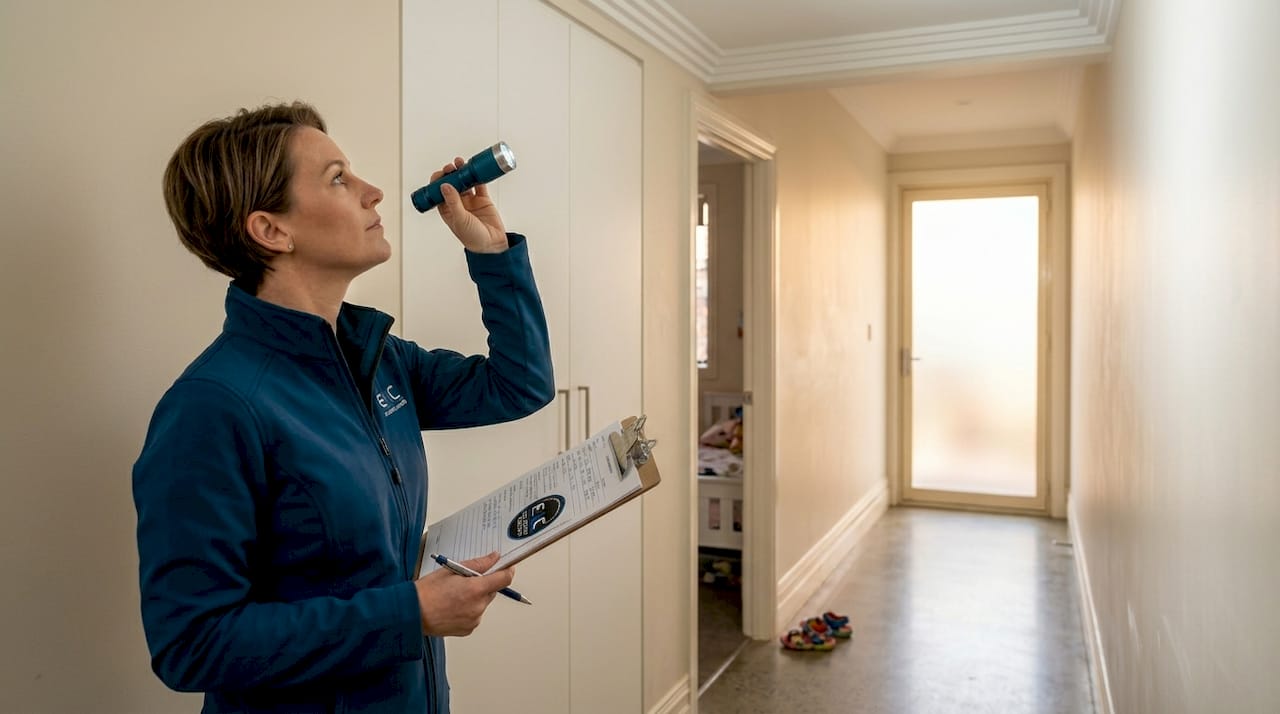
- The inspector arrives and conducts a visual walkthrough. A standard residential inspection is non-invasive and visual, meaning the inspector examines accessible components without opening walls, removing fixtures, or causing any damage to the property. This is the defined boundary of the exercise, and it matters.
- Core systems are examined methodically. The inspector works through the structure (foundations, walls, ceilings), roof and roof framing, plumbing (visible pipes, taps, hot water), electrical (switchboard, visible wiring, outlets), HVAC systems, and the exterior including drainage and retaining walls.
- The inspection takes two to four hours. For a typical residential property, inspectors spend 2 to 4 hours on site depending on the size, age, and condition of the property. A small apartment may take 90 minutes; a large older home could take longer.
- The inspector documents findings with photographs. Every observed defect, area of concern, or maintenance item is photographed and recorded with a description and condition rating. This documentation forms the foundation of your report.
- You attend the inspection in person. Being present is one of the most underutilised advantages available to buyers. Walk alongside the inspector, ask questions in real time, and listen to how they describe their concerns. You will absorb far more context than any written report can convey.
- The report is delivered within 24 hours. Reports with photos, descriptions, and recommendations are typically delivered the next business day, giving you documented evidence to act on.
Pro Tip: Prepare three or four specific questions before inspection day. Ask about the remaining useful life of the hot water system, the condition of the roof membrane, and whether any signs of moisture or movement concern the inspector. These questions prompt candid answers that go beyond the formal report.
The inspector’s role is to give you an objective condition assessment, detached from the emotional factors that cloud buyer judgement. That objectivity is exactly what makes the process so useful during a high-stakes purchase.
Reading and using your inspection report
Receiving the report is not the finish line. How you interpret it determines how well you protect your investment.
What the report contains
A well-structured inspection report includes an executive summary, a section-by-section breakdown of the property, photographs of every recorded defect, condition ratings, and recommendations for further specialist assessment where warranted. Some reports also estimate remaining useful life for major components such as the roof, hot water unit, and HVAC system.
Understanding the limits of the report
This is where most buyers go wrong. Inspection reports reflect conditions only at the date of inspection, based solely on what is observable. They are not a warranty. They do not predict what will fail next year. Treat your report as a structured snapshot, not a guarantee of the property’s future performance.
The concept of “readily accessible” is a critical legal and practical boundary. Inspectors cannot move obstructions or cause damage to increase the scope of their assessment, which means areas blocked by stored furniture, sealed access panels, or overgrown vegetation may not be assessed at all. Note every exclusion in your report.
How to prioritise findings
Use this framework when working through a report with multiple findings:
- Urgent safety items: Active electrical faults, structural movement, asbestos, or significant water ingress. These require immediate specialist assessment and costing before you proceed.
- Maintenance and repair items: Cracked render, aging gutters, worn sealant around wet areas, or minor roof damage. These are negotiable and should inform your price discussions.
- End-of-life components: Hot water systems, HVAC units, or roofing materials approaching the end of their serviceable life. Budget for replacement within a defined timeframe.
The following table shows common defects and what they signal for your purchase decision.
| Defect type | Likely implication | Recommended action |
|---|---|---|
| Active termite activity | Significant structural risk | Specialist pest report and remediation quote before proceeding |
| Rising damp or moisture | Potential subfloor or drainage failure | Plumber or waterproofing specialist assessment |
| Roof tile damage or sagging | Safety risk and costly repair | Roofing contractor quote; use for price negotiation |
| Outdated switchboard (fuse box) | Electrical safety concern and insurance risk | Licensed electrician assessment |
| Cracked render or brickwork | May indicate movement; monitor closely | Structural engineer opinion if widespread |
Visual inspections alone risk missing deferred maintenance. For investment properties, combining the inspection report with document review and owner interviews produces a far more accurate picture of what you are acquiring.
Negotiating after the inspection
The inspection report is not just a risk document. It is a negotiating tool, and knowing how to use it separates confident buyers from those who either overpay or walk away from good assets unnecessarily.
Inspection results give buyers the leverage to request repairs before settlement, negotiate a price reduction to offset repair costs, seek a financial credit applied at settlement, or withdraw from the contract entirely if the inspection contingency allows it. Your contract wording determines which of these options is available to you, which is why that contingency clause matters from day one.
Here is how to approach the post-inspection phase:
- Obtain at least two independent quotes for any significant repair item before entering negotiations. Presenting documented costs makes your position credible and specific.
- Separate safety issues from maintenance items in your negotiation. A seller is far more likely to respond constructively to a well-organised, specific request than a general complaint about property condition.
- For investment properties, use the inspection contingency clause alongside your cash flow modelling to determine whether the asset still meets your return threshold after repair costs are factored in.
- Know when to walk away. A property with multiple urgent safety findings, significant structural concerns, and an uncooperative vendor is a warning, not a challenge to overcome.
For guidance on structuring your negotiation effectively, a clear property negotiation guide can help you frame requests and responses in a way that protects your position without damaging the transaction.
Understanding the distinction between a property condition assessment and market valuation is also critical here. A valuer assesses market worth; an inspector assesses physical condition. Both matter, but they answer different questions.
My perspective on where buyers go wrong
I have watched buyers make the same mistakes repeatedly, and most of them come down to misunderstanding what an inspection is designed to do.
The first mistake is treating the inspection report as a pass or fail test. No property passes a thorough inspection without findings. Every property has something. The question is whether the findings are manageable, priceable, or genuinely deal-breaking. Buyers who expect a clean report either waive the inspection entirely (a serious risk) or panic when normal maintenance items appear.
The second mistake is not attending the inspection in person. The written report is a summary. The inspector’s verbal commentary, tone, and emphasis during the walkthrough contains information that simply does not translate to paper. I have seen buyers receive a report that seemed alarming in writing, but the inspector’s on-the-day assessment was “monitor this, it is not urgent.” That context is lost if you are not there.
For investors, the mistake I see most often is treating inspections as a formality rather than an input into cost and risk modelling. A structured PCA for commercial assets produces capital expenditure forecasts that change acquisition pricing and portfolio planning. Using that data well is a genuine competitive advantage.
Do not let a long or detailed report trigger paralysis. Use the prioritisation framework: safety items first, maintenance items second, end-of-life planning third. Then decide. Clarity is the product of a well-run inspection process, not more time spent worrying.
— Nick
How Elitewealthcreators supports your due diligence
The property inspection process is one step in a larger due diligence framework, and it works best when it is part of a clear acquisition strategy. At Elitewealthcreators, we work with buyers and investors to make sure inspection findings are interpreted in the context of their long-term wealth goals, not just the transaction in front of them. Whether you are evaluating your first purchase or adding to an existing portfolio, our team helps you move from report to decision with confidence. Explore our property investment insights to understand how due diligence fits into a broader wealth-building strategy, or learn how SMSF property investment works within a compliant ownership structure. Spots for new clients are limited each month. Ready to act?
FAQ
How long does a property inspection take?
A standard residential property inspection takes 2 to 4 hours on site, depending on the size and condition of the property. Larger or older homes may take longer.
When should I schedule a property inspection?
Schedule your inspection within 7 to 10 days of offer acceptance to allow enough time for negotiation before contract exchange.
What does a property inspection not cover?
Inspections are limited to readily accessible, observable components and do not include destructive testing, areas blocked by obstructions, or predictions about future property condition.
Can I use inspection findings to renegotiate the purchase price?
Yes. Inspection results can be used to request repairs, seek a financial credit, negotiate a reduced price, or withdraw from the contract if an inspection contingency clause is in place.
Do investors need a different type of inspection?
For commercial and investment-grade assets, a Property Condition Assessment (PCA) is recommended. It combines document review, a physical walk-through, and capital expenditure cost planning to support informed acquisition and portfolio decisions.